-
Jul 15, 2026
- by Ashley Chen
A Chance Encounter Led Me Back to Bhutan, and Changed How I See the World
A personal journey of reconnecting with a childhood caregiver leads to an unforgettable experience exploring Bhutan's culture, people, and lasting sense of peace.
Some of the most meaningful journeys begin long before we realise it.
When I first met Poonam, I was only two or three years old. My family had recently moved to New York, and she became part of our lives. I was too young to so I do not really have much memories from that time, just fragments. Faces, smells, and certain moments that stayed with me.
Poonam cared for me for around two or three years. By the time she returned to Bhutan, I was about five or six years old. After that, I completely lost contact with her. It was not that I forgot her. Life simply moved on, and she became part of my early childhood that I rarely thought about.
An Unlikely Reunion Begins in New York
Years later, I was getting ready to move to Singapore for six months, and I flew to New York for a work project. I got into a cab, and out of the thousands of cabs in that city, the driver happened to be from Bhutan. Bhutan is a tiny country on the other side of the world, so the odds of that happening was almost zero. His name was Karma.
His name was Karma. Half the roads were blocked off because of the snow, so it was a long ride, and we ended up talking the whole way. I mentioned that I knew someone from Bhutan and asked him, "Do you know Poonam Gurung?" It turned out she was a close friend of his, and he knew all about her. Of every person in every cab in New York, I had happened upon the one man who could bring her back to me. Sitting there in the snow, a whole part of my life I had not touched in years came rushing back.
Bhutan Finds Me Again
Soon afterwards, I arrived in Singapore and was assigned to work on a project with Druk Asia involving the National Museum of Paro as part of the Museums of Bhutan fundraising project. The project focused on reimagining the visitor experience and helping shape the museum's future potential, because the potential is enormous.
Out of every project I could have been given, it was Bhutan.
In a way, the trip planned itself, and I was left with an intrigue I couldn't shake.
I had no idea what to expect. Not many people know about Bhutan, and that is a shame, because it is one of the most beautiful places on earth.
A Different Pace of Life
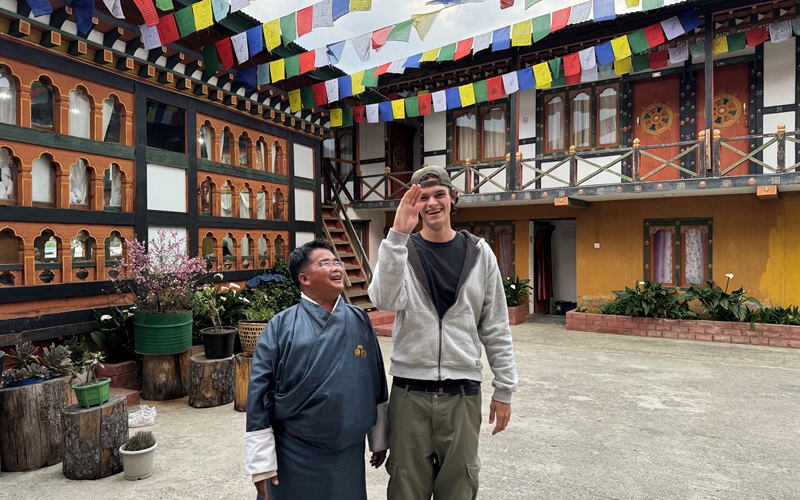
The strangest feeling came the moment I landed. I stepped off the plane in Paro and felt like I could finally breathe. You could feel the calm—and this was an airport. Airports are usually chaos; I still cannot make sense of Changi in Singapore, but Paro Airport somehow reflected peace. That set the tone for everything that followed.
Reuniting with Poonam
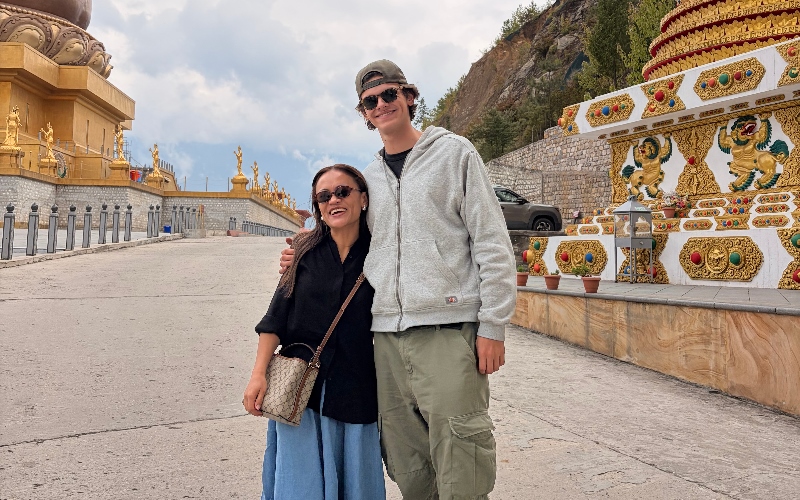
We arranged to meet Poonam at a small café in Thimphu.
Seeing her was one of the strangest feelings I have had. It is a little like running into someone whose face you know but cannot place, except that it was much deeper—because she was part of my life and part of who I became. The last time she saw me I was maybe a meter tall. Now, I am twice that.
The reunion meant a lot.
It was not about the cafe or the town, it was about the moment we actually looked at each other. We ended up spending the whole day together. She showed us where she lived and what her life is like now, and we talked for a long time about my family and hers.
Discovering Bhutan Beyond the Reunion
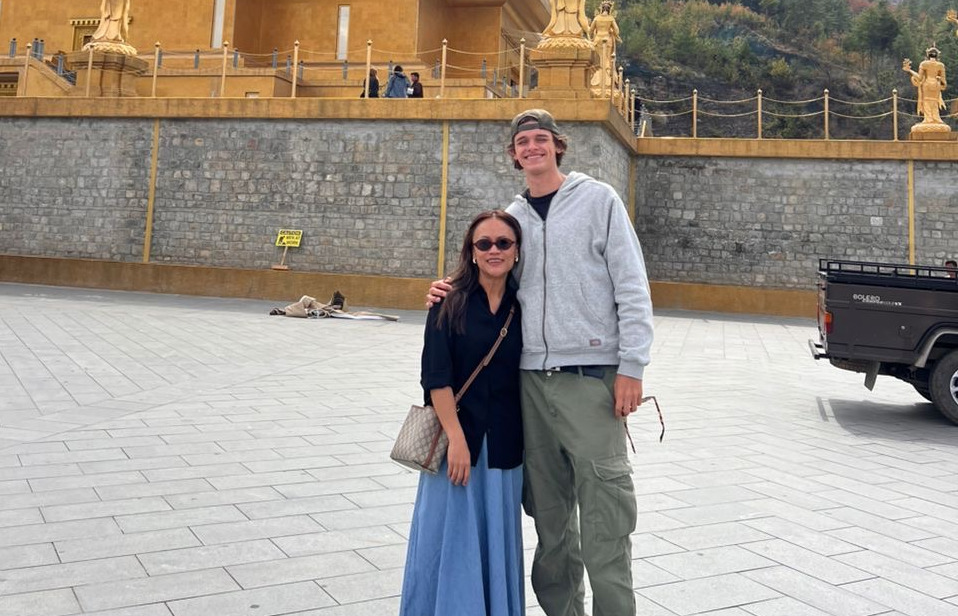
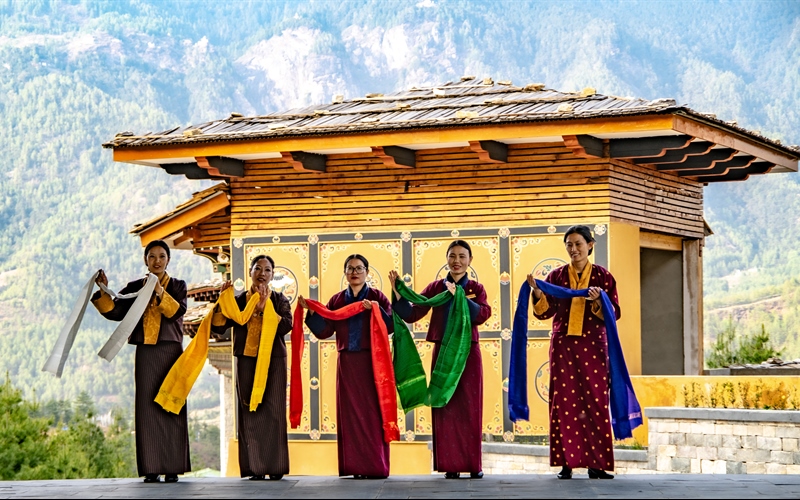
Beyond seeing Poonam, Bhutan was unlike anywhere I have ever been. It is so unique and liberating – it feels like stepping into another time, a place where the world slowed down and never rushed to catch up.
I learned about local traditions and Buddhist philosophy, both of which I find genuinely fascinating, and the conversations I had there were mind-blowing.
Travelling through Bhutan never felt like simply moving between destinations; the journey itself became the experience.
Above all, what stayed with me most was the silence. Outside the towns, there was remarkably little traffic or noise—a level of quiet I had rarely experienced or known existed anywhere else.
Looking Beyond Appearances
One experience in particular changed my perspective.
Before arriving in Bhutan, I had travelled through several countries in Asia, including Indonesia and the Philippines. In many places, children were surprised to see a foreign visitor. There were always a reaction.
Bhutan receives relatively few international tourists a year, so I expected even more reactions.
Instead, as I walked through Thimphu, almost nobody paid me any attention at all.
Curious, I asked my guide from SoulTrips, TP, why that was.
He explained that is simply how Bhutanese are. They do not look at your skin, your height or your face; they care more about what is inside of you.
Being in a place that actually lives that way gives you a kind of peace I had never felt before.
A Guide Who Brought Bhutan to Life
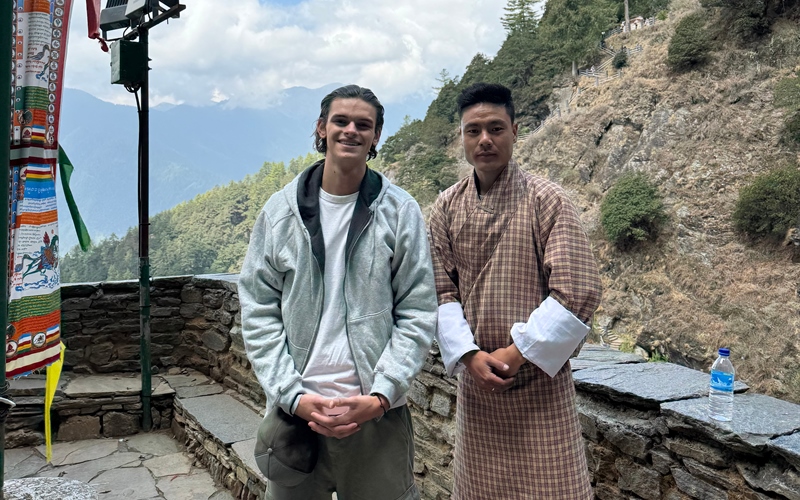
TP became one of the most important encounters I met during my time in Bhutan.
He was generous with his knowledge, patient in answering questions, and armed with stories about Buddhism and Bhutan.
But beyond what his knowledge, it was what he showed us that left a mark.
Through his guidance, places became more than landmarks.
The Tiger's Nest Monastery was probably one of the most beautiful sights I have ever seen. It was such a unique discovery, one that will stay with you long after you leave.
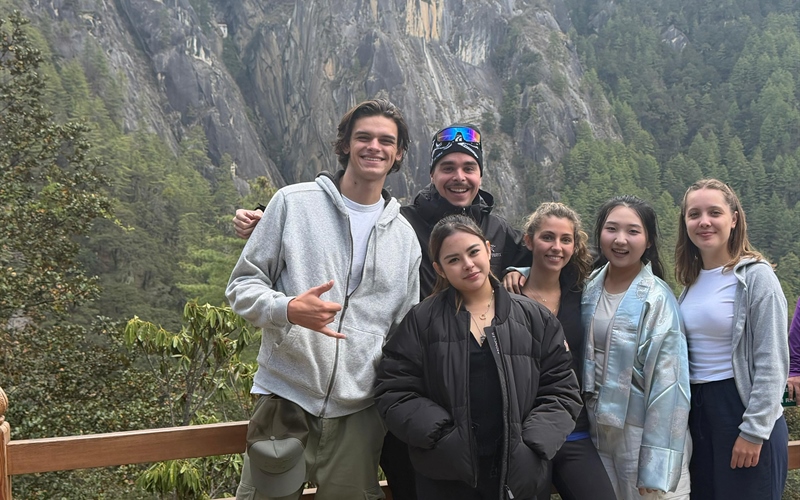
A Journey That Stays With You
I am only twenty, and I am grateful for all the travel I’ve been lucky enough to experience. Yet, I cannot fully put into words just how profound my gratitude is for Bhutan.
If I had to describe Bhutan in one word, it would be peace.
Not peace as in the absence of war, but a calm that comes from inside and stays with you after you leave. And that, to me, is something rare.
This article was contributed by Max Gaume, a French national who was raised in New York and is currently studying for a Bachelor of Science in International Hospitality Management at EHL, with a semester based in Singapore. His interest in Bhutan began while working on a consultancy project for the National Museum of Paro. During his visit to the country, that professional connection evolved into a deeply personal journey of rediscovery.