-
Sep 08, 2026
- by Ashley Chen
Bhutan Hosts First Global Conscious Food Systems Summit Amid Rising Food Security Pressures
The gathering in Paro brought together nearly 400 participants from more than 60 countries to examine how values, culture and inner development could complement policy, finance and technology in transforming food systems.
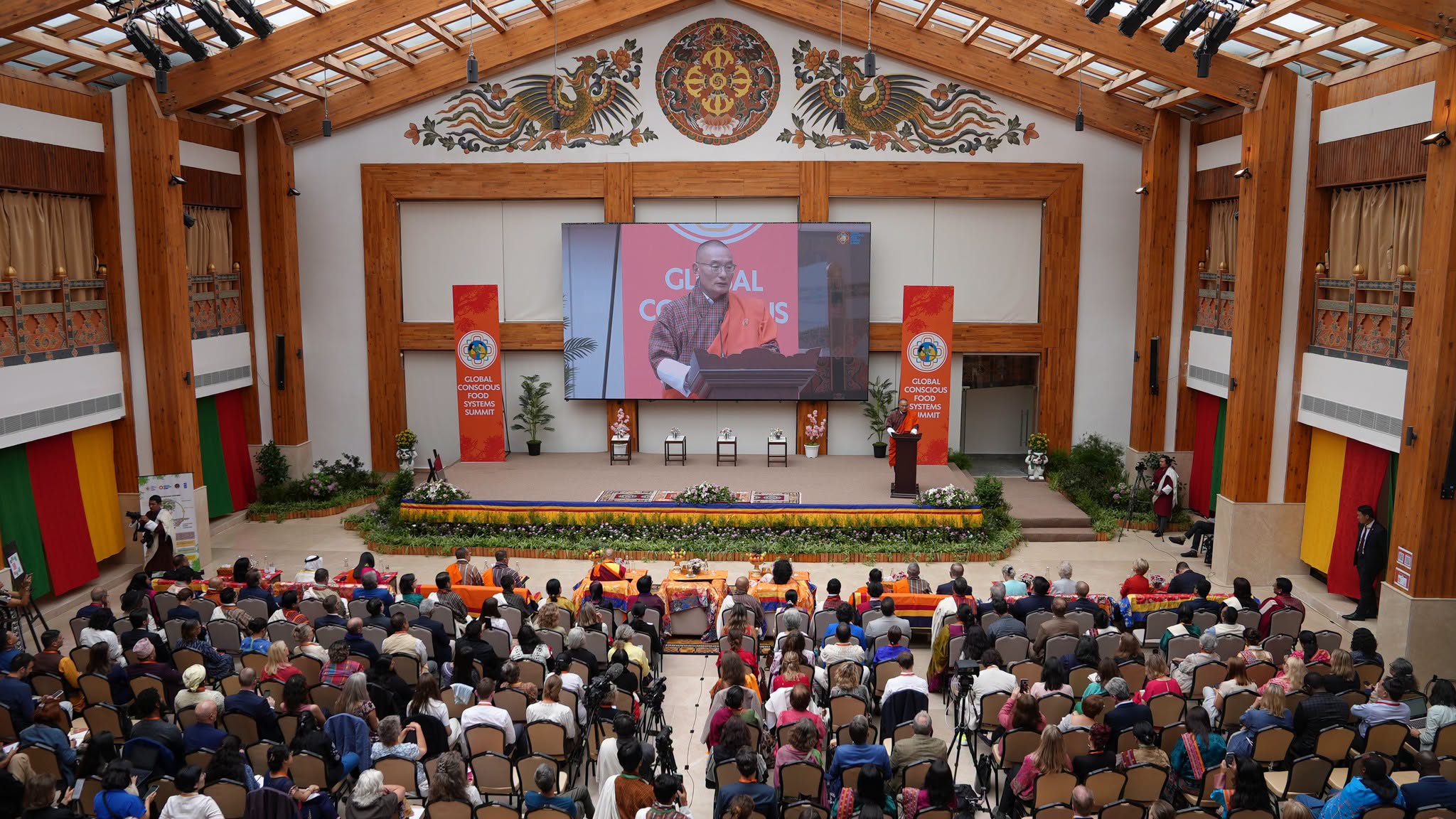
Bhutan hosted the first Global Conscious Food Systems Summit in Paro from 31 August to 4 September 2026, bringing governments, farmers, Indigenous leaders, scientists, entrepreneurs, youth representatives and development practitioners together at a time of growing pressure on global food security.
The gathering was hosted by the Royal Government of Bhutan, the Conscious Food Systems Alliance, or CoFSA, and the United Nations Development Programme. The formal summit sessions opened on 1 September at Dungkar Dzong in Paro. Nearly 400 participants from more than 60 countries attended.
Unlike conventional food conferences focused mainly on production, markets and technology, the summit examined another question. Organisers asked how values, mindsets, culture, spirituality and people's relationship with nature influenced the way food systems were designed and managed.
The approach did not seek to replace science or agricultural policy. Instead, it argued that technical solutions also depended on the human choices behind them.
Food Security Pressures Formed the Global Backdrop
The meeting took place as conflict, economic pressures and extreme weather continued to strain food systems around the world.
The World Food Programme estimated that 266 million people faced acute hunger in food-crisis countries in 2026. Conflict remained a major driver, compounded by economic shocks and climate risks.
Against that background, Bhutan's Prime Minister Dasho Tshering Tobgay argued that repairing food systems required attention to both practical structures and the values that shaped them.
“Food lies at the intersection of many of the defining challenges of our time – hunger, poor nutrition, poverty, climate change, biodiversity loss, and increasingly food security is also being disrupted by conflict and geopolitical instability. Our central message is simple: transforming our food systems requires both inner and outer change.”
He stressed that the approach was not an argument for choosing belief over evidence.
“Consciousness can cultivate compassion, empathy, resilience, creativity and a stronger connection with nature,” Tobgay said. “This does not mean choosing spirituality over science. It means recognising that our values and mindsets influence how science, policy, finance and technology are used.”
Global Leaders Gathered in Paro
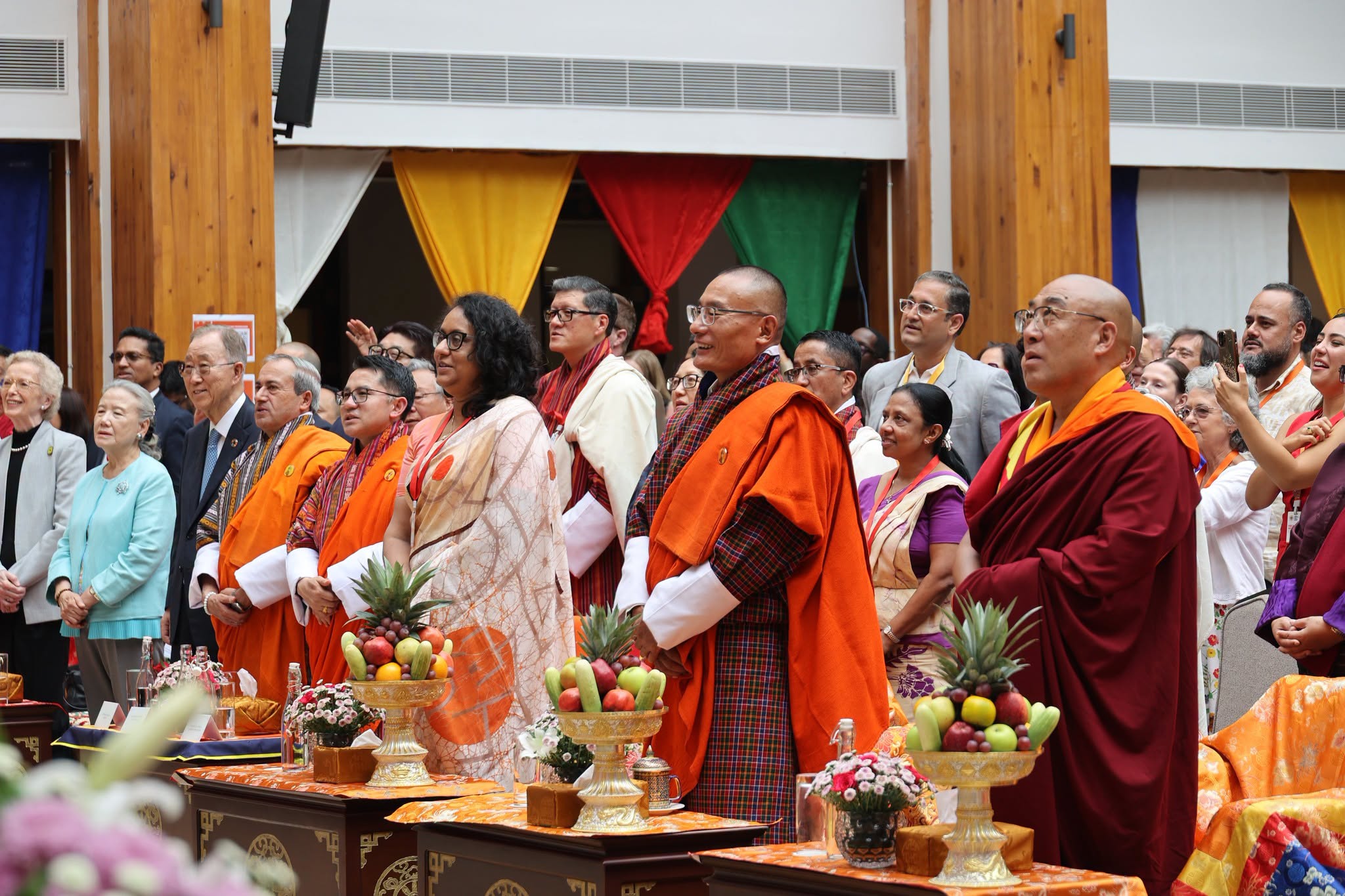
Speakers of the summit included Prime Minister Tobgay, Sri Lankan Prime Minister Dr Harini Amarasuriya, former UN Secretary-General Ban Ki-moon, former Irish president Mary Robinson, UNDP Deputy Regional Director for Asia and the Pacific Beate Trankmann and Otto Scharmer, founder and director of the Presencing Institute.
The first day examined what organisers described as the wider "polycrisis", including climate change, biodiversity loss, inequality and geopolitical instability.
One panel, "Rising to the Moment: Igniting Consciousness to Address the Polycrisis", included Arunachal Pradesh legislator Toko Tatung, youth climate advocate Prasiddhi Singh, Chizuru Aoki of the Global Environment Facility and spiritual leader Mata Amritanandamayi, widely known as Amma.
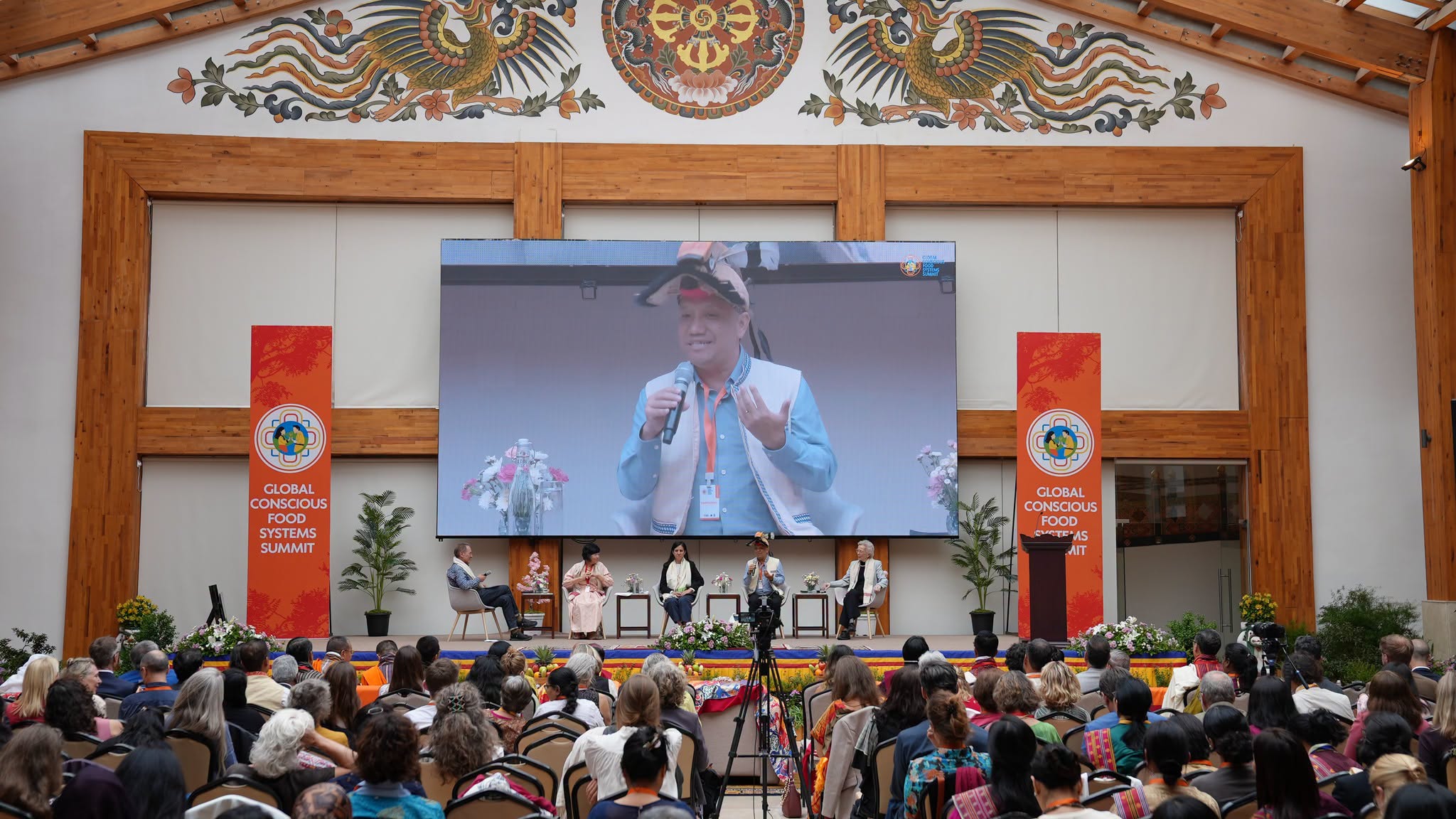
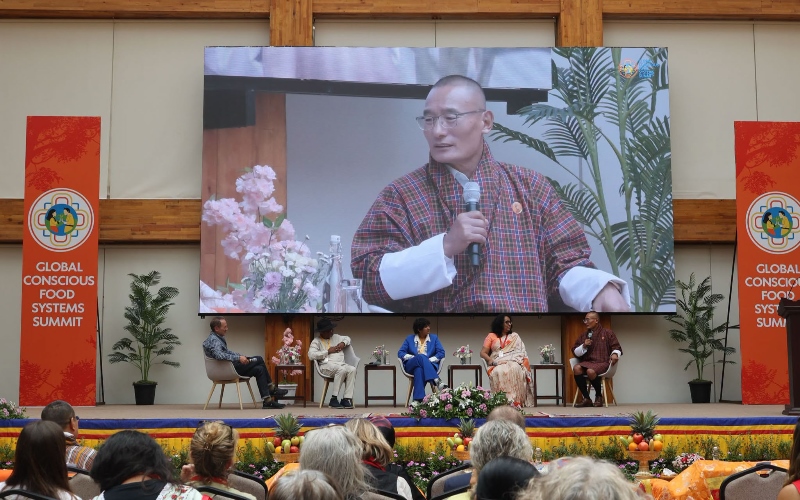
Another discussion brought the Prime Minister and Amarasuriya together with Indigenous leader Taily Terena and Songhaï Center founder Godfrey Nzamujo to examine the role of conscious leadership.
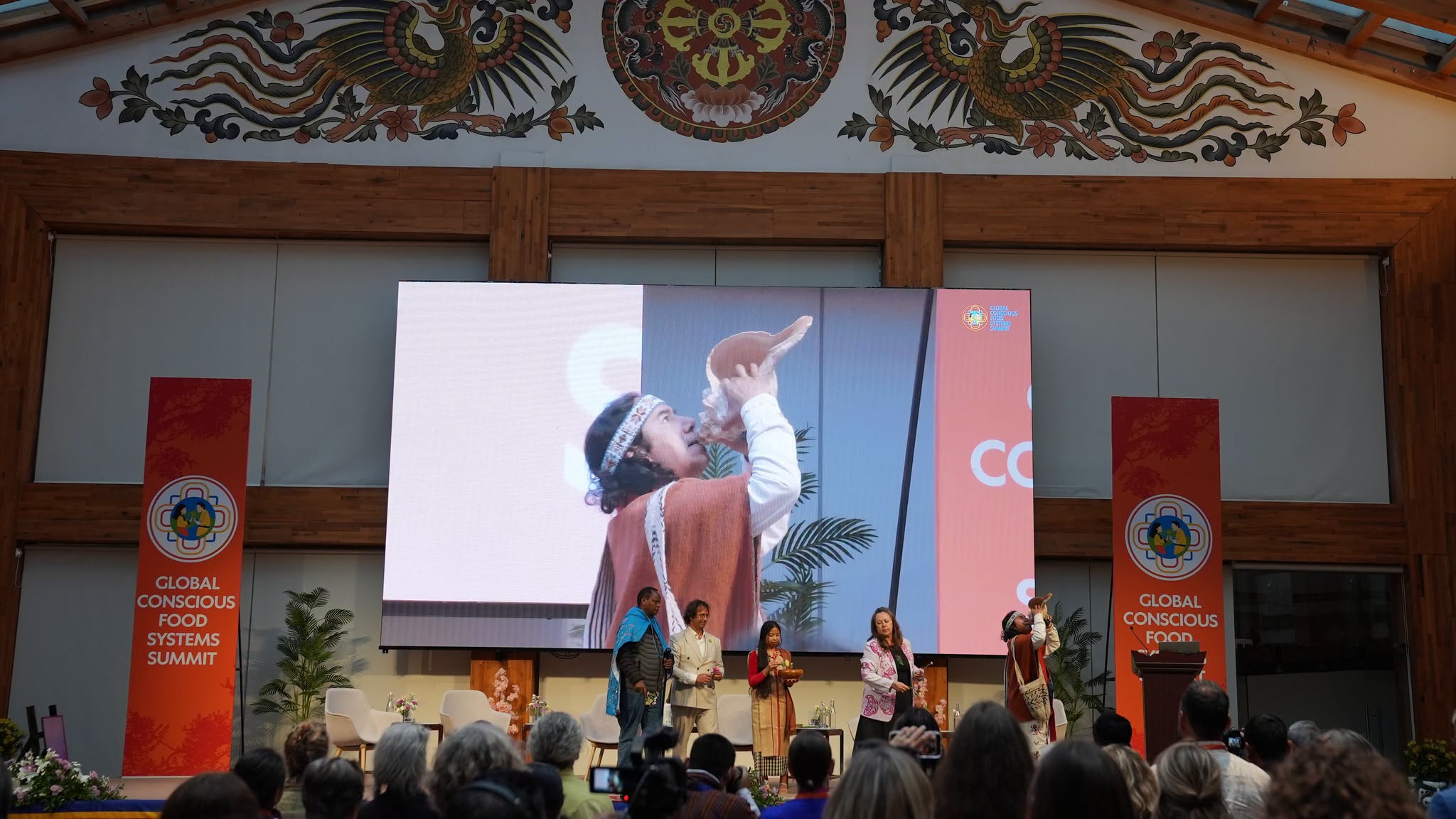
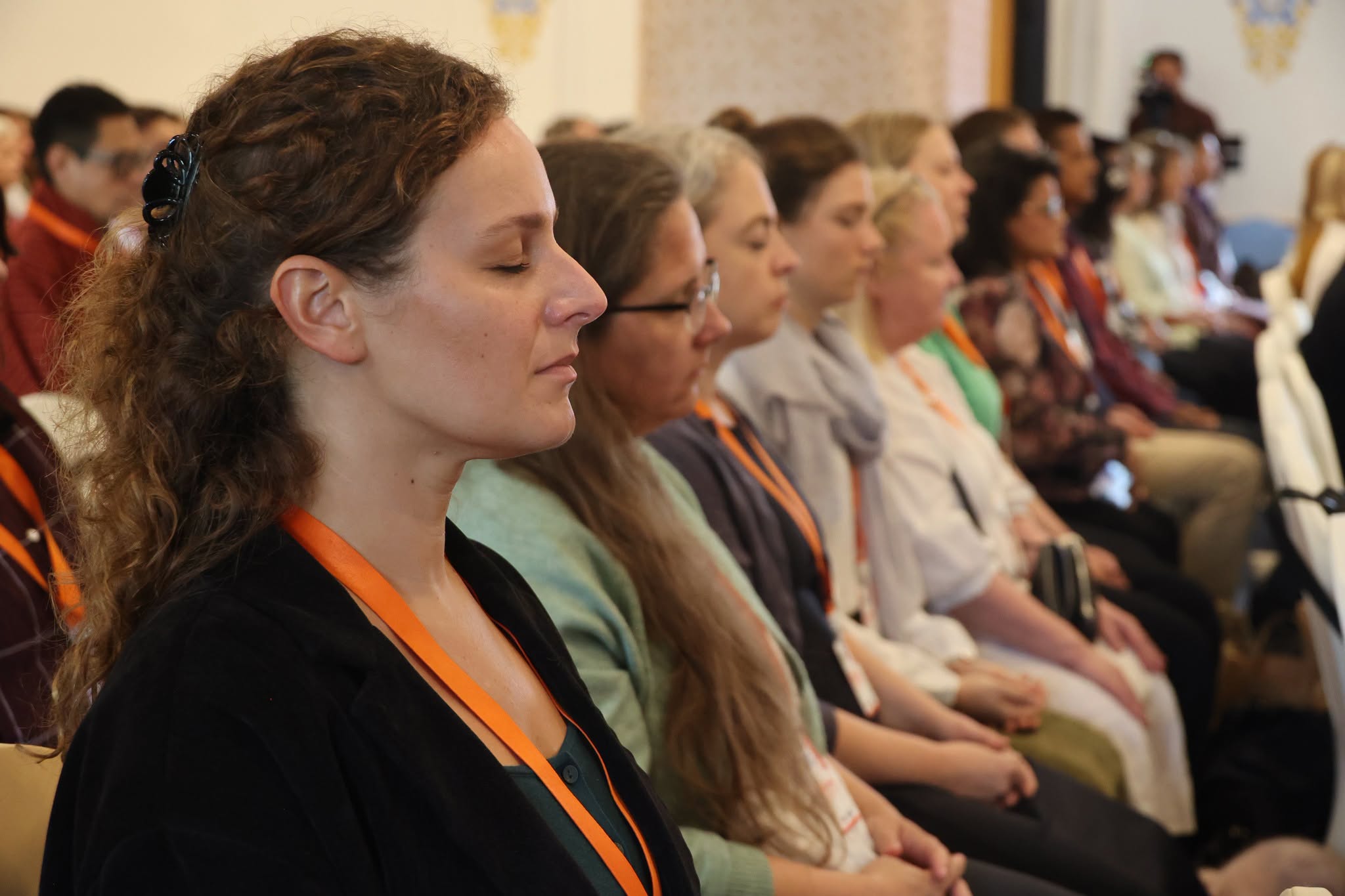
Indigenous representatives from different continents also took part in a Ritual of Gratitude to Mother Earth at the end of the opening day's programme.
From Ideas to Practical Food Systems
The summit moved beyond high-level discussion during its later sessions.
The second day focused on conscious food systems in practice, including regenerative agriculture, farmer wellbeing, agroecological approaches, faith traditions and Indigenous knowledge. The programme examined how the summit's principles could be applied in farming, communities and institutions.
A central part of the gathering was the Conscious Food Systems Framework. The framework drew on more than five years of consultation, co-creation and movement-building.
It brought together a shared vision and principles, approaches for individuals and institutions, lessons from existing work and more than 50 initiatives from around the world that had applied consciousness-based approaches to food systems.
The summit's objectives included encouraging countries to advance their national food systems pathways, demonstrating links between inner development and regenerative food systems, and examining how Bhutan's culture and spirituality had supported nature-friendly agricultural practices.
Gross National Happiness Entered the Food Debate
The third day placed Bhutan more directly at the centre of the discussions.
Under the theme "Bhutan: A Living Laboratory for Conscious Food Systems", sessions examined how the country's Gross National Happiness philosophy, culture, Indigenous knowledge and spiritual traditions could inform food systems thinking.
Gross National Happiness, or GNH, is Bhutan's development philosophy that considers social wellbeing, culture, environmental conservation and good governance alongside economic development.
A session titled "Cultivating Happiness: Gross National Happiness as the Blueprint for Food Systems Transformation in Bhutan" began with guided meditation and examined whether elements of the GNH approach could inform food policies elsewhere.
Bhutan's Minister of Agriculture and Livestock, Lyonpo Younten Phuntsho, said:
“GNH asks a deeper question: what is the purpose of prosperity? And ultimately: what is the purpose of development? These are difficult questions. But I believe they are precisely the questions we need to ask when we talk about transforming food systems.”
He added:
“For Bhutan, GNH means the economic progress, environmental stewardship, culture and human wellbeing cannot be pursued separately. They have to grow together. And perhaps this is one of Bhutan's most important contributions to the globall food systems conversation.”
The discussion included Ministry of Agriculture and Livestock Secretary Dasho Thinley Namgyel, Fadhil Bakeer-Markar, Khenpo Kinzang Yeshey and World Food Programme Bhutan Country Director Peter Rodrigues.
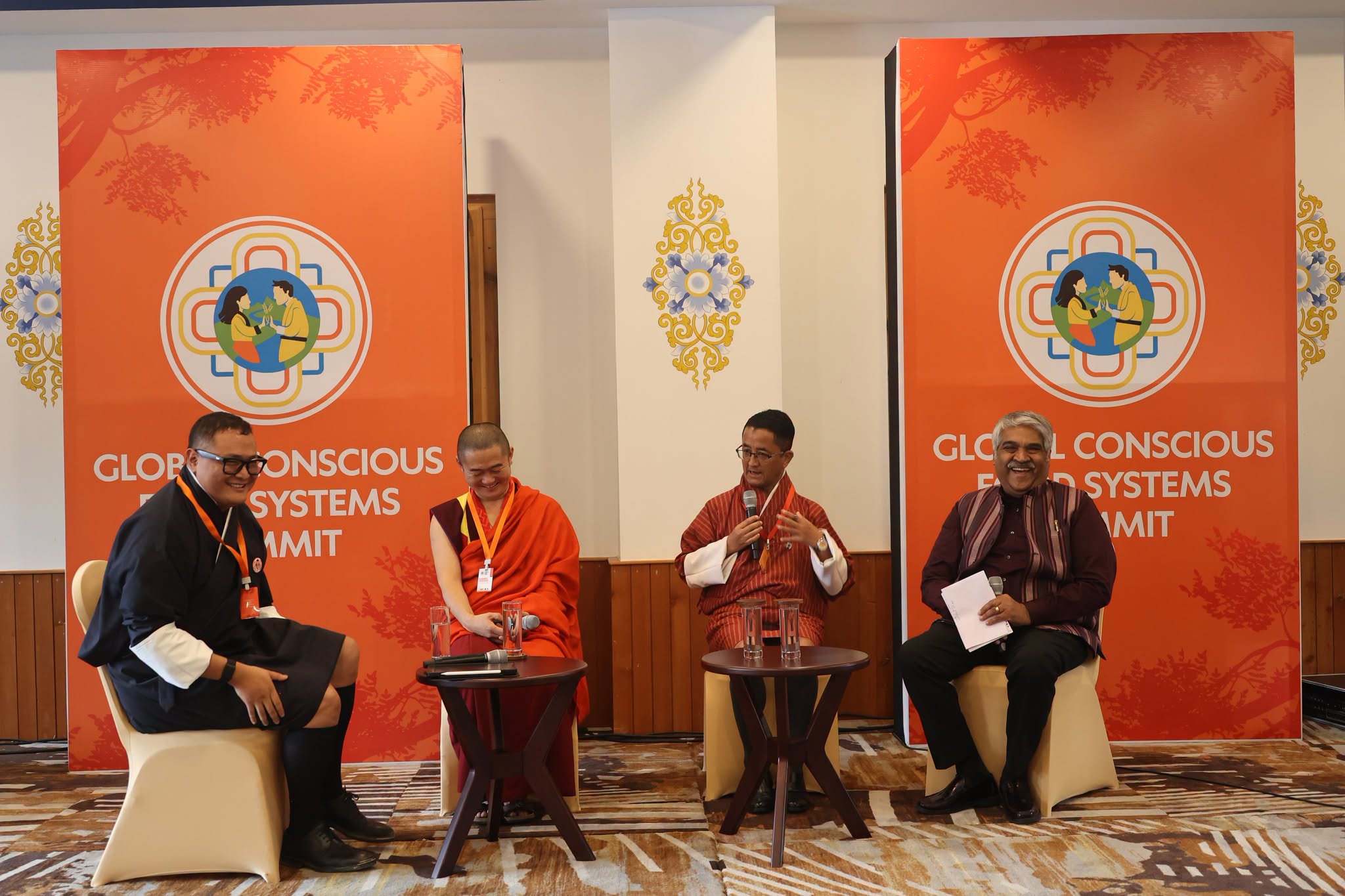
Bhutan's role as host did not mean the country presented its agricultural sector as being without challenges. Discussions also touched on rural livelihoods, farmer wellbeing, changing demographics and the need to make food systems more resilient.
Prime Minister Dasho Tshering Tobgay argued that farmers needed a stronger voice in the policies affecting them.
“Too often, policies are developed for these groups rather than with them,” he said.
Consciousness Was Linked to Policy and Markets
For summit organisers, "conscious" food systems were not intended to end with meditation or individual eating habits.
The programme connected inner development with external changes in agriculture, finance, governance, consumption and markets. Its broader argument was that values and mindsets could influence the way institutions designed and implemented food policies.
Dasho Tshering Tobgay described that link in practical terms.
“Outer change is agriculture, markets, finance, public policy and consumption,” he said. “Consciousness has value only if it influences our decisions and changes how we act. For example, a conscious approach to production would care for both the land and the farmer. It would regenerate soils, not deplete them. It would protect water. It would reduce pollution and deforestation and recognise the dignity and wellbeing of the people who produce the food that sustain us.”
The final stages of the summit shifted towards policy, governance and collective action. Participants considered how the ideas discussed in Bhutan could be applied through institutions and food systems beyond the gathering.
A Conversation Intended to Continue Beyond Bhutan
The summit positioned Bhutan's Gross National Happiness philosophy within a wider debate about how societies valued food, farmers, nature and economic development.
Its significance lay less in proposing one agricultural model for every country than in asking whether food systems could be changed through technical reforms alone.
For Bhutan, the gathering also provided an opportunity to connect its development philosophy with an increasingly urgent international discussion about hunger, climate resilience and the future of agriculture.
Whether the ideas discussed in Paro translated into policy, investment and measurable changes in food systems would depend on what governments, institutions, farmers and other participants did after returning home.