-
Nov 24, 2026
- by Ashley Chen
Passion and Purpose: Bhutan’s Culture, Trails and Happiness
Bhutanese guide Kinley Dendup shares stories from the trail, common visitor misconceptions and his thoughts on culture, hospitality and happiness.
1. Please share a little bit about your background.
I am Kinley Dendup from Gangtey in central Bhutan, and I have been working in the tourism industry for more than a decade.
After finishing high school, I returned to my village and found work in the hotel industry. I worked in food and beverage at Gangtey Lodge for almost two years. After resigning from the hotel, I decided to follow my passion and pursue a career as a tour guide. I'm currently serving as a tour guide with Druk Asia.
2. What first inspired you to become a tour guide in Bhutan?
I remember meeting tourists during my childhood. We would often ask to take photographs with them or ask them for pens.
Some tourists visited our school and interacted with the students. At that time, Western culture was completely unfamiliar to me. These encounters intrigued me from a young age and made me curious about people from other countries.
That interest stayed with me, and in 2015 I joined a tour-guiding course.
3. What is your favourite hiking trail in Bhutan and why?
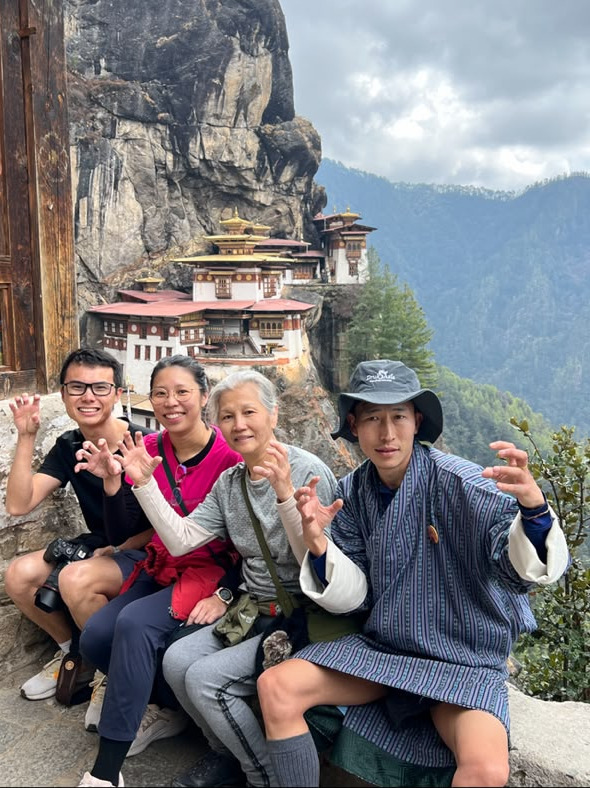
Above all, the hike to Tiger’s Nest has always been my favourite. It is one of the main highlights of a journey through Bhutan for almost every visitor.
The sense of spiritual progress that comes through completing this demanding hike is what makes the place feel like a haven on Earth.
I cannot remember how many times I have been there, but every climb feels different and special. The big smiles on my guests’ faces after completing the hike and the words of encouragement people share along the trail always affect me differently.
Personally and physically, hiking to Tiger’s Nest makes me feel that I have used my full potential for the day.
4. What is a common misconception visitors have about Bhutan?
Many guests are confused by online weather forecasts. Sometimes Google shows negative temperatures in Punakha, which may not reflect the conditions visitors actually experience there.
Another misconception concerns the seasons. Many people think that spring and autumn are the only good times to explore Bhutan. With changing weather patterns, the monsoon sometimes arrives earlier, and mountain weather is increasingly unpredictable.
I often tell tourists that if their intentions are good, even the sky and the earth will be good to them.
Every season has its own beauty. Winter can be harsh, but the sky is often clearer, offering better views of snow-covered mountains and good conditions for stargazing.
Some tourists also worry that the food served in hotels may not meet their expectations. However, most tourist-standard hotels provide a range of dishes designed to serve international visitors.
5. What was the most memorable or funny encounter you have experienced as a guide?
By nature, I use humour when interacting with tourists. It adds something extra to the necessary briefings and commentary I provide as a guide.
I have experienced many funny moments with guests. Sometimes, we have laughed so much that we had to hold our stomachs.
Two incidents from the beginning of my guiding career in 2016 remain especially memorable.
In the first incident, another guide welcomed my guests by mistake because the clients had the same name written on their airport placards. By the time we realised what had happened, both guides had already clicked with the guests they had mistakenly received. We therefore continued the tours with the guests we had met.
On another occasion, I took the wrong trail while hiking towards Kyila Goenpa. I followed a longer route from the sky-burial area near Chele La. What should have been a two-hour hike became a five or six-hour journey.
After some time, we ran out of water and had no choice but to drink from a spring. Fortunately, the guests were from Germany and were in their mid-thirties, so they were physically able to manage the long hike.
The funny part came after we returned to the car and began driving towards Paro. One guest developed had to make several emergency bush stops. We kept driving into the valley, stopping repeatedly and laughing about what had happened.
6. Which Bhutanese tradition are you most passionate about preserving?
Bhutan is a traditional society, and our cultural practices give the country a distinctive identity that we are proud of.
The area where I come from is known for archery. Matches have been played between communities and regions for generations.
I have fond childhood memories of elders in our community helping us organise two-day archery matches during the New Year. Children from the younger generation still play as we did, but the intensity, charm and traditional standards are no longer quite the same.
Many of our root values are intangible, and some are gradually disappearing. We therefore need to revitalise our traditions and culture.
I also feel that the concept of one nation and one people is a tradition that we must preserve for all time. It is the wheel that will continue to drive our country’s future.
Above all, I believe in protecting the environment and natural resources through traditional beliefs, including the practice of regarding mountains as sacred. We should maintain this pride in sustainability and preserve the sanctity of our natural environment for generations to come.
7. Have you ever witnessed a visitor experience a life-changing moment in Bhutan?
As guides, we may not do anything extraordinary. We simply show visitors what Bhutan is through our expressions, stories and interactions.
Bhutanese people are naturally hospitable and want guests to feel welcomed. Our distinctive culture can sometimes overwhelm visitors in a positive way.
Almost every guest who explores Bhutan returns home with a heart full of joy and contentment. They are often influenced by the philosophy of Gross National Happiness and by the different way Bhutanese people look at life.
Some guests say they may not have gained anything material from the trip, but they have definitely been transformed from their former selves.
Some guests have later said they were blessed with a child after praying at Chimi Lhakhang, commonly known as Bhutan’s fertility temple. Some visitors have also found their life partners in Bhutan.
I have personally met several guests who were deeply influenced by Bhutan’s approach to sustainable tourism. They wanted to do something for the country and later returned as investors or experts contributing to national skilling programmes.
8. What is the most memorable question a traveller has ever asked you?
One of the most memorable questions I have been asked is how Bhutan measures its happiness index through the development philosophy of Gross National Happiness.
With the development of Gelephu Mindfulness City, some tourists are also curious about how such a large new city will take shape. They frequently ask what the city is going to be like.
9. What is one story, legend or piece of Bhutanese history that you never tire of telling?
One popular story I enjoy telling is about a dog, a cat and a cow. It is a fictional story in which all three animals travel to their destinations in the same taxi.
When they reach their chosen destinations, the cow pays the correct fare. The cat does not pay anything, while the dog pays but does not receive its change.
That is why the cow walks along the road without caring about passing vehicles. The dog barks at vehicles because it is still asking for its change. The cat runs away because it never paid its fare.
10. What do you hope visitors take away from their time in Bhutan?
I believe every guide’s main intention is to help guets have the best possible trip in Bhutan.
We always give our best to create an impactful journey through genuine service, shared stories and therapeutic hikes through pristine forests.
Visitors are naturally touched by the beauty of Bhutan’s mountainous landscapes and by the simple gestures of Bhutanese hospitality.
Our tangible and intangible root values, combined with a modern approach to sustainable tourism, make Bhutan one of the world’s distinctive travel destinations. Almost every guest who visits Bhutan leaves satisfied and says the country is unlike anywhere else.
By sharing aspects of Bhutanese spirituality, we also help visitors discover different ways of looking at life.
11. What does happiness mean to you?
Bhutan is known for considering happiness in its development activities.
An old Bhutanese saying describes individual happiness as something so great that even a thousand horses could not carry it. This reflects how much we value and strive for collective happiness.
For me, happiness comes when the bond between family and friends grows stronger, particularly when people come together for a good cause. I am also happy when things fall into place as I have envisioned them.
I feel over the moon whenever I have the opportunity to explore a new place or go hiking. It gives me time for reflection and allows me to press life’s reset button.
This interview is part of the Passion and Purpose series where we shine a spotlight on the extraordinary individuals shaping Bhutan’s industries and communities across the different industries. Each feature explores the unique journeys, challenges, and achievements of Bhutanese professionals across diverse fields—tourism, arts, entrepreneurship, and more. Through heartfelt stories, we uncover what fuels their dedication and how they contribute to preserving Bhutan’s heritage, sustainability, and Gross National Happiness ethos.