-
Nov 25, 2026
- by Jamyang Choden
Woven from a Legend: How Kishuthara Keeps Khoma's Story Alive
From a gift cloth at a Tibetan trade fair to a new generation's songs and screens
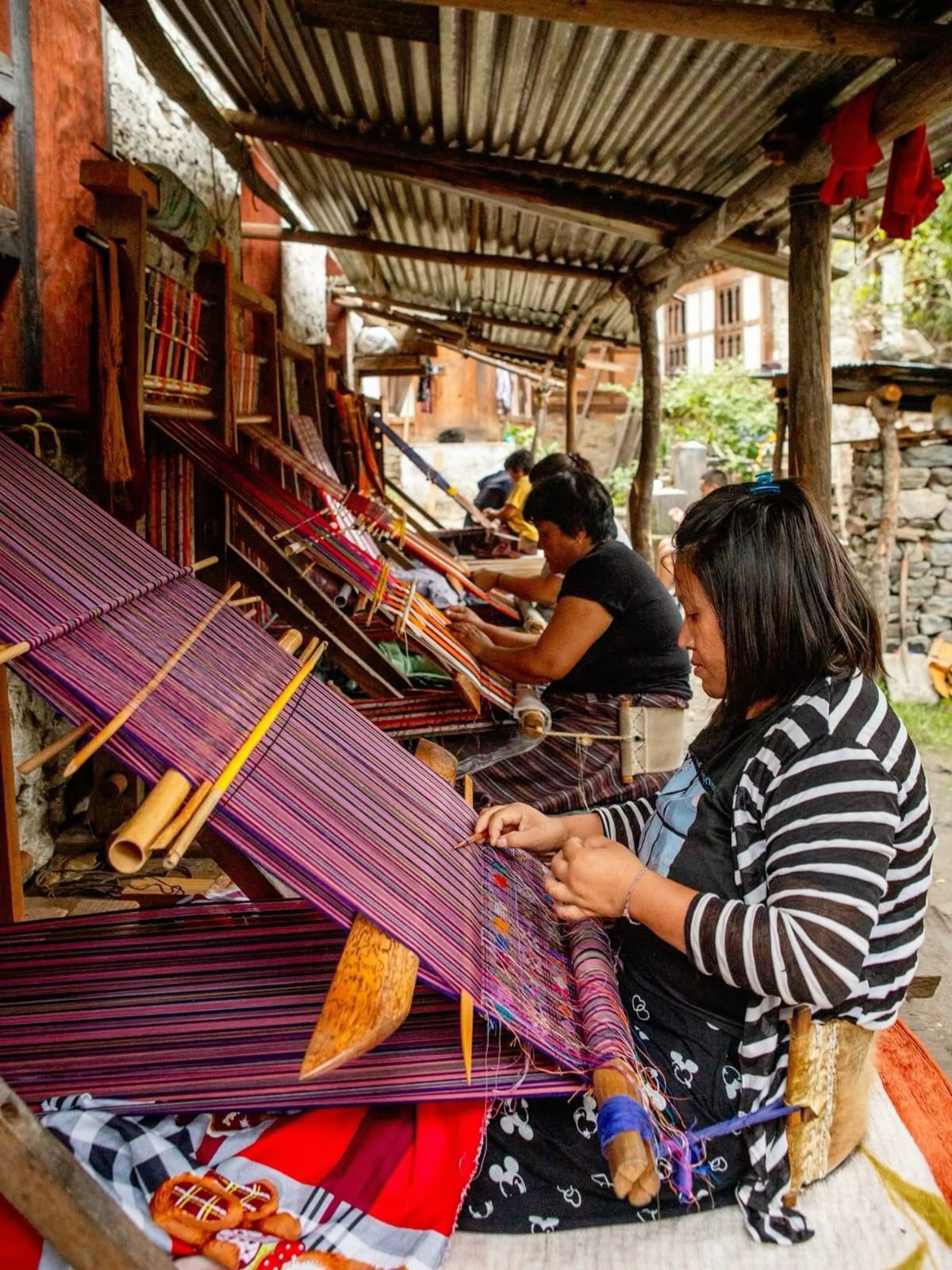
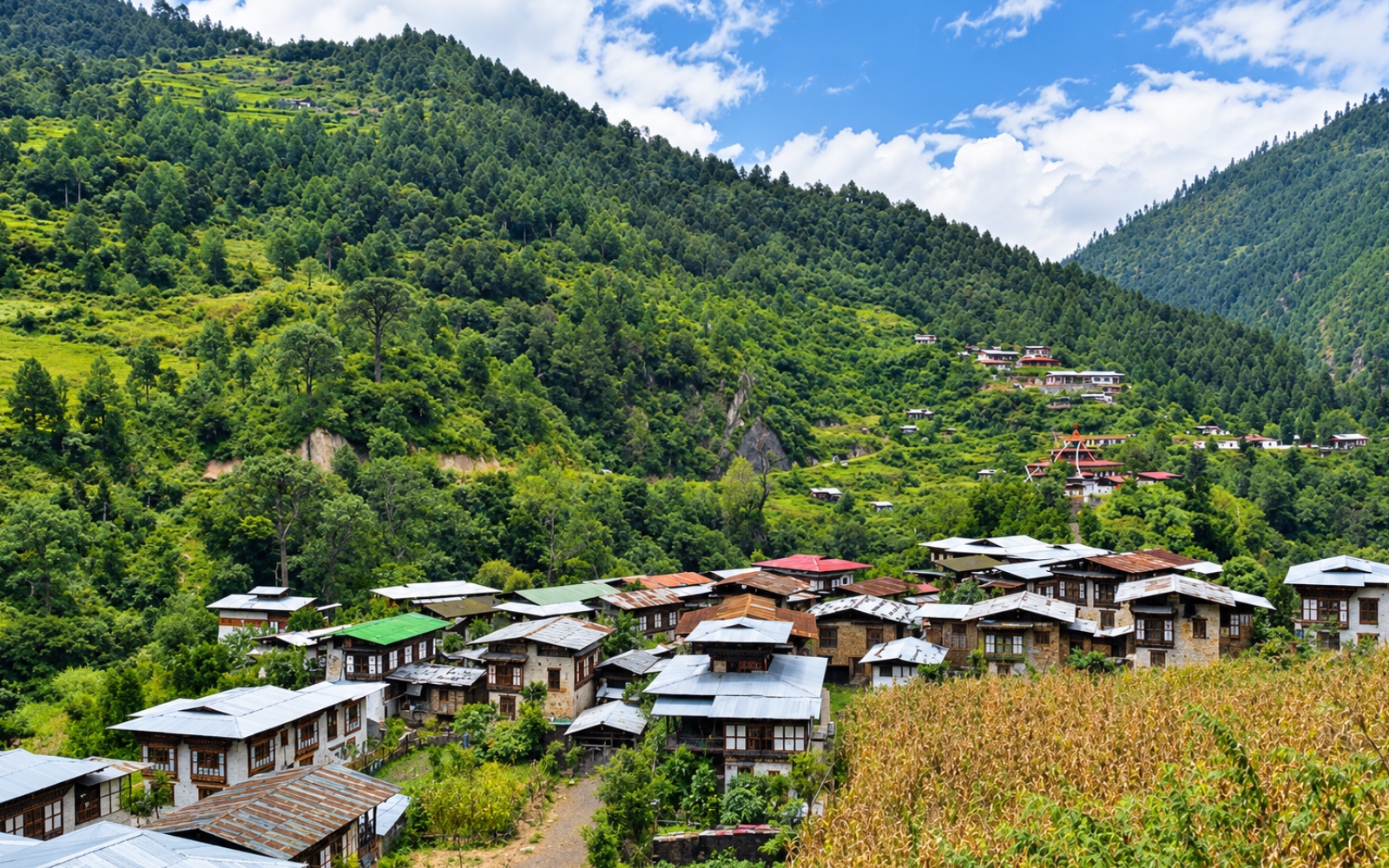
In the hills of Lhuentse, a district in Bhutan's northeast, the sound of a wooden beater striking the warp carries across the village of Khoma. Women sit at their looms and build, thread by thread, the kishuthara: dense silk brocade that will one day be worn at a wedding or a festival.
The kishuthara is a style of kira, the ankle-length wrapped dress Bhutanese women wear on formal occasions. It is among the most valued textiles in the country, and Khoma is its home. The village sits about 11 kilometres east of the district headquarters in Lhuentse, the ancestral region of Bhutan's royal family.
A Cloth That Began as a Gift
Khoma tells it this way. At a trade fair in Tibet, the merchant Tshongpoen Norbu Zangpo gave an intricately patterned cloth to Yoesel Dema, a woman from Khoma who was staying at his home. She carried the idea home, wove a similar cloth from nettle fibre, and named it kishuthara, from ki-shu (nettle fibre) and tha-ra (weave). The women of Khoma learned from her and passed the skill down the generations.
The villagers also place the craft in a sacred story. One weaver recalls a tradition from the time of Azhi Jaza and Yoesel Dema, in line with Guru Padmasambhava's prophecies. Guru Padmasambhava is the eighth-century master credited with bringing Vajrayana Buddhism to Bhutan. Other accounts describe the textile itself as a divine gift linked to Azhi Jaza.
Written history is more modest about the dates. The textile is thought to go back at least to the seventeenth century, when a simple tunic was made from cotton and nettle rather than silk. Legend and history agree that this has always been women's work.
How a Kishuthara Is Made
Today's kishuthara is woven from silk on a backstrap loom. One end of the loom is tied to a post and the other is fastened around the weaver's waist, so she controls the tension with her own body.
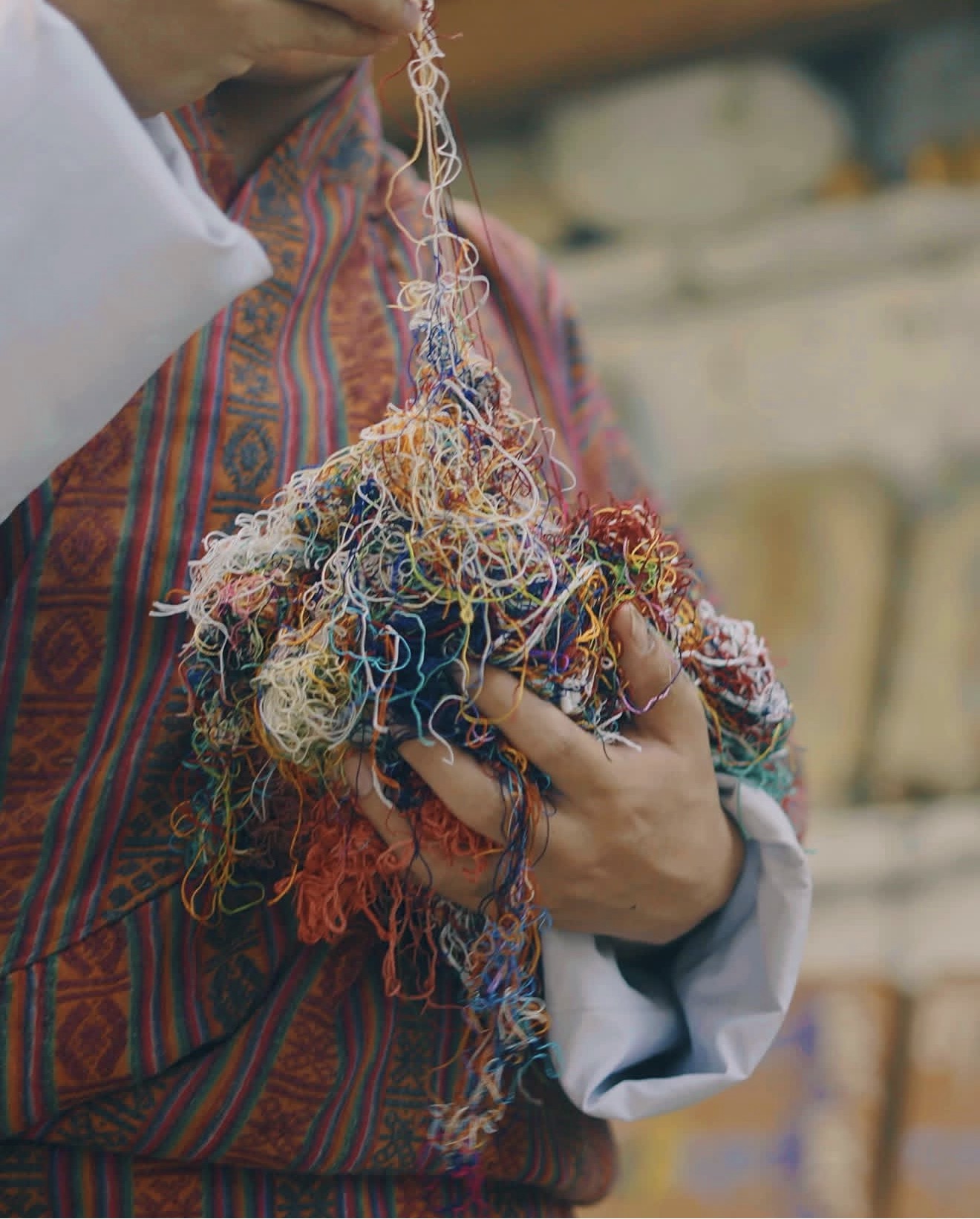
The patterns are made with a technique Bhutanese weavers call trima. Extra threads are wrapped around the base threads by hand to form raised designs, each one picked out with a thin bamboo stick. Some weavers still dye their silk with plants such as madder, rhubarb and indigo. A single kira can take about two months to complete.
For readers new to Bhutanese cloth, the wider story of the country's weaving traditions, dyes and techniques is covered in our guide to the textiles of Bhutan. The garment itself has its own history, traced in our look at how the kira has evolved.
The Women of Khoma
Weaving here is part of the rhythm of life. After the harvest, women sit in rows of six to ten with their backstrap looms under bamboo canopies in the empty paddy fields. Girls start as young as eight, learning beside their mothers. Local leaders estimate that about 70 percent of the households in Khoma gewog (subdistrict) weave.
It is also a livelihood and a source of standing. Weavers say the income lets them support their families, go on pilgrimage and build homes, and that the whole community applauds their skill. Many weavers describe the work as a kind of meditation, chanting or singing as they weave.
In December 2024, Sither Lhamo, a 90-year-old Khoma weaver who has woven for 76 years, became the first recipient of the Living Legend Award in Weaving Culture. Her Majesty Gyalyum Sangay Choden Wangchuck, the Queen Mother, presented the award at the Royal Textile Academy in Thimphu. Sither Lhamo received a certificate, a statue of Tshepamey, the Buddha of Long Life, and Nu 100,000 (approx. USD 1,000). The academy says the award is given on merit alone and not every year.
Patterns as a Signature
The patterns are Khoma's signature. Weavers have named designs after the horse, the betel nut tree, the owl and the flying bird, alongside flowers, palaces and thunderbolts. Every piece carries its weaver's own mark, and as the occasion grows more important, so does the density of the pattern.
A New Generation Picks Up the Tale
Today the legend is travelling beyond the village. Young Bhutanese filmmakers and musicians are drawing on it for stories and for patterns. Lungten's recent music video tells how kishuthara began in just a few minutes, short but powerful, and brings the story of Yoesel Dema to an audience that may never have sat at a loom.
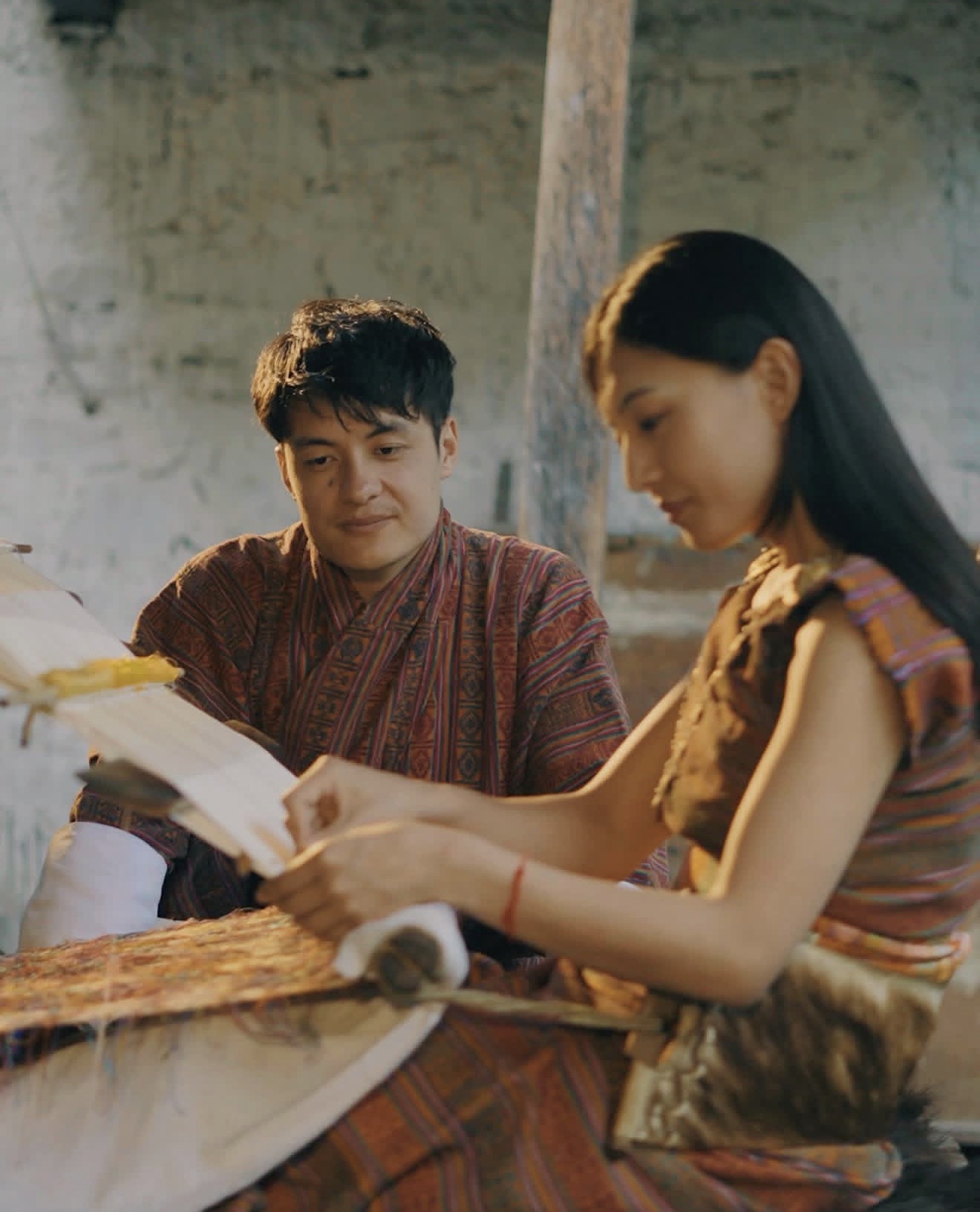
“Dear Yoesel Dema,
In your soul is already woven
the patterns of kishuthara.
And may I, Norbu Zangpo,
Lend you a light to find it.”
-thelungten
That matters for the craft's future. Khoma's weavers face real pressures, from limited market access and material shortages to the strain of long hours at the loom. Many young people leave for jobs in Thimphu or abroad after finishing school, and some weavers worry there may be no one to take their place.
There are efforts to respond. A weaving centre opened in the village in 2024 with support from the United Nations Development Programme. It is managed by Khoma's kishuthara group and earned around Nu 900,000 (approx. USD 9,300) during the tourist season. The village study recommends collaborations between weavers and designers to create modern designs using traditional techniques. A song or film that sends a young person back to the story, or to the loom, carries that idea forward.
One Thread, Many Hands
A gift cloth, a woman who wanted to recreate it, and a village that never stopped weaving: that is the thread running through kishuthara. Every kira that leaves Khoma carries the legend with it. Whether that continues will depend on how many of Khoma's girls still choose to sit beside their mothers at the loom.