
The history and evolution of money in Bhutan
The legal currency of Bhutan, Ngultrum (symbol: Nu., code: BTN) was launched in 1974.
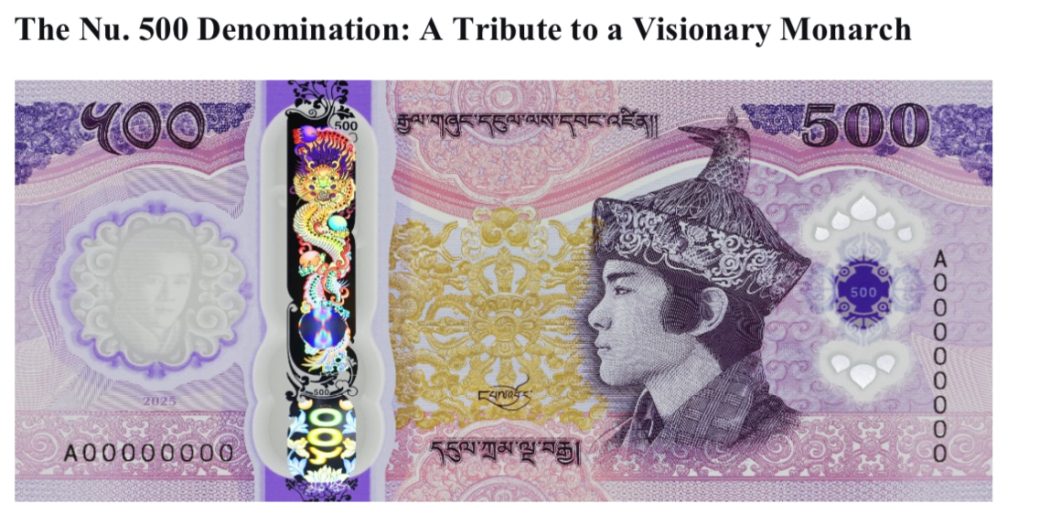
Update on 12th November 2025:
In a landmark announcement, the Royal Monetary Authority of Bhutan has unveiled a new series of Ngultrum banknotes to commemorate the 70th Birth Anniversary of His Majesty the Fourth King, Jigme Singye Wangchuck. These next-generation notes, made from sustainable and durable polymer material, symbolise Bhutan’s blend of tradition and innovation. Beyond their advanced security features, each denomination serves as a visual tribute to the Wangchuck dynasty and the nation’s spiritual and cultural heritage — from Trongsa and Punakha Dzongs to the majestic Tashichho Dzong. As they enter circulation in January 2026, the notes will not only enhance the nation’s currency system but also carry forward Bhutan’s story of unity, reverence, and the timeless values of the Pelden Drukpa.
There was a time not long ago in Bhutan when the barter system was popular.
So if I wanted rice, and you wanted wool, we’d swap items and call it a day. There was no currency system.
The common commodities were rice, butter, cheese, wool, and other local produce—exchanged among Bhutanese according to their needs.
The first silver coins were introduced towards the end of the 18th century, primarily for trade with the Indians and Tibetans.
Significantly later, alloyed silver, copper, and brass coins were released, used for minor local purchases.
Known as ‘Ma-trum’ or ‘Che-trum’, these coins were issued by tribal chiefs and not the Bhutanese government.
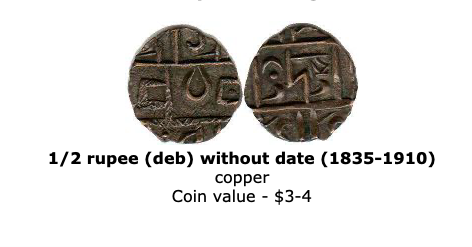
Into the 20th century, coin production continued through the reign of the first king, Druk Gyalpo Ugyen Wangchuck.
It was only in 1928, during the reign of the second king, Druk Gyalpo Jigme Wangchuck, that machine-struck silver and copper coins were introduced, launching the era of modern coinage in Bhutan.
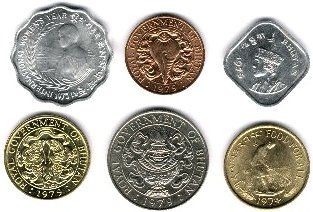
Nonetheless, the currency was limited, and the barter system was still the primary means of transaction. In fact, even government officials were paid in kind and not cash.
Furthermore, until the 1960s, textiles could be used to pay taxes and fines.
It was only during the mid 1950s, during the reign of the third king, Druk Gyalpo Jigme Dorji Wangchuck, that money became more mainstream.
More silver coins were pumped into circulation. King Jigme Dorji Wangchuck used his father’s moulds, except with nickel alloy as material for the coins.
The Bank of Bhutan was established in 1968. This marked a stride towards full monetisation. At this point, salaries were paid with money, and not in kind anymore.
The Formal Launch of the Ngultrum
On April 6, 1974, a simple yet traditional ceremony took place in Thimphu for one purpose—to launch the Ngultrum (symbol: Nu., code: BTN) as the legal currency of Bhutan.
During the ceremony that coincided with the coronation of His Majesty the Fourth Druk Gyalpo, Jigme Singye Wangchuck, Her Royal Highness Ashi Sonam Chhoden Wangchuck introduced the first paper notes in the presence of His Majesty and the Cabinet.
The paper notes were released in the denominations of Nu. 1, Nu. 5, and Nu. 10.
Currency was standardised, so that 100 Chetrum was equal to 1 Ngultrum.
In 1979, the Ngultrum was officially pronounced the only legal currency of Bhutan.
Come 1982, the Royal Monetary Authority of Bhutan (RMA) was appointed to act as the central bank of Bhutan.
Then in 1983, all the notes and coins previously released by the Ministry of Finance became the jurisdiction of the RMA.
The History Behind the Name
There are three main theories as to how the name Ngultrum came about:
1) Dngul-Tam. ‘Dngul’ means silver and ‘Tam’ means distribution. The implication is self-explanatory.
2) Ngul-Trum. ‘Ngul' means silver, whereas ‘Trum’ means ‘Tangka’, referring to a Tibetan silver coin that was in circulation since the mid-1600s.
3) A derivation of ‘Taka’. Tanka, or Tangka, was a currency majorly used in Asia, especially on the Indian subcontinent and Tibet. It eventually became a currency of the Silk Road.
So which do you think makes the most sense?
Present Day
The first series of banknotes that the Bank of Bhutan issued were all the same size. As a result, rural folks had trouble differentiating one from another. To tackle this problem, in 2006, the RMA released bank notes of different designs, colours, and sizes.
In 2013, new denominations were introduced to the Bhutanese: Nu. 1, Nu. 10, Nu. 20, and Nu. 50.
Nu. 1 and Nu. 10 were printed as hybrid substrate banknotes, a substance made from a mixture of paper and polymer. There is a polymer patch applied vertically over the height of the banknote, creating a transparent window.
Notes of Nu. 2 have ceased printing, and Nu. 1 has been converted into coin form.
Nevertheless, earlier notes of these denominations are still considered legal and can even now be used for purchases.
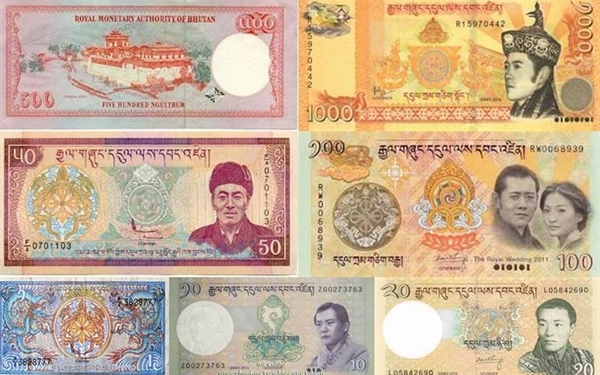
Present day, Bhutan issues bank notes in the denominations of Nu. 1, Nu. 5, Nu. 10, Nu. 20, Nu. 50, Nu. 100, Nu. 500 and Nu. 1,000.
Coins n the following denominations used to be available: Ch. 5, Ch. 10, Ch. 20, Ch. 25, Ch. 50, and Nu. 1.
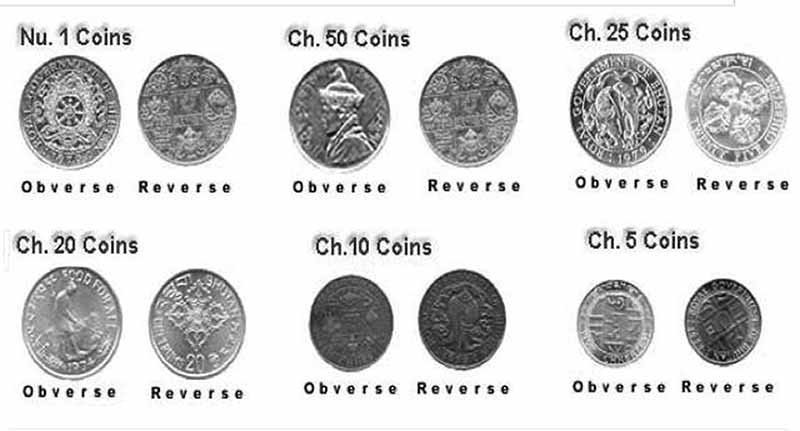
In 2003, Bhutanese coins were minted for the last time at the Royal Mint in the United Kingdom—5 million pieces of Ch. 25 coins, worth Nu. 1,250,000.
This decision was undertaken because the RMA discovered that not many people still use Bhutanese coins. In fact, there were people melting Ch. 25 coins because the metal itself was more valuable than the assigned value of the coin!
When purchasing something, the seller often offers change in the form of sweets, match boxes, or paper notes, instead of coins. This has become the norm.
However, the RMA is of the opinion that the usage of coins could curb the manipulation of prices in the market.
As such, they organised a campaign to popularise coins in 2005.
Teams were sent into different sectors of Thimphu to distribute packages of coins of different denominations.
Unfortunately though, the initiative was unsuccessful. It seems like most Bhutanese are not interested in using coins anymore.
But that’s not necessarily a bad thing. As we can see, the evolution of money in Bhutan has come a long way, and it’s a reflection of the maturing of society.
Therefore, we may aspire for money to continue evolving as times advance and demands change, including in the tranquil Kingdom of Bhutan.
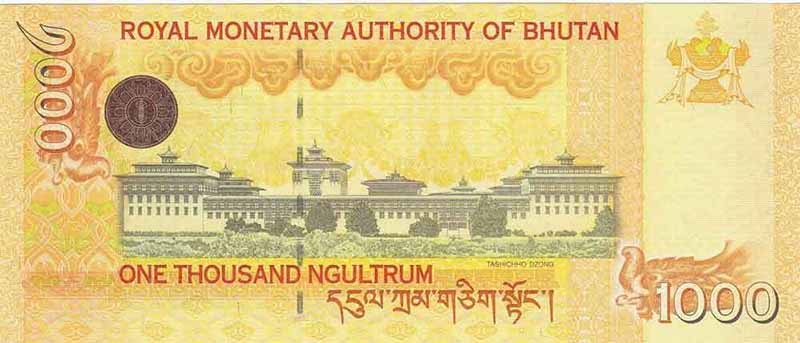
The Ngultrum is pegged at par with the Indian rupee. Thus, Rs 100 is commonly accepted in Bhutan. If you are a tourist travelling to Bhutan, do note that the banks only accept currency exchange for 10 major currencies; U.S. Dollar, Pound Sterling, Euro, Japanese Yen, Swiss Franc, Hong Kong Dollar, Canadian Dollar, Danish Kroner, Australian Dollar and Singapore Dollar.
Commemorative notes
In celebration of the historic Royal Wedding of King Jigme Khesar Wangchuck and Queen Jetsun Pema on 13th of Oct 2011, the Royal Monetary Authority of Bhutan issued the Royal Wedding Commemorative Nu. 100 Notes. You can purchase the commemorative note from Bhutan Natural online store.