
Former PM Tshering Tobgay Calls For Establishment Of Council To Protect World’s 'Third Pole'
He spoke about the urgent need to establish a high-level, intergovernmental organisation that could consist of all eight countries located in the region.
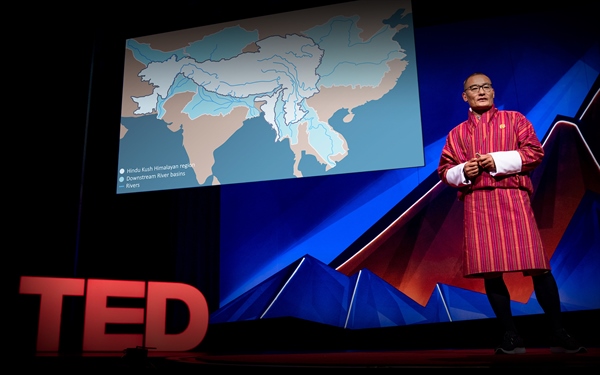 Dasho Tshering Tobgay's talk at the TED Summit has garnered over one million views.
(Source: TED)
Dasho Tshering Tobgay's talk at the TED Summit has garnered over one million views.
(Source: TED)
By Kinley Yangden | Daily Bhutan
In a speech delivered at a TED Summit last month, former prime minister Tshering Tobgay proposed to create a new intergovernmental agency tasked to protect the world’s third largest repository of ice.
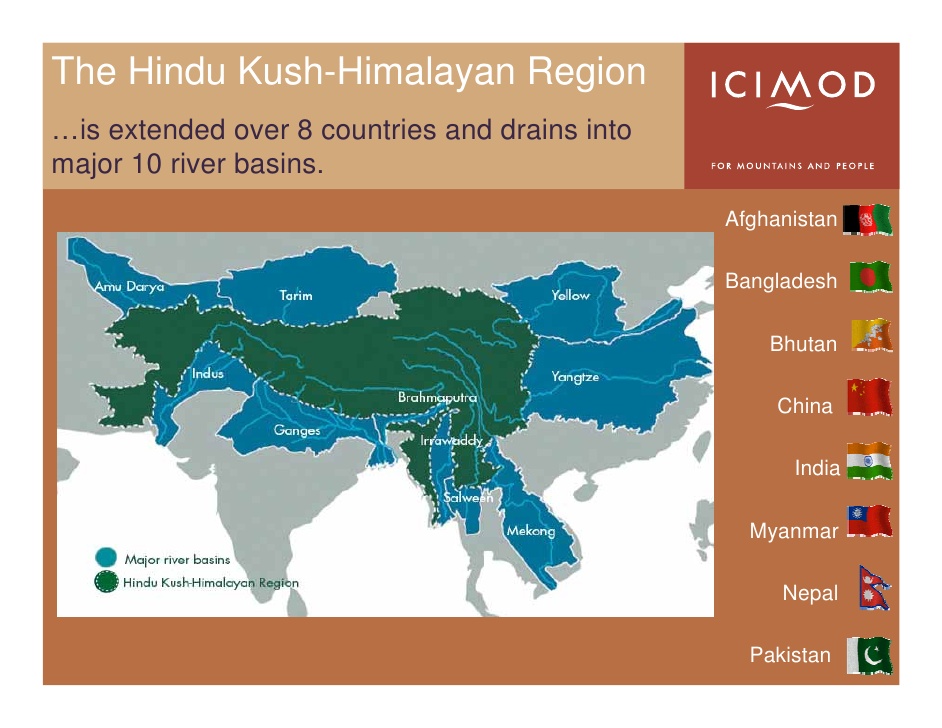
This repository is informally known as ‘The Third Pole’, which refers to the Hindu Kush Himalaya region. It is the largest repository of ice after the North and South Poles. Just like the two Poles, the glaciers in the Hindu Kush Himalaya region are vulnerable and threatened by global warming.
In his 15-minute talk in Edinburgh, Scotland, Dasho Tshering Tobgay spoke about the urgent need to establish a “Third Pole Council, a high-level, intergovernmental organisation” that could consist of all eight countries located in the region.
This council, he hopes, will be responsible in working together “to monitor the health of the glaciers, to shape and implement policies to protect our glaciers, and by extension, to protect the billions of people who depend on our glaciers.”
He also called out India and China, “two powerful giants who must reduce their own greenhouse gases, control their pollution, and lead the fight”.
Dire effects of melting glaciers
In his speech, which has been viewed over one million times, Dasho Tshering Tobgay said that one-third of the ice in this region could melt by the end of the century, but only if global warming can be contained to 1.5 degrees centigrade over preindustrial levels. However, if the current situation prevails, a full two-thirds of the glaciers in the region could disappear.
Global warming also means that the Himalayan mountains could receive more rain and less snow. Rain will melt the ice and hurts the health of the glaciers.
Graphic: ICIMOD
In addition, he said that pollution in the region has increased the amount of black carbon that is deposited on the glaciers. Black carbon is like soot. It absorbs heat and accelerates the melting of glaciers.
The consequences that he painted are dire. Not only are the 240 million people who live in the Hindu Kush Himalaya region affected, such as Afghanistan, Pakistan, India, China, Nepal, Bangladesh, Myanmar and Bhutan, people who live in countries downstream are impacted as well.
This is because 10 of their major rivers originate in the Hindu Kush Himalaya mountains. The Hindu Kush Himalaya mountains are also called the “water towers of Asia”, and are critical in providing drinking water and water for agricultural purposes to 1.6 billion people living downstream.
Effects of melting glaciers may also potentially cause political destabilisation, resulting in conflict over water in a region that has three nuclear powers: China, India and Pakistan.
“The Hindu Kush Himalaya mountains is like the pulse of the planet. If the region falls sick, the entire planet will eventually suffer.
“We have to work together, because thinking globally, acting locally does not work.
“We’ve tried that in Bhutan. We’ve made immense sacrifices to act locally and while individual localised efforts will continue to be important, they cannot stand up to the onslaught of climate change,” said Dasho Tshering Tobgay.