

Gasa lives the organic dream
Organic dream to be lived in!
It all started by default.
In the past, being cut off from other parts of the country since the dzongkhag was not connected by road, farmers in Gasa had no access to chemical fertilizers; they were forced to use only organic manure to grow crops.
Then in 2004, former agriculture minister, Sangay Ngedup, visited the dzongkhag and assessing the situation declared Gasa an organic dzongkhag. Farmers in Gasa still do not use chemical fertilizers or pesticides.
However, Gasa was certified to produce and sell organic produce only last year with a farmers’ group, Rangshin Sonam Detshen from Khatoed gewog, marching towards the vision of going 100% organic. Bhutan Agriculture and Food Regulatory Authority (BAFRA) certified it as the first organic group in the country last year.
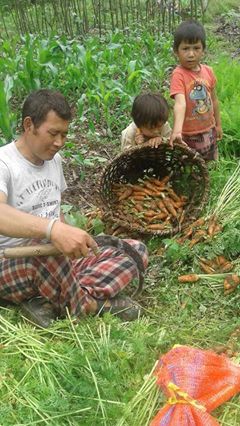
The group owns 25 acres of land where they grow potatoes and garlic as certified organic products. From this year, the farmers have started cultivating red carrots as well.
The group comprising 52 members has demarcated land for production. Each member works on 20-30 decimals and gathers produce at the gewog center. The members have to pay Nu 100 each every month as membership fee.
“We could not imagine getting all those heavy loads of chemical fertilizers. We also could not carry loads of processed groceries due to unavailability of road back then. By default, agricultural practices became organic in Gasa,” says Gasa Dzongda, Dorji Dhradhul.
The Dzongda says that even if they had wanted to buy farming chemicals, it would have been unaffordable.
“With the development of road in 2012, we saw the biggest opportunity for Gasa to start living the organic dream,” says Gasa Dzongda.
The Dzongda fears that if they delay the initiative from gaining momentum right now, there are chances people might start using chemical fertilizers.
“The time is now.”
Meanwhile, farmers of the first organic group in the country are a contented and diligent lot.
Gyem Lham, 58, a member, is the only one to work on her farm. Both her elder children have settled down in different places and her youngest child is studying in high school. “I became part of this group so that in future I can pass it down to my children. It is a good and healthy initiative. We are consuming our produce and also earning through sale,” says Gyem Lham.
Like Gyem Lham there are many others who are happy about the group being certified as organic because for the grassroots community in Gasa, the certified organic dream has been realized after a huge struggle that lasted a decade.
On February 9, Rangshin Sonam Detshen secured its first biggest commercial deal when it signed a memorandum of understanding (MoU) with 11 major hotels and restaurants in Thimphu, including Taj Tashi, Druk Hotel, Aman Kora, Termalinca, Hotel Ariya, and Pedling.
The group now supplies vegetables to these major hotels every week. Every Tuesday, the products are brought to Thimphu and the next day distributed to the hotels in presence of a staff from the agriculture ministry and one member from the gewog.
The group signed a MoU for the supply of 54,000Kgs of potatoes, 3,000Kgs of garlic and approximately 17,000 Kgs of red carrots for 11 hotels a year.
The group charges Nu 123 per Kg of garlic and Nu 63 per Kg of carrot. Nu 3 per Kg of produce is included as transportation charge and daily allowance of farmers bringing the produce to Thimphu.
The hotels have committed to support organic farming provided the producers can ensure consistency in supply and quality. The group also informed them that it would be able to supply the produce over a period of eight months from the next season.
However, challenges remain to the Gasa organic dream. Farmers face transportation problems among others.
“It is difficult to get vehicles in Gasa and though we have gewog bolero, it costs Nu 6,000 to reach Thimphu. The sale of our produce hardly covers vehicle charges,” says Gasa Mangmi Sangay Tashi.
Farmers also face issues such as unwillingness of group members to stay back in Thimphu and sell their produce.
According to the Dzongkhag Agriculture Officer, Tshering N Penjor, no one volunteers for the task since the expenditure is high and they have to pay for own accommodation. “For now it is quite difficult to send someone for marketing just from the amount generated from the produce,” he said adding that to solve this problem, they will have to look for more consumers and increase the weekly demand.
“We need to discuss further with hoteliers, schools and the military, which provide food,” says Tshering N Penjor.
The chairperson of the group, Tshering Zangmo, says farmers also approach her complaining about their produce getting spoiled.
“Due to limited demand, we cannot take all the produce to the market and since we take the produce in turns, they have trust issues. Most of us are illiterate farmers so it is hard for us to understand about team work, strategizing and execution,” she says.
To solve the issue, the dzongkhag has proposed for a cold storage house to prevent produce from damaging.
“Such logistical issues however can be addressed once the market is properly established and the volume of produce plus the supply season is extended in the future,” says Tshering N Penjor.
Although the agriculture ministry is supporting farmers, it is not up to expectations, according to the Dzongda. “The ministry can be more proactive,” he says, “The dzongkhag is doing its best. This concern is not just for Gasa, it is about the whole country. The authorities can definitely do more.”
Khamed Gewog has also formed a small organic group with 12 members but their produce is not certified. In Lunana and Laya, people have already started implementing protected agriculture under greenhouse.
Farmers grow vegetables like chilies and cucumber in greenhouses; these normally do not grow on high altitudes. There are 18 green houses in Laya and three in Lunana. Very soon, the dzongkhag will supply 15 green plastic sheets to Lunana to build green houses.
In order to sell more organic produce, Gasa dzongkhag is also proposing the need to go for contract farming. In contract farming, the consumers will place orders for certain quantities and farmers will produce only the required amount.
“In the near future, when business has grown and farmers get better prices, more people will be motivated to do better in agriculture. Later, apart from selling produce locally, we could start exporting,” says Gasa Dzongda.