

Locally-grown fruits struggle to find market

Organic finding ways to be in market
Locally-grown fruits struggle to find market

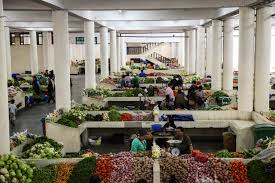
 It’s a rainy weekend in Thimphu. Dark clouds hover in the sky. Shoppers throng the Centenary Farmers Market (CFM).  It is a huge crowd. Sangay Dema, a 35 years old corporate employess, makes sure she visits very nook and corner of CFM. She starts buying organic vegetables and fruits from the top floor of CFM. She scans the length and breadth of the floor and makes her way to the right corner. There are fresh fruits in a bamboo basket. Customer preference is changing. Organic and locally- grown fruits are in high demand.

Sonam look at a basket where there are fresh peaches piled like miniature pagodas. Nu 60 a kilogram is way too expensive. She lets out a slow breath of disappointment.

 “Fruits are expensive, but I prefer local fruits,” she said. She is now in deep dilemma.

Aum Tshering, 52, a vegetable vendor, said peaches and apples are grown on a wide scale in western parts of the country today. Her mouth is red with betel juice. “I brought about 35 kilograms of peaches to sell from Paro,” Aum Tshering said. “One of my cousins there has a plot where he grows only peach and apple.”

Like Aum Tshering’s cousin, many farmers today are venturing into fruit business. And they do it in a large scale. Aum Tshering also sells organically-grown cucumbers. “I have a vegetable garden and I sell cucumbers from my garden.” Cucumbers are Aum Tshering’s favourite and it’s a delicacy, especially at this time of the year. After buying some vegetables from the top floor, Sonam Dema goes downstairs towards the fruits section of CFM.

There, she buys watermelon and mangoes. They are her children’s favourite fruits. She pays Nu 60 for a kilogram of watermelon, and the same for mangoes.There are litchis, grapes, pineapples, apples, oranges and sugarcanes here in this section of CFM.  They are, however, all imported, mostly from India and the US.

A fruit vendor from Punakha, Chuki is 39. She is carrying a child on her back. Chuki said that she doesn’t know where these fruits come from.“We are told that they are brought from India and some from the US,” Chuki said. “We have good supply of imported fruits all the year round and it is mostly bought by people can afford it.”

 Karma Choki, 47, from Hawadara in Tsirang, grows fruits such as papaya, sugarcane, mango and pineapple. She has a stall near her house and sells fruits from there to the travellers. “Growing fruits in a larger scale is not feasible in this weather because most of the fruits rot fast and end up as cow feeds,” Karma Choki said.

But for Padam Lal Nepal from Rangthaling, who has been growing and selling oranges for 30 years, it is a different story. Padam Lal Nepal owns about 300 orange trees. Every fruiting season, he gives his orchard on hire to people who are interested to buy.“Without a cold storage facility, it is difficult to harvest on my own,” he said. “If the government could provide or facilitate us with a cold storage facility, we would prefer to sell in the local market instead of letting other people take fruits outside the country”.


“Like vegetable cooperatives, forming fruits cooperatives with certain facilities would help meet demand for fruits in the country,” he said. “Farmers are capable of doing large scale farming, but they do not want to take the risk due to lack of facilities.” A vegetable vendor in Tsirang said that he would prefer to sell imported fruits for their color and durability. “But it’s difficult to sell locally-grown fruits because they perish too soon.”


The Officials from the Department of Agricultural Marketing and Cooperatives (DAMC) said that despite the time that takes to reach fruit self-sufficiency, there are a good number of fruits that are exported outside the country. “Fruits such as apple and oranges are exported to Bangladesh and India,” officials said. Records with DMC show that last year, about 1,387.4 metric tonnes (MT) of apples worth USD 901,823 were exported to Bangladesh. About 5,385.6 MT of apples worth of USD 3.5 million were exported to India as well. About 26,728 MT of oranges were exported to Bangladesh, which amounts to USD 1.04 M last years. During the same time, about 10,101 MT of oranges were exported to India.
Last year, about 610 MT of cardamoms were exported to Bangladesh, which fetched about USD 1.03 million.




Related Posts

All you need to know about alcohol consumption in Bhutan

Discover alcohol in Bhutan, from ara and local beer to whisky and wine, plus current Tuesday sales rules, drinking laws...

Oct 06, 2026 10:57

From Chhukha to Eurovision Asia: Thukten's Journey to Bhutan's...

Thukten Nyendra, a 24-year-old Bhutanese singer-songwriter whose journey from a childhood love of music to winning...

Aug 19, 2026 16:53

Passion & Purpose: Finding Meaning on Bhutan's Mountain Trails

Discover how Bhutanese trekking guide Bijay Ghalley found purpose in the mountains, sharing stories of resilience,...

Aug 06, 2026 13:07

Bhutan’s Mountain Man Takes on the World’s Toughest Trails

Bhutanese ultramarathon runner Jigme Tenzin completed the legendary 268km Snowman Trek in just five days and is now...

Jul 28, 2026 10:05

A Chance Encounter Led Me Back to Bhutan, and Changed How I See...

A personal journey of reconnecting with a childhood caregiver leads to an unforgettable experience exploring Bhutan's...

Jul 15, 2026 21:51

Passion and Purpose: A Bridge Between Cultures

A Bhutanese tour guide reflects on 13 years of guiding visitors, sharing memorable experiences, cultural traditions,...

Jul 13, 2026 10:46

Latest

News

Gelephu Prepares for 100,000 Visitors as 108 Stupas Rise in a Single Day

Gelephu expects around 100,000 visitors on 1 November as 108 stupas rise in a single day. Hotels are full and police have set traffic and...

Oct 09, 2026 14:18

Gongthung School Builds Local Food Supply Chain With Village Farmers

Gongthung School is buying vegetables, eggs and dairy directly from village farmers, supporting student meals and rural incomes in eastern...

Oct 08, 2026 10:21

Features

All you need to know about alcohol consumption in Bhutan

Discover alcohol in Bhutan, from ara and local beer to whisky and wine, plus current Tuesday sales rules, drinking laws and tourist...

Oct 06, 2026 10:57

From Chhukha to Eurovision Asia: Thukten's Journey to Bhutan's Biggest Music Stage

Thukten Nyendra, a 24-year-old Bhutanese singer-songwriter whose journey from a childhood love of music to winning Rhythm of Bhutan will...

Aug 19, 2026 16:53

Business

From Australia to Wangdue: How a Bhutanese Couple Built a Business Back Home

After more than seven years in Australia, Yeshey Choden and Dawa Gyeltshen returned to Bhutan to raise their daughter and build Acho Daka, a...

Aug 11, 2026 15:45

Bhutan recognised first four Geographical Indication products

Bhutan has officially registered its first four Geographical Indication products, protecting traditional goods while creating new...

Jul 06, 2026 14:29

Sports

Three Bhutanese Athletes Reach Quarterfinals at Aichi-Nagoya Asian Games

Kinley Tshering and Lam Dorji reach the Asian Games archery quarterfinals as Kinga Wangmo records a first for Bhutanese women’s boxing.

Oct 01, 2026 14:45

Bhutan and Malaysia Sign First Olympic Cooperation MoU at Asian Games

Bhutan and Malaysia have signed their first National Olympic Committee cooperation agreement during the Aichi-Nagoya 2026 Asian Games, with...

Sep 22, 2026 17:40

Tourism

Phuentsholing Moves From Transit Point Towards Tourism Destination

Phuentsholing has launched a tourism brand, digital visitor services and new experiences aimed at encouraging travellers to stay longer.

Sep 30, 2026 12:30

A Historic Manor in Lhuentse Finds New Life as Jigme Namgyal Museum

The Jigme Namgyal Museum in Lhuentse preserves sacred spaces, historic artefacts and the legacy of Desi Jigme Namgyal in an restored...

Sep 28, 2026 09:59

Lifestyle

Thruebab in Bhutan: Why Blessed Rainy Day Is About Water, Not Rain

Discover the meaning of Thruebab, Bhutan’s Blessed Rainy Day, and the beliefs and bathing traditions behind this September celebration.

Sep 23, 2026 15:18

A Different Way of Seeing: Returning to Bhutan with Leica

What changes when you slow down behind the camera? Discover a more mindful approach to photography in Bhutan.

Sep 07, 2026 11:06

GMC

Gelephu’s Shivalaya Mandir Prepares for Golden Transformation

Bhutanese donors have given over Nu 7 million to gild Gelephu’s Shivalaya Mandir in gold by royal command, ahead of a celebration on 1...

Oct 09, 2026 11:21

Child Safeguarding Gains Focus in Gelephu Schools

A school programme in Gelephu is strengthening awareness of child safety, sexual exploitation, harassment, reporting mechanisms and...

Sep 11, 2026 10:27

Subscribe to our newsletter

Never miss out on new happenings and news stories!

newsletter

Download Daily Bhutan Mobile App

Connecting with us just got easier!

android app
apple app