
Bhutan Becomes First Country to Adopt Gross Ecosystem Product Nationally
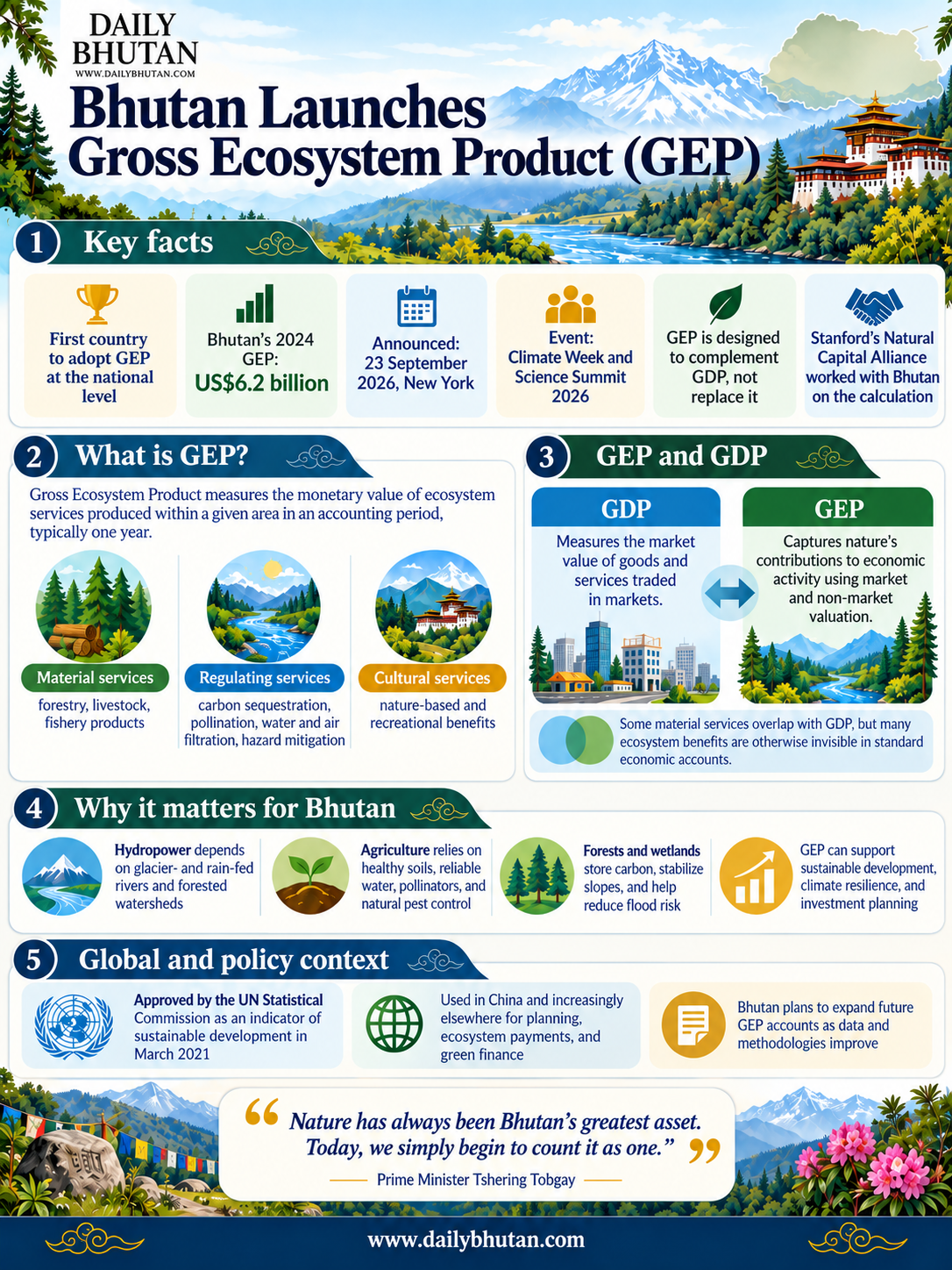
Bhutan has become the first country to adopt Gross Ecosystem Product nationally, valuing its ecosystem services at approximately US$6.2 billion for 2024 and introducing a new measure alongside GDP and Gross National Happiness.
Bhutan has become the first country to adopt Gross Ecosystem Product, or GEP, at the national level, introducing a new measure that places a monetary value on the benefits people and the economy receive from nature.
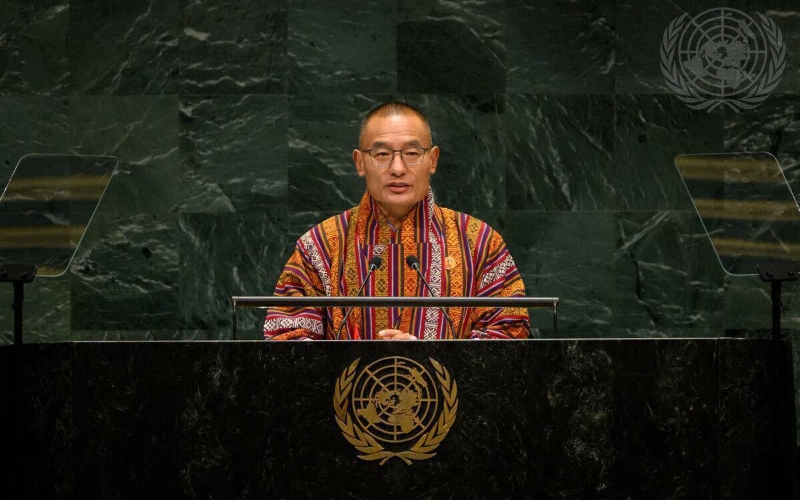
Prime Minister Dasho Tshering Tobgay announced in New York that Bhutan’s GEP for 2024 was approximately US$6.2 billion. The announcement was made during Climate Week and the Science Summit 2026 on the 23rd September 2026.
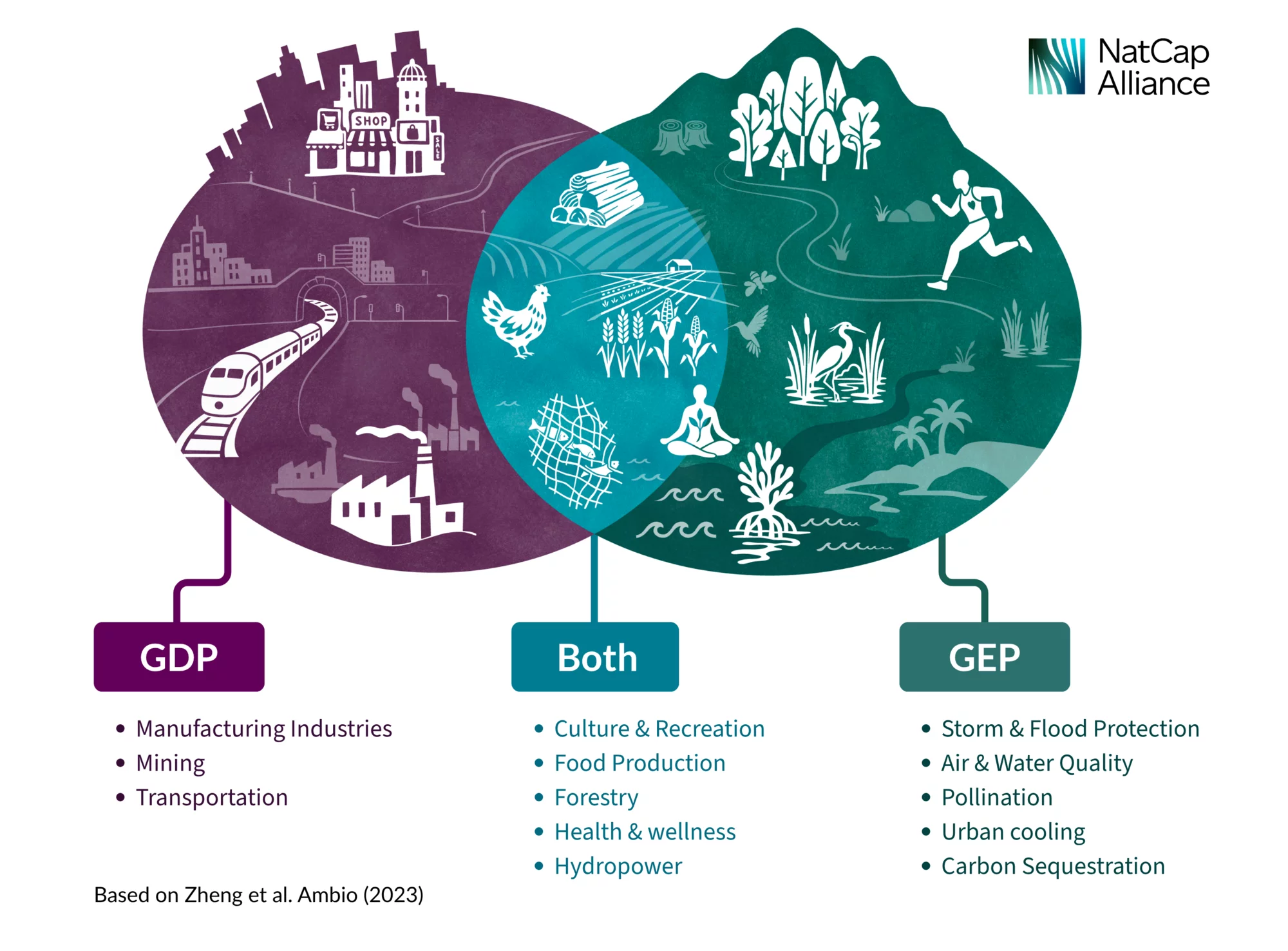
GEP is designed to complement Gross Domestic Product, rather than replace it. While GDP measures the market value of goods and services produced in an economy, GEP measures the monetary value of ecosystem services produced within a particular area over an accounting period, typically one year.
“Nature has always been Bhutan’s greatest asset. Today, we simply begin to count it as one,” the Prime Minister said, according to the press release issued by his office.
What does Gross Ecosystem Product measure?
Nature supports economies in ways that are not always fully reflected in conventional economic statistics.
Forests can store carbon and regulate water. Healthy soils support agriculture. Ecosystems can reduce flood risks, filter pollution and support tourism. Many of these services have substantial economic value even when they are not directly bought and sold.
Stanford University’s Natural Capital Alliance defines GEP as a statistic summarising the value of nature’s contributions to economic activity. It brings different ecosystem services into a common monetary measure so they can be tracked alongside conventional economic indicators.
GEP can include three broad types of ecosystem services.
Material services include products such as forestry, livestock and fisheries. Regulating services include carbon sequestration, pollination, pest control, air and water filtration, and protection from natural hazards. Non-material services include cultural and recreational benefits such as ecotourism.
Some material services are already captured within GDP because they are traded in markets. Other benefits, particularly regulating and cultural services, can remain largely invisible in conventional economic accounts.
GEP therefore does not represent an entirely separate economy from GDP. Instead, it provides another way of understanding how economic activity and human wellbeing depend on functioning ecosystems.
How is a value placed on nature?
Different ecosystem services cannot simply be added together in physical terms. A quantity of clean water, for example, cannot be directly combined with tonnes of carbon sequestered or the recreational value of a landscape.
GEP addresses this by converting different ecosystem services into monetary values before combining them into an overall measure.
According to Stanford’s Natural Capital Alliance, valuation methods can include market prices where these are available, the cost of replacing an ecosystem service with infrastructure, and other economic valuation approaches appropriate to the service being measured.
The methodology focuses on the benefits from ecosystems that are ultimately used or experienced by people. Countries can select individual ecosystem services according to their circumstances and add further services as their data and technical capacity improve. GEP accounts can also be developed to be consistent with the United Nations System of Environmental-Economic Accounting.
Bhutan’s government has said future editions of its GEP accounts will expand their coverage as data and methodologies mature.
Why the measure matters for Bhutan
The relationship between ecosystems and economic activity is particularly significant in Bhutan.
Forests, rivers, soils and mountain landscapes support livelihoods and economic activities across the country. Changes to forests and water systems can affect agriculture, infrastructure and communities, while ecosystem services such as water regulation and carbon storage provide benefits that extend beyond easily observable market transactions.
By giving these contributions a monetary value, the government intends GEP to provide another source of information for sustainable development, investment decisions and climate-resilience planning.
The US$6.2 billion figure should therefore not be interpreted simply as an alternative version of Bhutan’s GDP. The two indicators measure different, although partly overlapping, things.
Stanford’s Natural Capital Alliance said Bhutan’s calculated GEP was about twice the size of its GDP. More importantly, GEP is intended to reveal economic values that can otherwise remain difficult to see when governments evaluate development choices.
A concept developed over more than a decade
While Bhutan is the first country to officially adopt GEP at the national level, the concept itself has been developing internationally for more than a decade.
The idea was first proposed in 2013 by Zhiyun Ouyang of the Chinese Academy of Sciences’ Research Center for Eco-Environmental Sciences and Chunquan Zhu, then representative of the International Union for Conservation of Nature’s China Office.
Researchers and institutions including the Chinese Academy of Sciences, University of Minnesota, Stockholm Resilience Centre and Stanford University subsequently contributed to its development.
In 2020, researchers published an English-language academic study applying GEP to Qinghai Province in China. The approach has since been used across China and increasingly elsewhere for purposes including land-use planning, environmental management, payments for ecosystem services and green finance.
Stanford says GEP received international recognition in March 2021 when the United Nations Statistical Commission approved it as an indicator of sustainable development.
Bhutan’s step is different in scale. Rather than applying GEP to a province, city or individual landscape, it has adopted the measure at the national level.
Building on Gross National Happiness
The new measure also has a clear connection with Bhutan’s longer-established development philosophy of Gross National Happiness, or GNH.
GNH has long sought to consider environmental conservation and human wellbeing alongside economic development rather than relying on economic growth alone.
At the New York event, Prime Minister Tshering Tobgay said: “For decades, Bhutan has believed that development cannot be measured by economic growth alone. By measuring GEP alongside GDP and GNH, we recognize nature as the foundation of our economy and wellbeing. What we measure, we value. What we value, we protect. And what we protect today will sustain Bhutan for generations to come.”
GEP adds a different dimension to that approach. GNH considers wellbeing through a broad development framework, while GEP specifically attempts to quantify the economic value generated by ecosystems.
The Prime Minister also described the reasoning behind the initiative in the government’s press release: “A country that only counts what it extracts will eventually have nothing left to count.”
From ecosystems to national decision-making
Bhutan developed its GEP accounts in collaboration with Stanford University’s Natural Capital Alliance, with support from the Enlight Foundation. Stanford said it is continuing to work with Bhutan’s National Statistics Bureau on using the measure in policy and financial decisions.
At the launch, the National Statistics Bureau was also recognised with the 2026 Natural Capital Young Leaders Prize for its work in advancing natural capital accounting.
International experience suggests that GEP can potentially inform several types of decision-making, including land-use planning, environmental management, payments for ecosystem services and green finance.
This means a GEP account can potentially do more than produce a headline monetary figure. Repeated over time, it can provide information about whether the ecosystem services supporting communities and economic activity are increasing, declining or changing, depending on the services included and the quality and consistency of the underlying data.
What comes next
Bhutan’s adoption of GEP establishes a national baseline, but its longer-term significance will depend on how the accounts develop and how the information is incorporated into decision-making.
The government has said coverage will expand as data and methodologies improve. Stanford’s Natural Capital Alliance is also continuing its work with the National Statistics Bureau to apply the measure in policy and finance.
For Bhutan, the introduction of GEP adds another measurement alongside GDP and Gross National Happiness. Each answers a different question.
GDP measures economic production. GNH provides a broader framework for considering national wellbeing. GEP seeks to identify the economic contributions generated by ecosystems.
The US$6.2 billion estimate is therefore only the beginning of Bhutan’s GEP story. The next question is how measuring nature’s contribution will influence decisions about development, conservation, investment and the management of the country’s natural resources.