
From Chhukha to Eurovision Asia: Thukten's Journey to Bhutan's Biggest Music Stage
Thukten Nyendra, a 24-year-old Bhutanese singer-songwriter whose journey from a childhood love of music to winning Rhythm of Bhutan will take him to the first Eurovision Song Contest Asia in Bangkok.
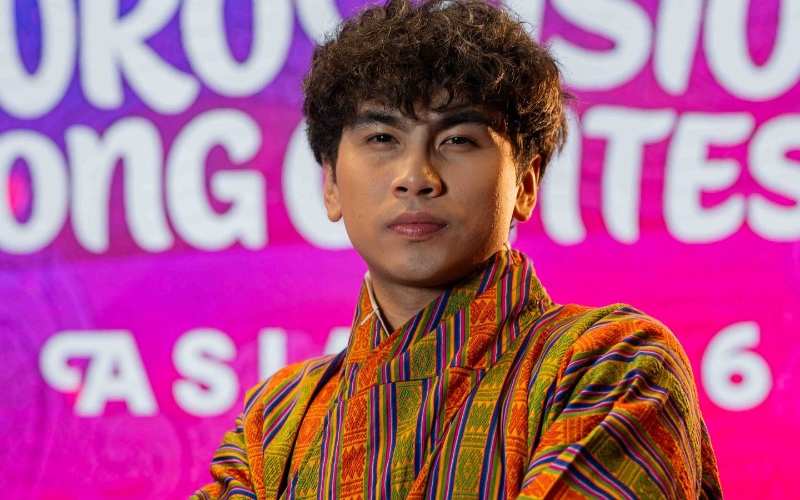
At 24, Thukten Nyendra is preparing to represent Bhutan at the inaugural Eurovision Song Contest Asia in Bangkok. His place on the international stage follows his victory at the first Rhythm of Bhutan singing competition, but his journey with music began much earlier.
From playing guitar and singing as a four-year-old to moving to Thimphu and pursuing music despite uncertainty about where it could lead, Thukten's story has developed over years of practice, songwriting and learning to trust his own choices.
In November, that journey will take him to Bangkok, where he will perform Lhayi Semo, or The Angel, as Bhutan makes its Eurovision Song Contest Asia debut.
A childhood interest in music
Thukten grew up in Chhukha, and his interest in music appeared at an early age.
His mother, Nidup Tshomo, remembers him playing guitar and singing when he was around four years old, although the family had little idea at the time that music would eventually become such an important part of his life.
“When he was around four years old, he used to play the guitar and sing. At that time, we couldn’t make videos of him, but we did take some photos. We never expected that he would grow to love music and want to pursue it.”
Years later, when Thukten was studying at Royal Thimphu College (RTC), that childhood interest had become a serious pursuit.
For his mother, however, the prospect of building a career around music came with practical concerns.
“When he was studying at Royal Thimphu College (RTC), he told us that he loved music and started practising. I told him that I could not fully support his passion for music because of the limited opportunities to pursue music in our country. I advised him that it would be better to find a job, and he seemed upset about it.”
Her concerns reflected a question familiar to many young artists. Passion alone does not guarantee a stable career, particularly in a small creative market.
Thukten decided to continue.
Moving to Thimphu and taking music seriously
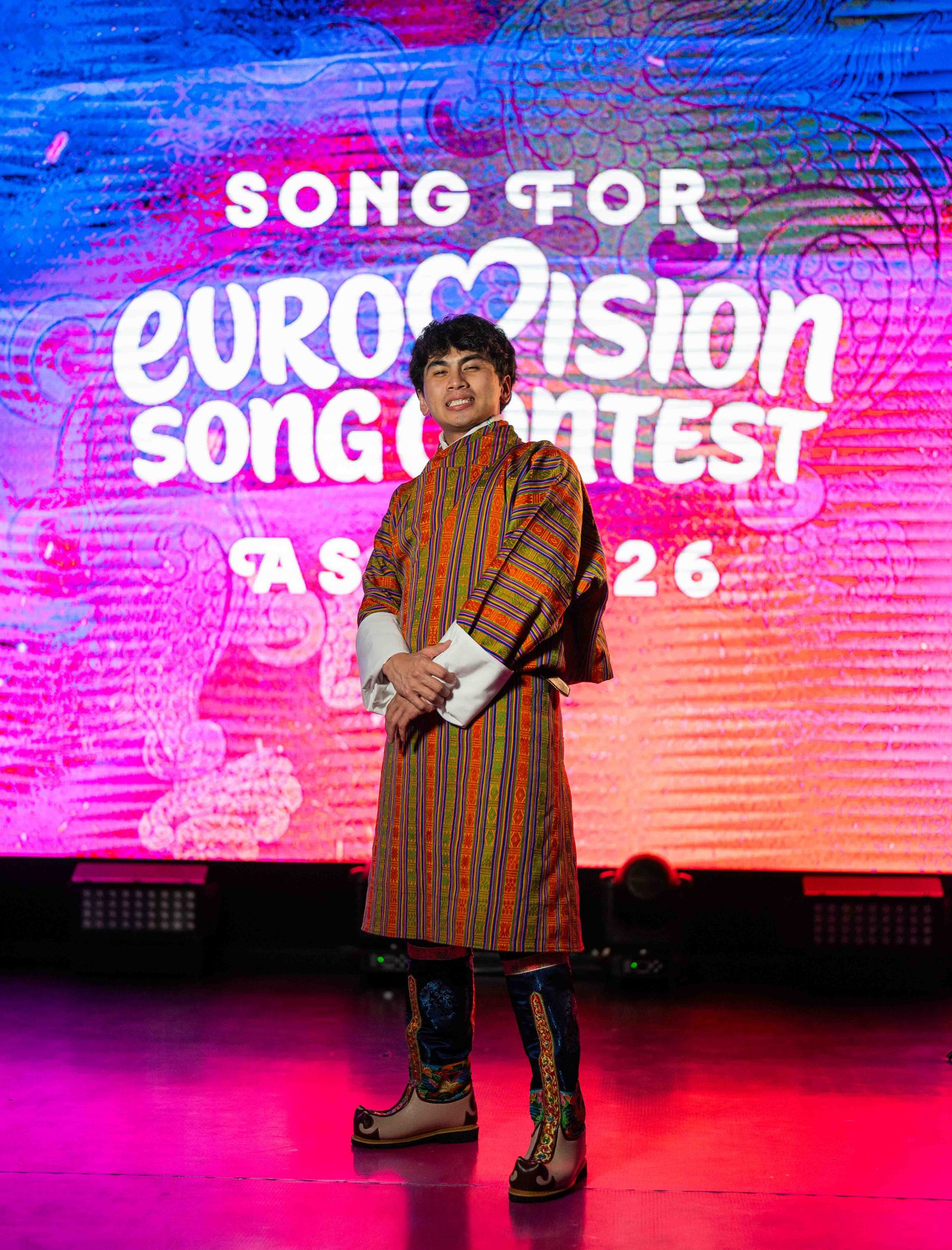
Thukten says he began singing at 17, although he did not initially imagine making music a central part of his life.
That changed when he was 19 and moved to Thimphu.
“I started singing at 17, but then I never thought I would take music seriously. When I turned 19, I moved out on my own here in the capital city of Bhutan; that’s where I started taking music very seriously. I came here to study as well as pursue music. But studying was just like an escape so that I could do music.”
He went on to graduate from Royal Thimphu College with a degree in mass communication and journalism. Alongside his studies, he continued developing as a singer-songwriter and producer, working across pop, folk-pop, acoustic and R&B and writing in both English and Dzongkha.
The decision to pursue music did not remove his doubts about whether he belonged on stage.
Learning to live with self-doubt
Thukten describes insecurity as one of the biggest challenges he has faced.
“Well, I self-doubt myself a lot. I’m very, very insecure about myself, the way I look, the way I present myself, the way I talk, every little thing about me. I’m very insecure about myself. So, it has always been like the biggest challenge, battling with myself where, you know, the self-doubt comes into the way when I’m trying to do something in my life.”
Music gradually became one of the ways he could communicate thoughts and emotions that he found difficult to express in conversation.
“I’m someone who cannot express it that well, like all of my feelings and stuff like that. I think I’ve always been like that, where I can’t say out loud what’s inside my mind. That’s when I started writing things down. There was one of these moments where I started writing my very first song, but that never went on Spotify or anything, but it was like I wanted to say it out loud.”
Songwriting gave those thoughts somewhere to go.
Telling his story through an album
After graduating, Thukten wrote and produced a nine-song album titled Let Me Tell You a Story.
The project drew heavily from his personal experiences, with several songs carrying particular significance for him.
“I wrote and produced an entire album last year called Let Me Tell You a Story. So, that album consists of nine songs, and almost all of the songs in that album is very personal to me. One of the songs that is really personal to me is the song called Let Me Tell You a Story. And another one would be Take Me Back. I think those two songs are really personal to me, like in the very most vulnerable way ever.”
His development as an independent artist eventually brought him to Rhythm of Bhutan, the national selection organised to choose Bhutan's entry for Eurovision Song Contest Asia 2026.
Winning Rhythm of Bhutan
The Rhythm of Bhutan final was held in Thimphu on 11 August 2026 and featured five competing acts.
The result combined three voting groups. A professional Bhutanese jury accounted for 40 percent, the Bhutanese public for another 40 percent and international voters for the remaining 20 percent. Thukten won with Lhayi Semo (The Angel), which he co-wrote with Lungten Wangchuk.
The Sangay Lhaden Band finished second with Pemi Tshewang Tashi (The Legend), while Baeyul 301 placed third with Drenpa (The Memories).
The result means Thukten will become Bhutan's first representative at Eurovision Song Contest Asia.
What is Eurovision?
The Eurovision Song Contest began in Europe in 1956 and has developed into one of the world's largest televised music competitions.
The contest is organised under the European Broadcasting Union, or EBU. Participating broadcasters select artists and original songs to represent their countries, with performances presented to audiences across participating nations and internationally.
Over seven decades, Eurovision has developed into a major live television event built around music, broadcasting and participation between countries. In 2026, the European contest marked its 70th anniversary.
The format is now expanding into Asia.
The EBU announced Eurovision Song Contest Asia in March 2026, describing it as Eurovision's first multi-country expansion. Bangkok was selected to host the inaugural Grand Final on Saturday, 14 November 2026.
Bhutan is among the first participating countries, alongside Bangladesh, Cambodia, Laos, Malaysia, Nepal, the Philippines, South Korea, Thailand and Vietnam. Bhutan Broadcasting Service (BBS) is the country's participating broadcaster.
The organisers say the countries confirmed for the first edition represent a potential audience of more than 600 million people.
For Bhutan, participation places the country's contemporary music on a new regional platform alongside artists from across Asia.
Bhutan's road to Eurovision Asia
Bhutan's path to the contest has had an unusual beginning.
In August 2025, BBS organised Druk Dra, a competition involving 10 contestants. Its planned final did not go ahead amid uncertainty at the time over the status of an Asian Eurovision contest.
Bhutan subsequently moved ahead with Rhythm of Bhutan as its selection for the confirmed 2026 contest.
Five artists competed, all of whom had been finalists in the earlier Druk Dra competition. Thukten's victory secured both the national title and the opportunity to carry Bhutan's entry to Bangkok.
For a country entering the competition for the first time, the significance extends beyond the final ranking. It gives a Bhutanese artist the opportunity to perform an original Dzongkha song on an international stage.
A proud moment for his family
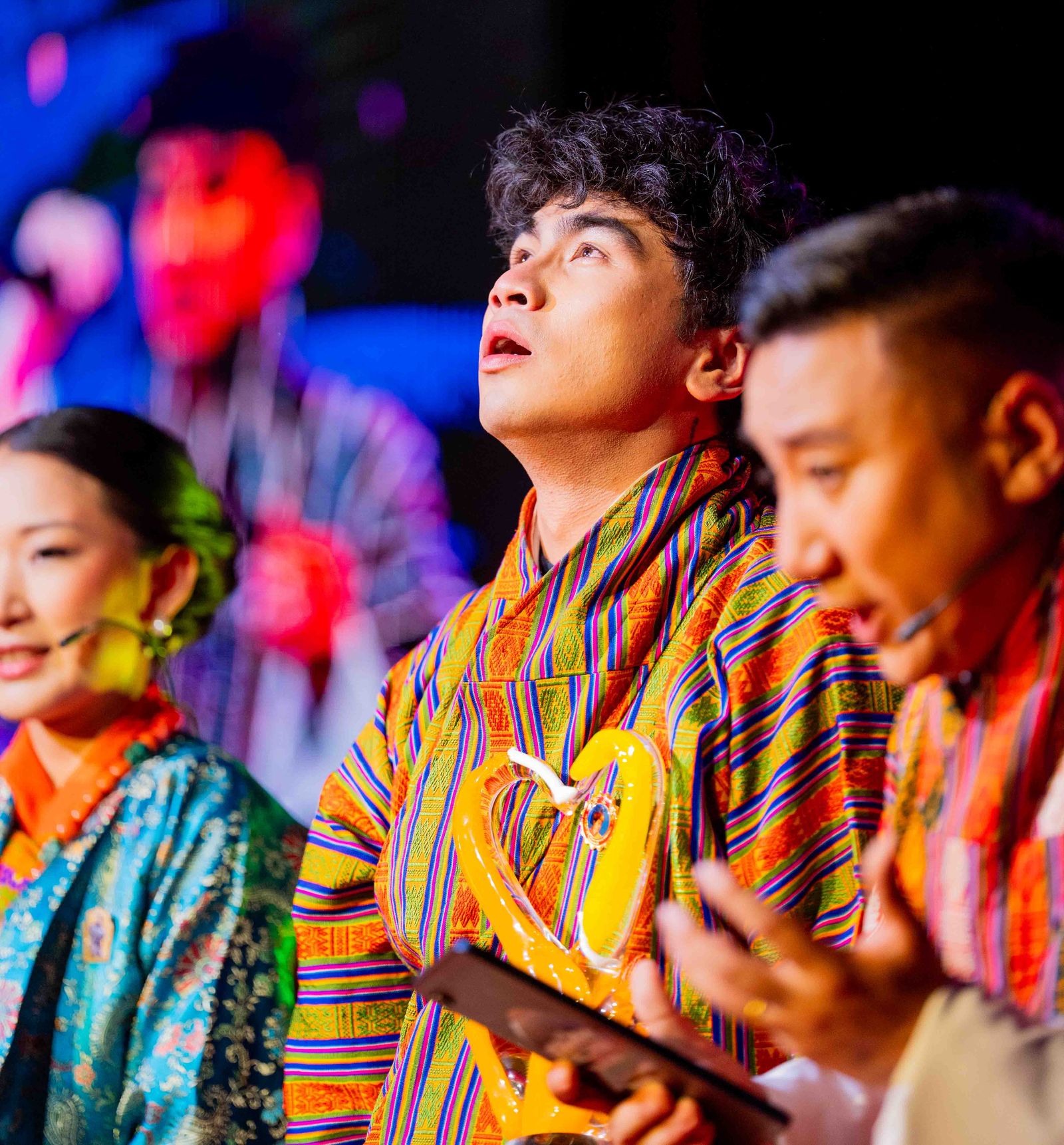
For Thukten's mother, the international opportunity has also changed how she views the path her son chose.
“It is a proud moment for me that he will be representing Bhutan. He is also really happy that he got selected. He is very excited, and I am also very happy. I advised him not to get upset even if he does not get through the top 5 and that it’s a good thing that he at least participated.”
It is a different conversation from the one they had when he was at college and she worried that music offered too few opportunities.
Those concerns were practical, and Thukten's career remains at an early stage. But his decision to continue writing, producing and performing has now led to an opportunity that did not exist for Bhutanese musicians when he first began pursuing music seriously.
From Chhukha to Bangkok
On 14 November, Thukten is expected to take the stage in Bangkok with Lhayi Semo, representing Bhutan in the inaugural Eurovision Song Contest Asia.
For him, reaching that stage has involved more than winning a national competition. It has meant continuing with music despite doubts about himself, concerns from his family and uncertainty over where the profession might lead.
For other young Bhutanese considering creative careers, his experience does not suggest that following a passion is simple or certain.
It shows instead what can happen when someone continues to work at it.
A musical interest that began at four years old has taken Thukten from Chhukha to Thimphu. His next stop is Bangkok.