

Royal Decree Gives Gelephu Regulator Central Banking Powers
A Royal Decree gives Gelephu’s financial regulator central banking powers covering monetary policy, reserves, payments and financial supervision.
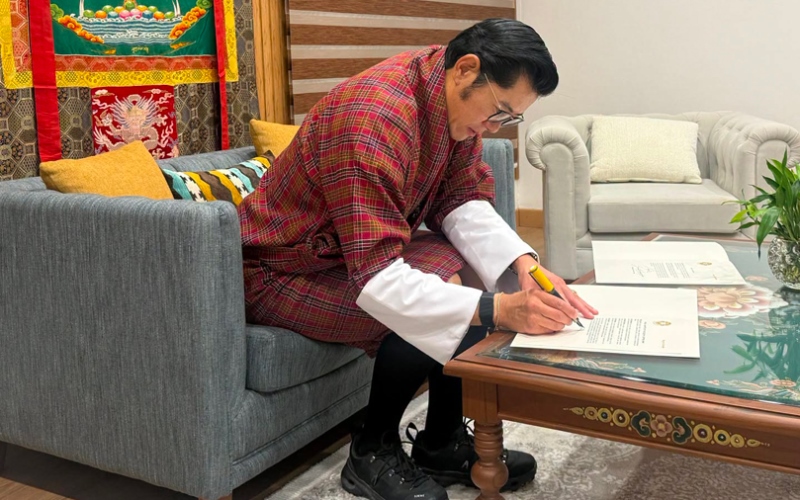
King Jigme Khesar Namgyel Wangchuck has signed a Royal Decree granting comprehensive central banking powers to the Gelephu Financial Services Office, paving the way for its transition into the Gelephu Central Bank.
The decree expands the institution’s role beyond financial regulation. The proposed central bank will be responsible for monetary policy, reserve management, financial stability and payment systems within Gelephu Mindfulness City, Bhutan’s special administrative region in the south of the country.
The development is intended to provide the institutional foundation needed for GMC to build an internationally connected financial sector. However, several important details, including the transition timetable and coordination with Bhutan’s national central bank, have not yet been publicly outlined.
From Financial Regulator to Central Bank
The Gelephu Financial Services Office currently regulates financial services operating within GMC. Its responsibilities cover conventional finance, financial technology and virtual assets.
Under the expanded mandate, the institution will transition into the Gelephu Central Bank, an autonomous body with both regulatory and central banking responsibilities.
The new institution will continue supervising financial companies while taking on wider responsibilities for the operation and stability of GMC’s financial system.
The decree forms part of the wider development of Gelephu Mindfulness City, which is being built as a new economic centre focused on areas including finance, technology, health, education, aviation and sustainable urban development.
What Powers Will the Gelephu Central Bank Hold?
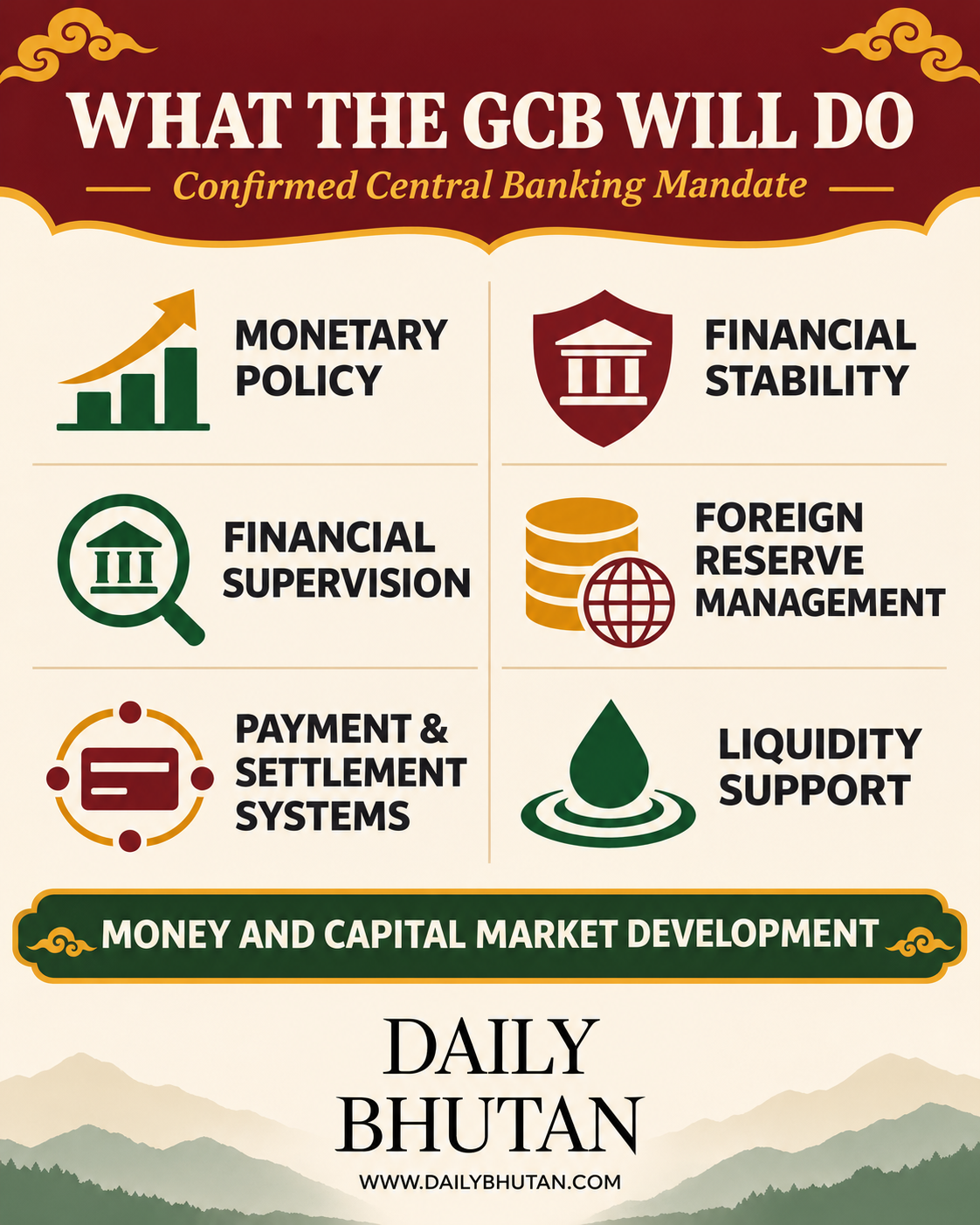
The Gelephu Central Bank’s mandate will include:
-
Formulating and implementing monetary policy within its jurisdiction
-
Managing foreign reserves under its mandate
-
Maintaining financial stability
-
Regulating and supervising financial institutions
-
Establishing payment and settlement systems
-
Providing liquidity support when necessary
-
Supporting the development of money and capital markets
These functions would give GMC a more complete financial infrastructure, including mechanisms for moving money, supervising institutions and responding to liquidity or market pressures.
The decree grants the authority to perform these functions. Their practical operation will depend on implementing rules, institutional capacity and the participation of licensed financial companies.
Digital Assets Included in the Mandate
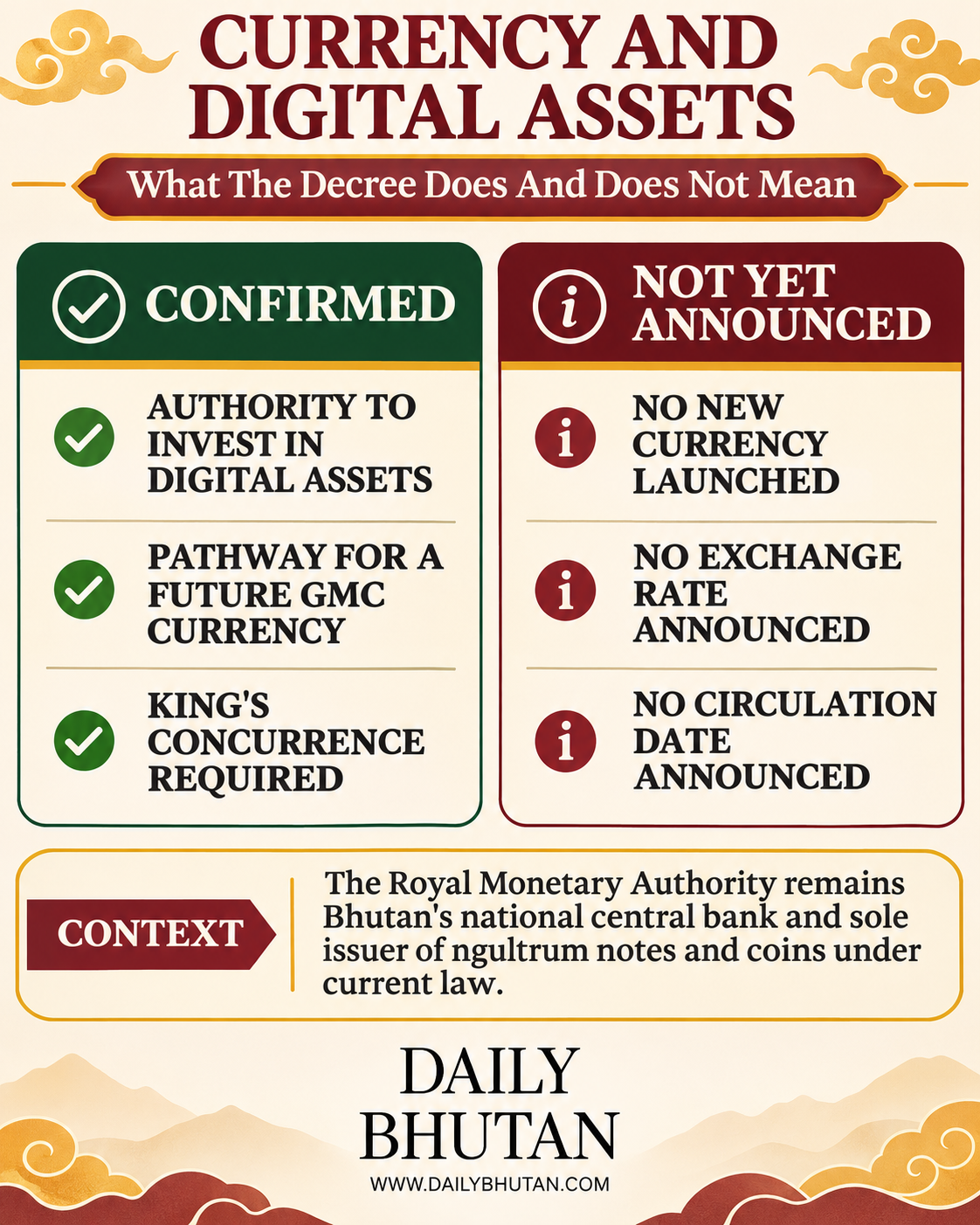
The Gelephu Central Bank will be authorised to invest in digital assets and cryptocurrencies alongside conventional reserve assets.
This authority does not mean that the bank must invest in a particular cryptocurrency. Decisions on the composition, scale and management of reserves would require policies governing risk, custody, liquidity and accountability.
Digital assets have already become part of GMC’s developing financial sector. Earlier initiatives include TER, a gold-backed digital token issued through Gelephu Mindfulness City, and the licensing of companies providing virtual asset trading, custody and related services.
Bringing digital assets within a central banking mandate could allow GMC to develop clearer links between conventional finance and regulated blockchain-based services. It also places greater responsibility on the new institution to manage financial, technological and compliance risks.
A Pathway to a GMC Currency
The decree provides a pathway for GMC to introduce its own currency, including a possible digital form. Any such step would require the King’s concurrence.
The Royal Monetary Authority remains Bhutan’s national central bank and the sole issuer of ngultrum notes and coins under existing national law. The Gelephu Central Bank’s mandate relates specifically to GMC.
How the two institutions would coordinate on currency, foreign exchange, payment systems and monetary policy has not yet been explained publicly. These arrangements will be important because GMC remains part of Bhutan while operating under a distinct legal and administrative framework.
More Than 50 Financial Roles Planned
More than 50 positions are expected to be opened to Bhutanese and international professionals as the institution expands.
The proposed roles cover areas including:
-
Banking operations
-
Macroeconomics and monetary policy
-
Regulatory policy
-
Financial technology
-
Virtual asset supervision
-
Anti-money laundering controls
-
Technology and payment systems
Recruitment will be important because central banking requires specialist capacity in economics, regulation, technology, risk management and financial-market operations.
The new positions could also create opportunities for Bhutanese professionals to gain experience in emerging areas of international finance. Details about individual vacancies, qualifications and recruitment schedules should be confirmed through official GMC and GFSO announcements.
What Happens Next
The Royal Decree gives GMC the authority to develop a central banking institution, but the transition will require further operational work.
Important next steps include formally establishing the Gelephu Central Bank, appointing its leadership, recruiting specialist staff and publishing the rules governing its expanded powers. Further clarification will also be needed on its relationship with the Royal Monetary Authority and the conditions under which a GMC currency could be considered.
The decree provides GMC with a broader financial mandate. Whether it succeeds in attracting trusted institutions and international investment will depend on how that mandate is implemented, how risks are managed and how clearly the new central bank communicates its responsibilities.