
Bhutan Successfully Raised 108 Chortens in Gelephu on a Single Day of Buddhist and Royal Significance
Bhutan raised 108 Jangchub Chortens in Gelephu on 1 November 2026, coinciding with Lhabab Duechhen and the King’s coronation anniversary.
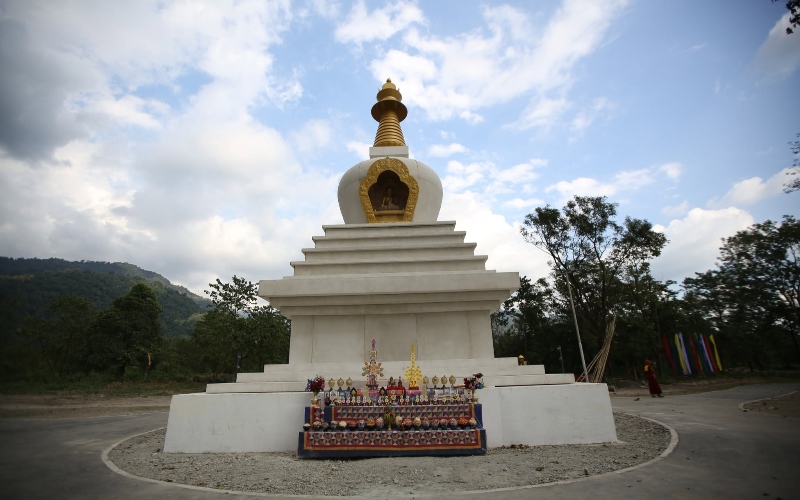
Bhutan completed the coordinated raising of 108 Jangchub Chortens in Gelephu Mindfulness City on 1 November 2026, bringing together around 40,000 volunteers and an estimated 200,000 attendees for one of the largest public gatherings in the country’s recent history.
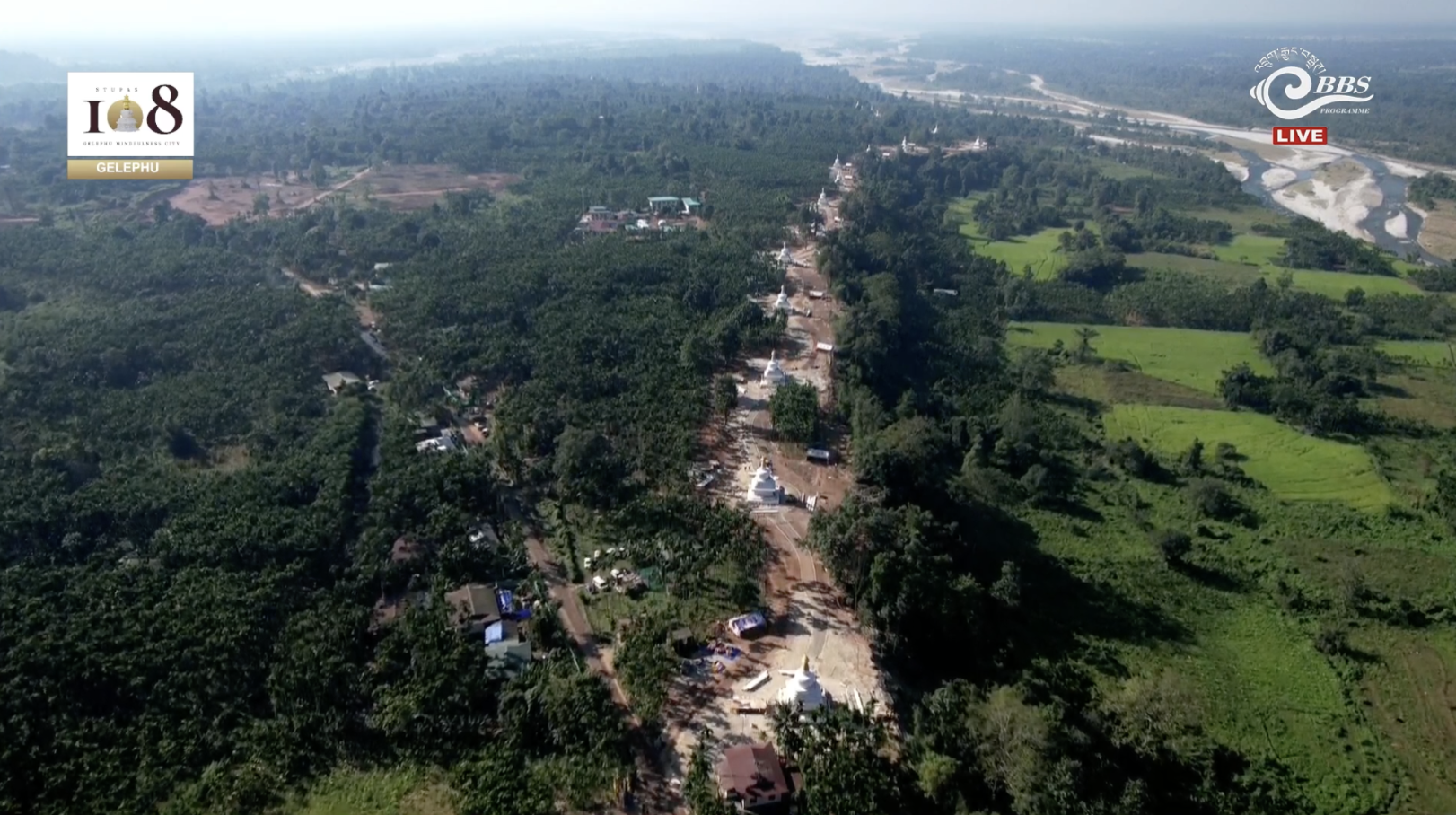
The royal initiative placed 108 Stupas of Enlightenment along an 11.7-kilometre corridor beside the Mau Chhu in southern Bhutan. Each chorten stands 15 metres high, with 108 metres separating one structure from the next.
The date carried three layers of national and religious significance. It was the 18th anniversary of the coronation rites of King Jigme Khesar Namgyel Wangchuck, Lhabab Duechhen, or the Descending Day of Lord Buddha, and the day selected for the completion of Project 108.
Project 108 at a Glance
| Detail | Information |
|---|---|
| Main event | 1 November 2026 |
| Location | Gelephu Mindfulness City, southern Bhutan |
| Structures | 108 Jangchub Chortens |
| Height | 15 metres each |
| Distance between chortens | 108 metres |
| Corridor length | Approximately 11.7 kilometres |
| Volunteers | Around 40,000 |
| Wider programme | 1 to 4 November 2026 |
A Royal Initiative Completed in Less Than Nine Months
The King announced Project 108 on 21 February 2026, during the groundbreaking ceremony for the Gelephu Chorten in Chuzergang. The announcement coincided with his 46th birthday and the launch of Bhutan’s fifth Zhabtog voluntary service programme.
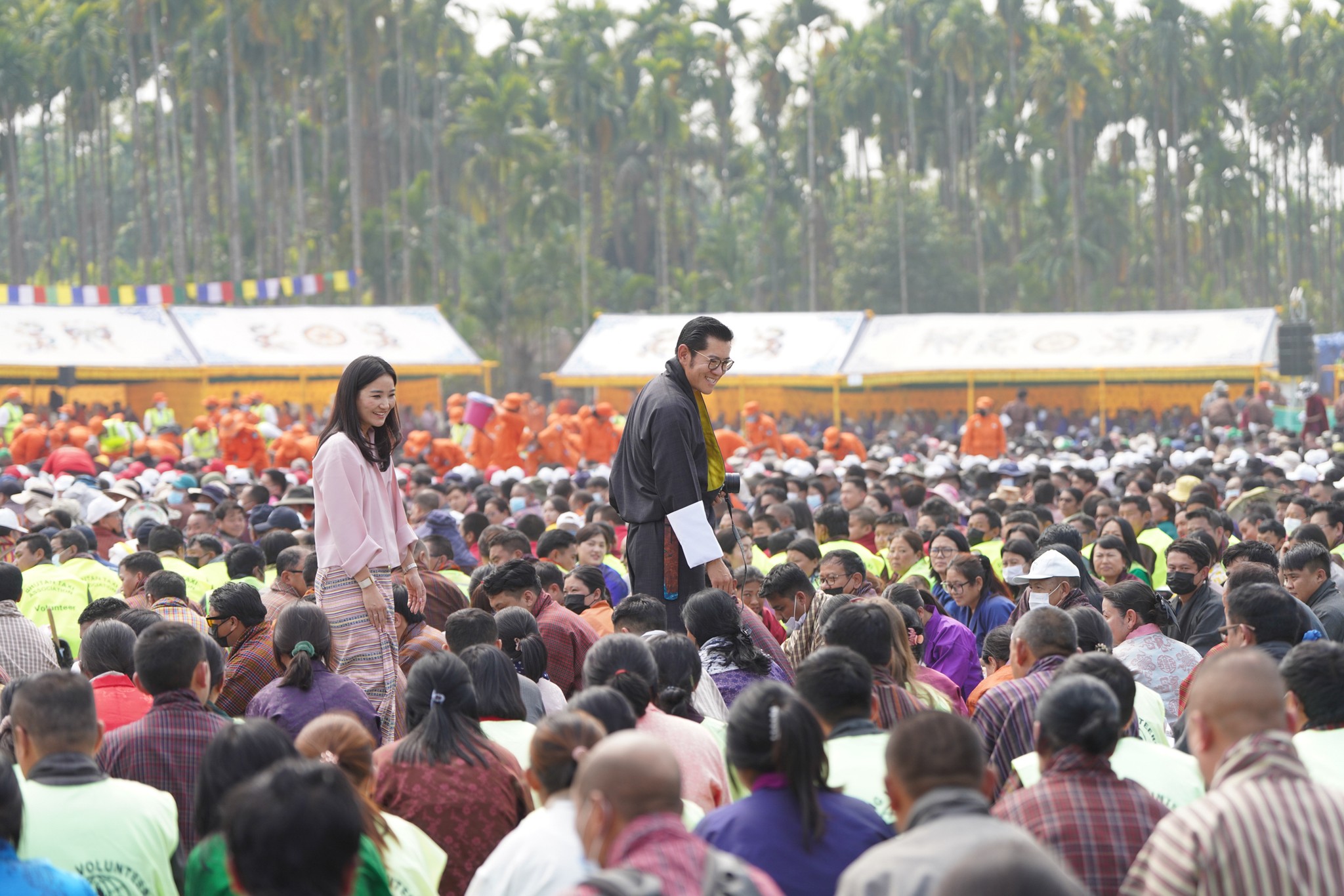
Less than nine months later, approximately 40,000 volunteers and trained workers gathered along the Mau Chhu to raise all 108 Jangchub Chortens in a single day.
Work Began Before Sunrise
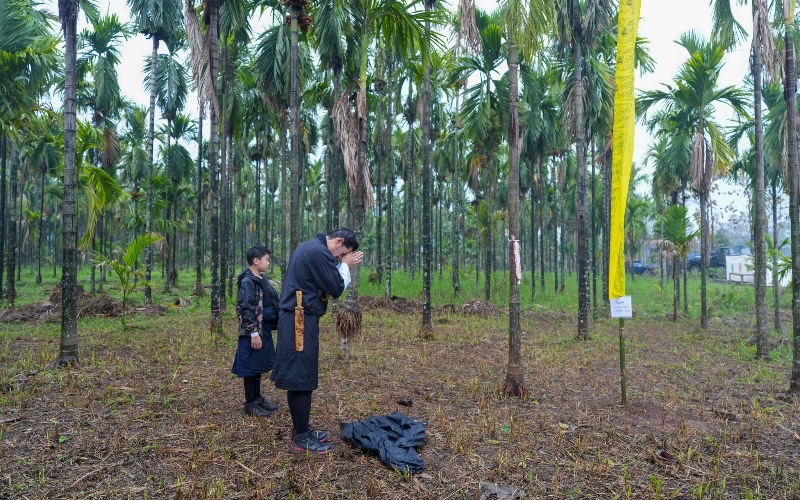
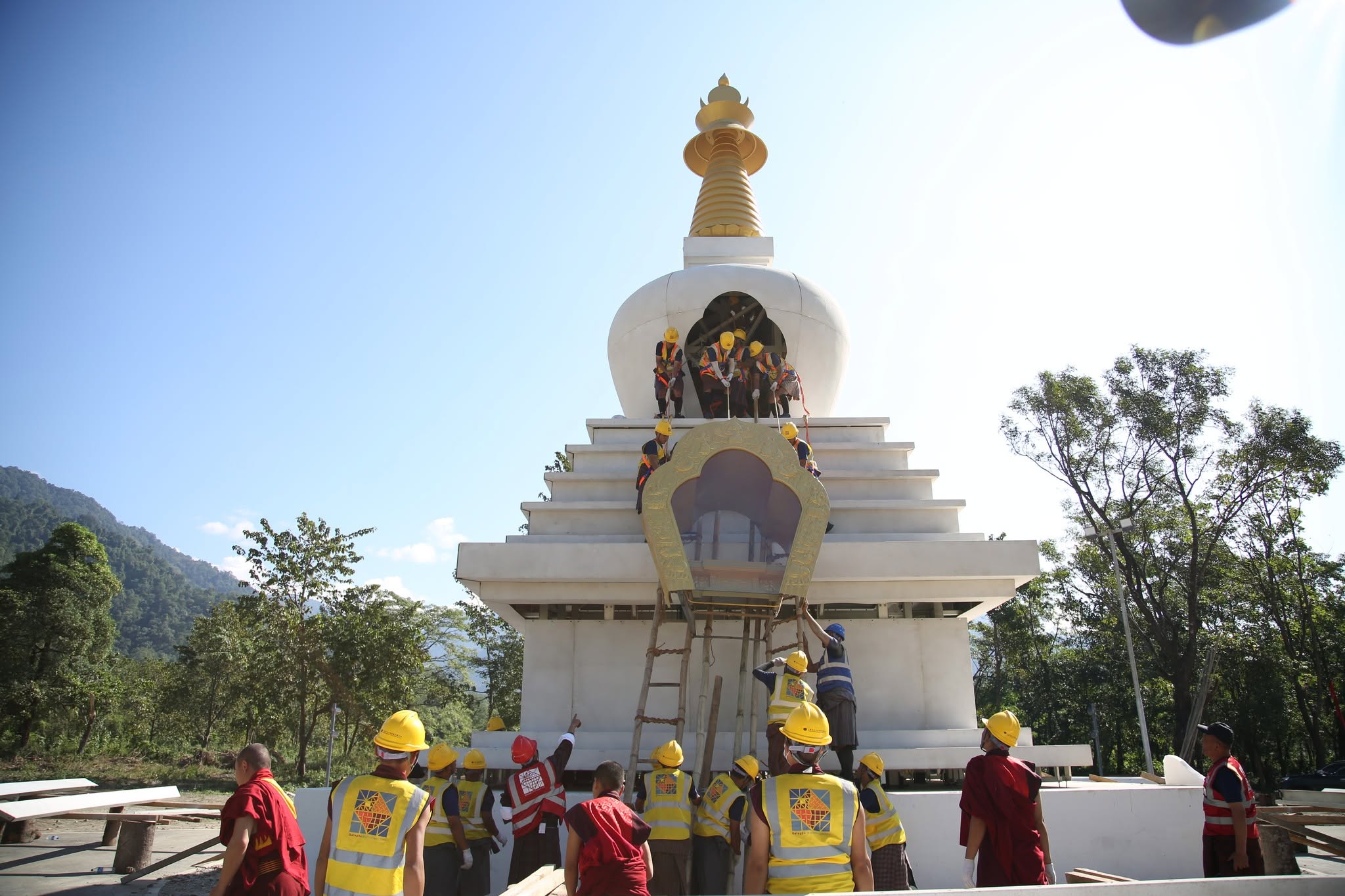
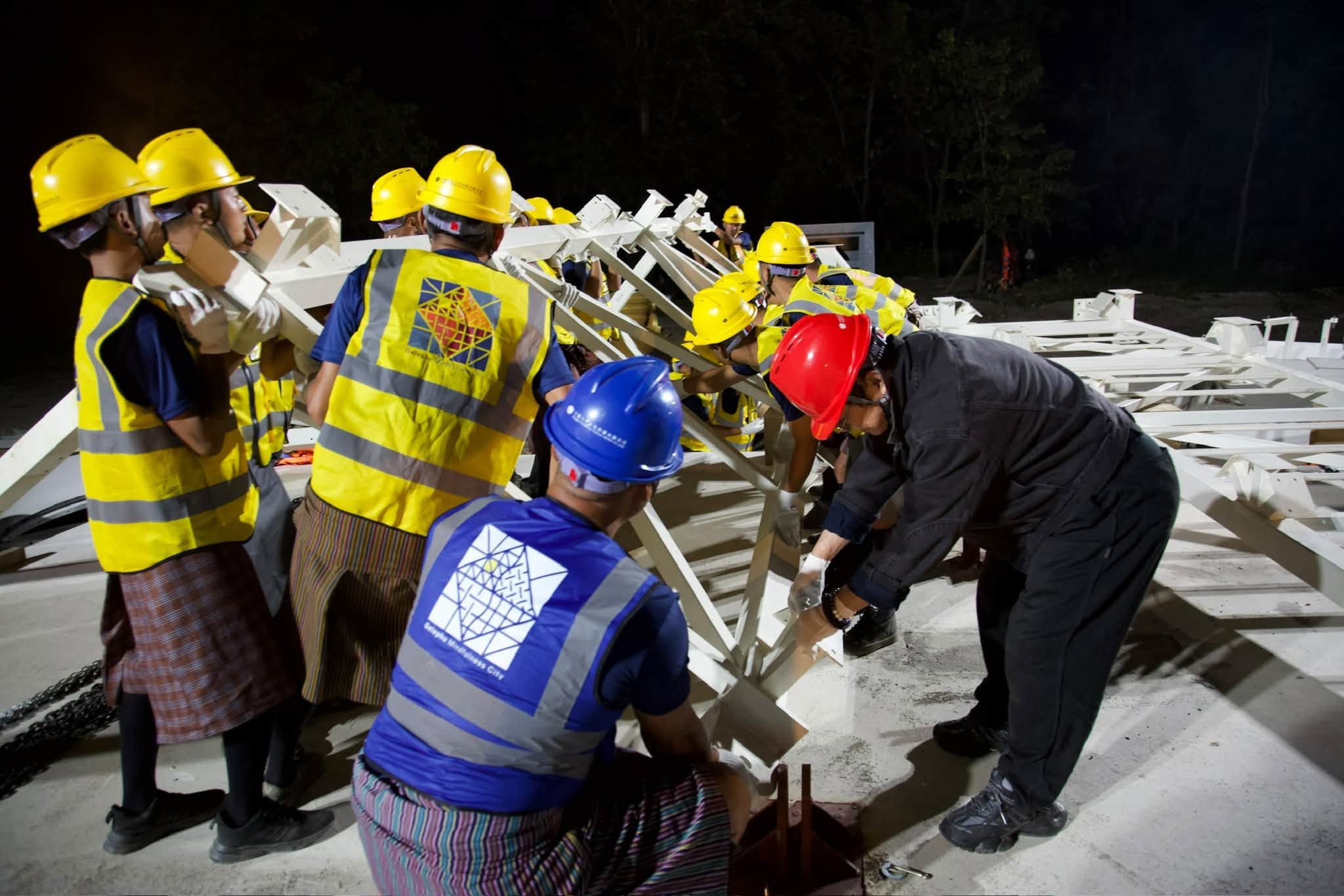
Construction teams and volunteers reported to their assigned sites before dawn. Monks and religious leaders were also positioned along the river corridor to conduct prayers and rituals as the structures were raised.
At 3 am, 58 sets of dungchen, long ceremonial horns used in Tibetan Buddhist traditions, sounded across the site. The horns marked the start of the coordinated operation at all 108 locations.
On the opposite side of the river, attendees recited Om Mani Padme Hung, the six-syllable mantra associated with Chenrezig, the Buddhist embodiment of compassion. The programme also included butter lamp offerings, religious prayers and a formal procession.
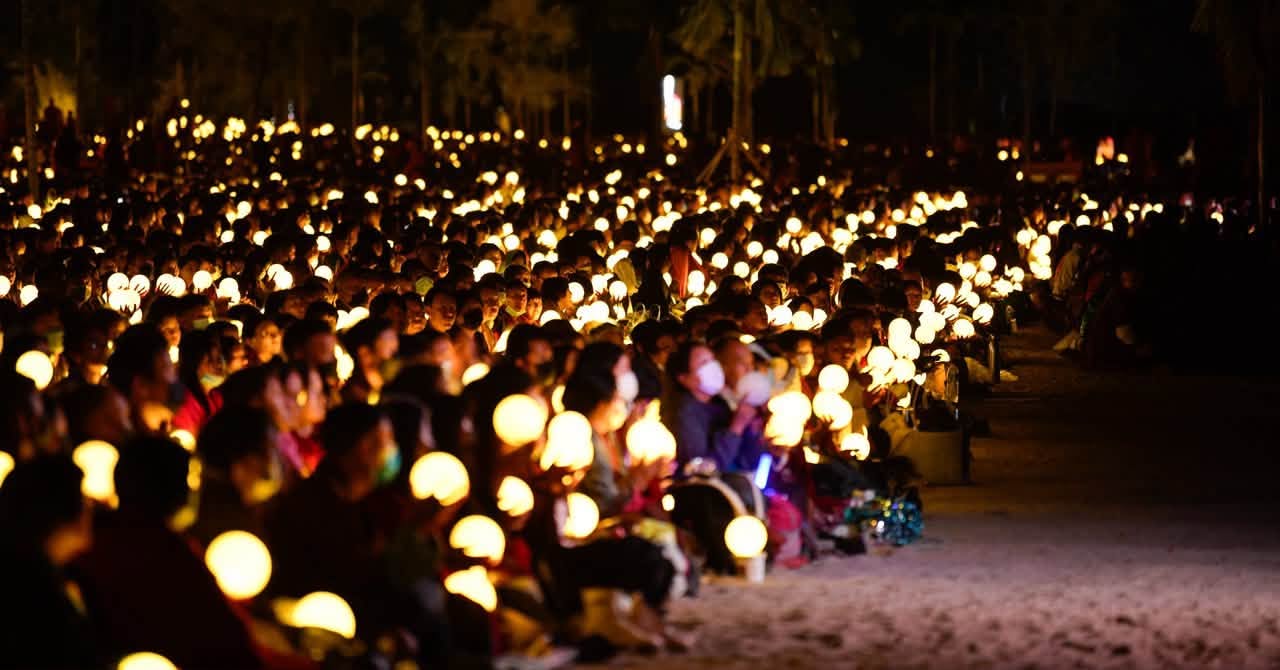
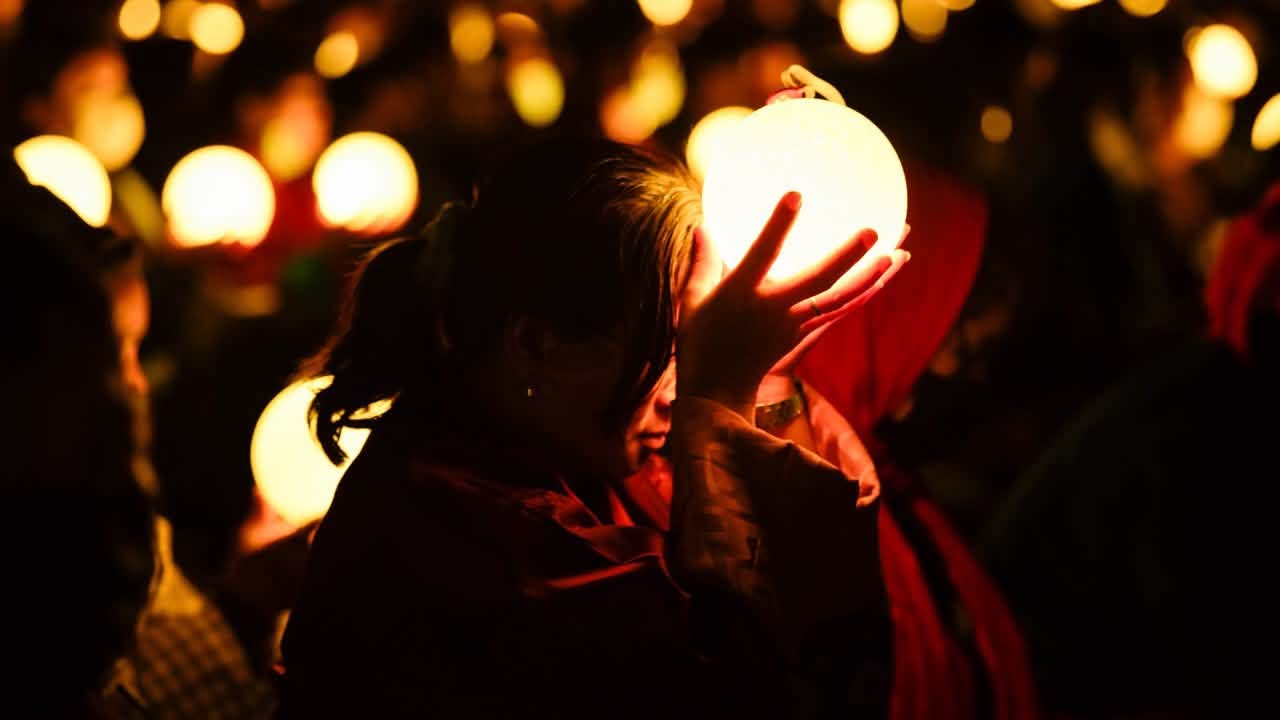
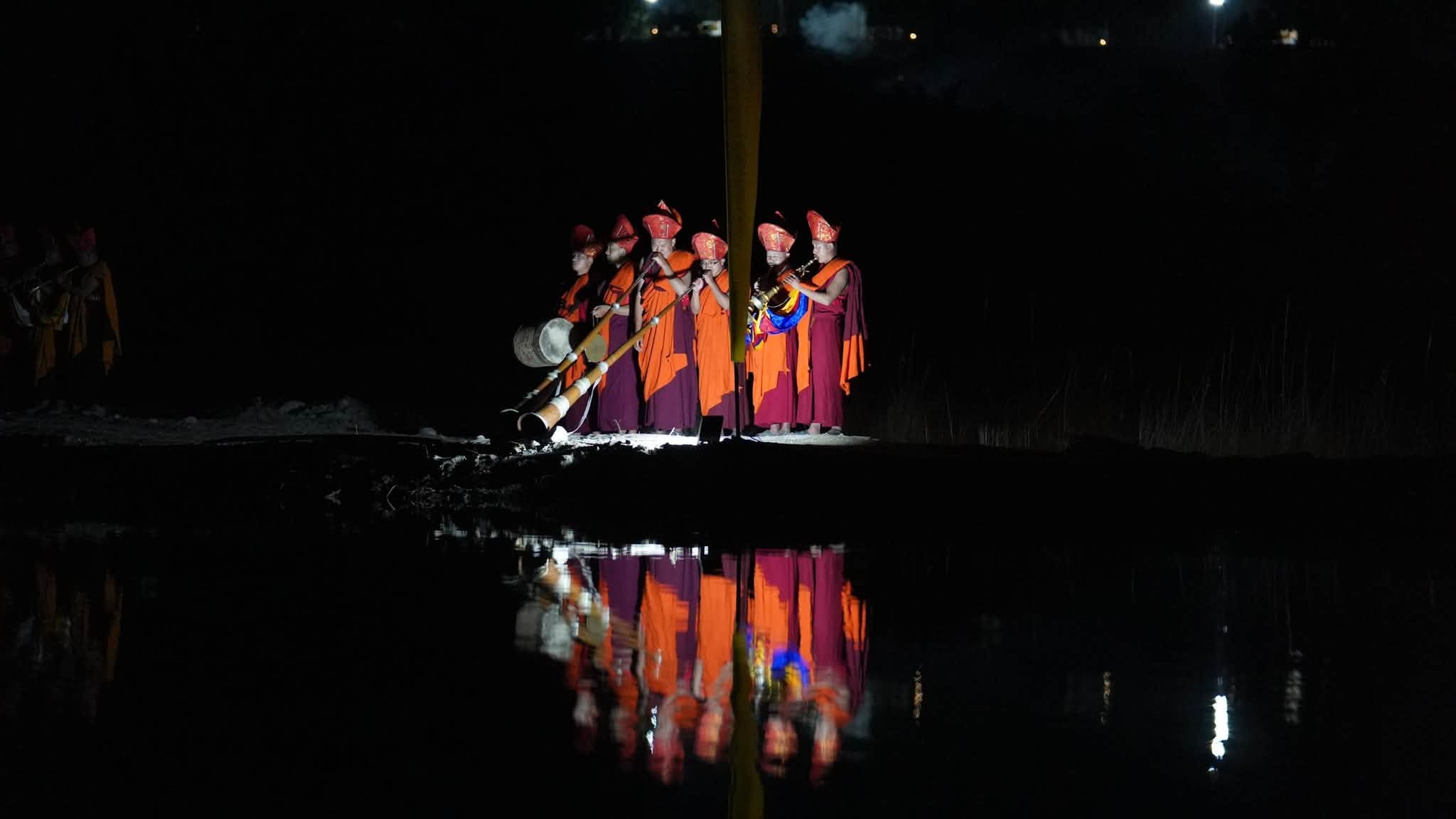
King Jigme Khesar Namgyel Wangchuck, Queen Jetsun Pema, their children, Bhutan’s fourth king Jigme Singye Wangchuck and other members of the Royal Family attended the ceremony.
The Je Khenpo, Bhutan’s chief abbot and head of the Central Monastic Body, led the religious observances alongside senior Bhutanese and international Buddhist teachers.
Worksite preparations began before dawn, followed by the coordinated raising of the 108 chortens at 3am. 9 hours later by early afternoon, the external structures of all 108 chortens were in place.
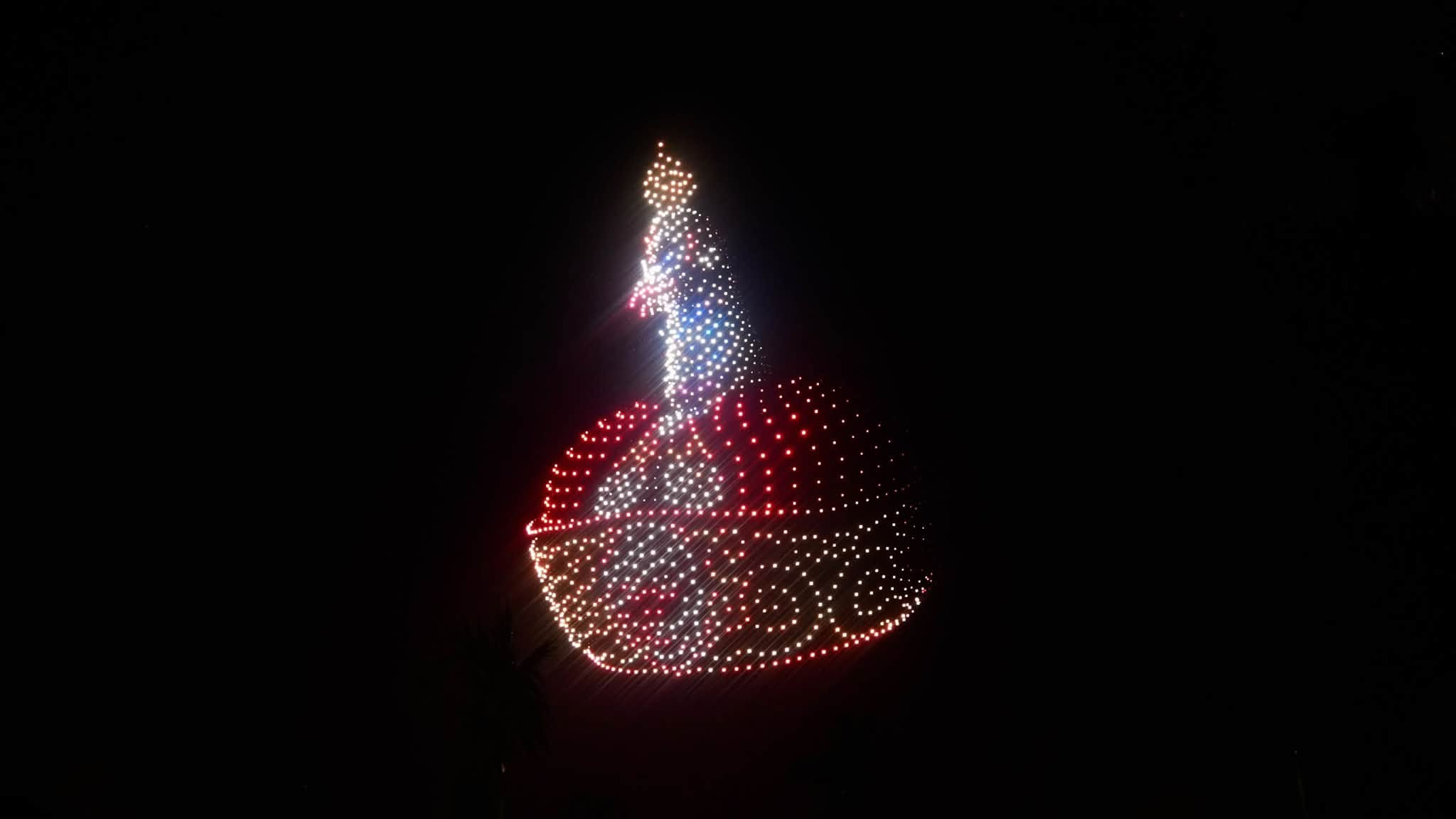
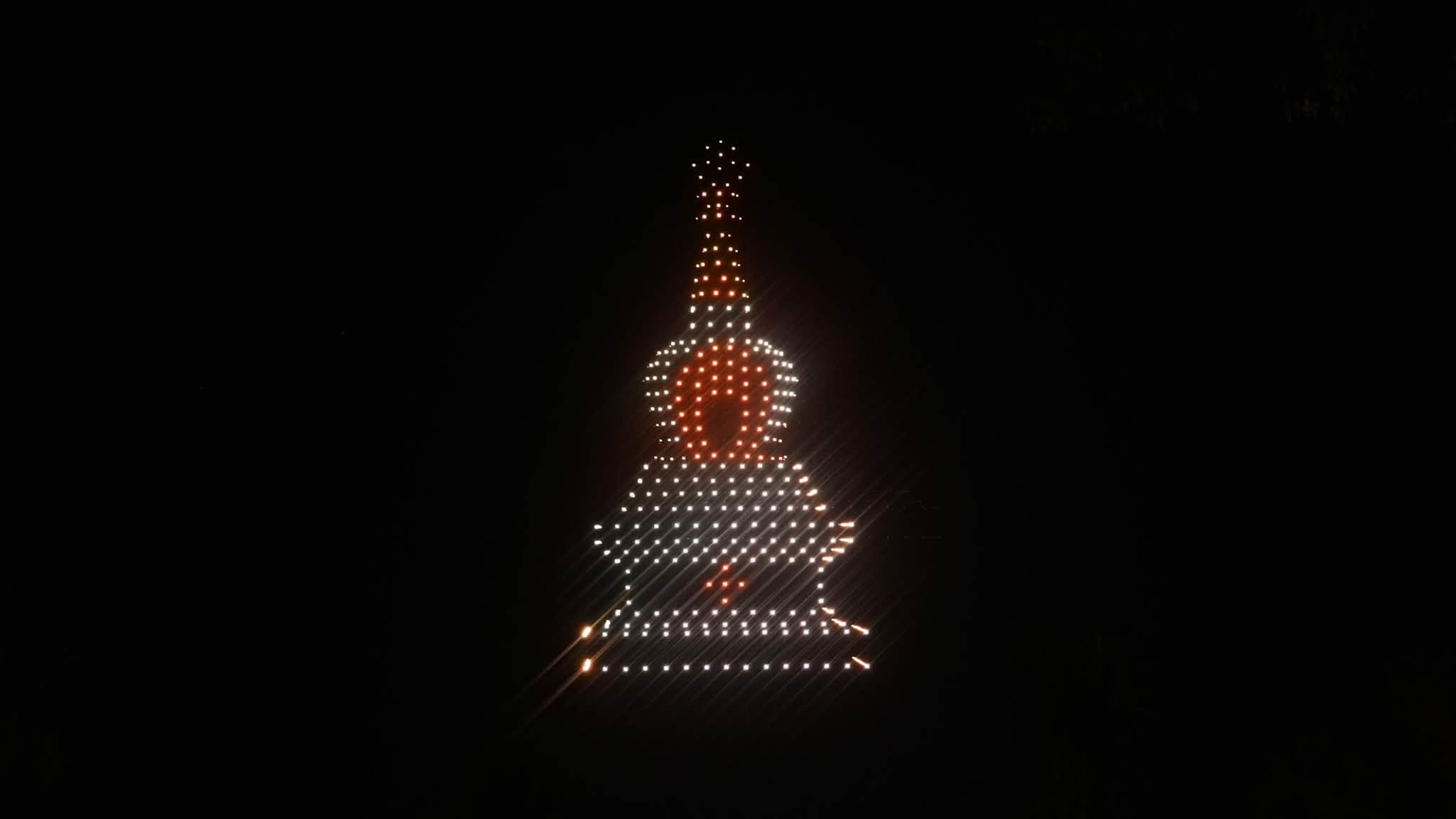
The completion of the chortens was marked by the sounding of ceremonial horns, the national anthem and an address by the King. Religious ceremonies continued in the evening, followed by an aerial drone display.
The Chortens Were Not Built From Scratch in One Day
Although all 108 chortens were raised together on 1 November, the achievement followed months of groundwork, engineering, material preparation and training.
Foundations had already been prepared at each site. Components were manufactured and organised for assembly, while dedicated teams practised the coordinated construction process.
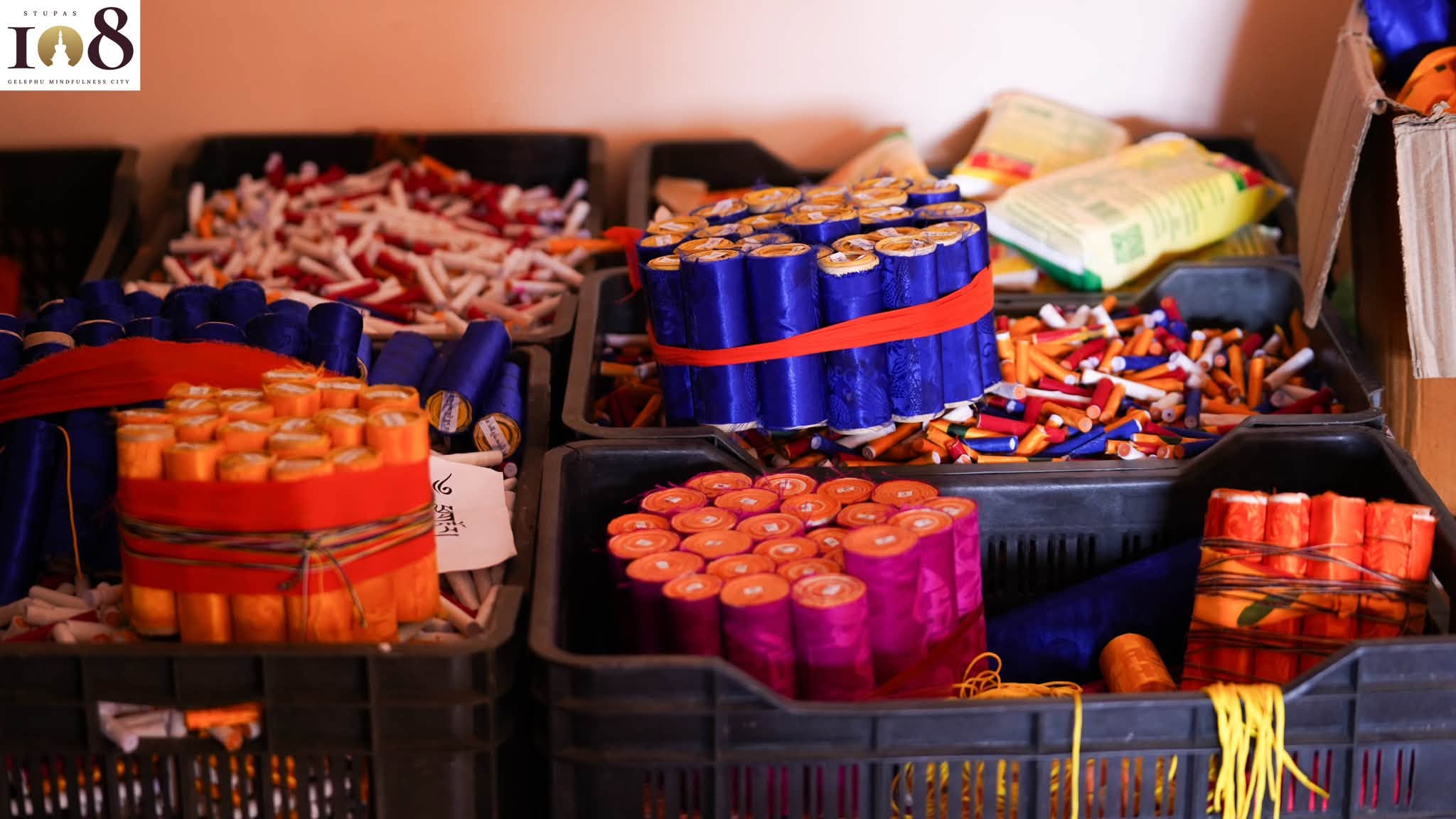
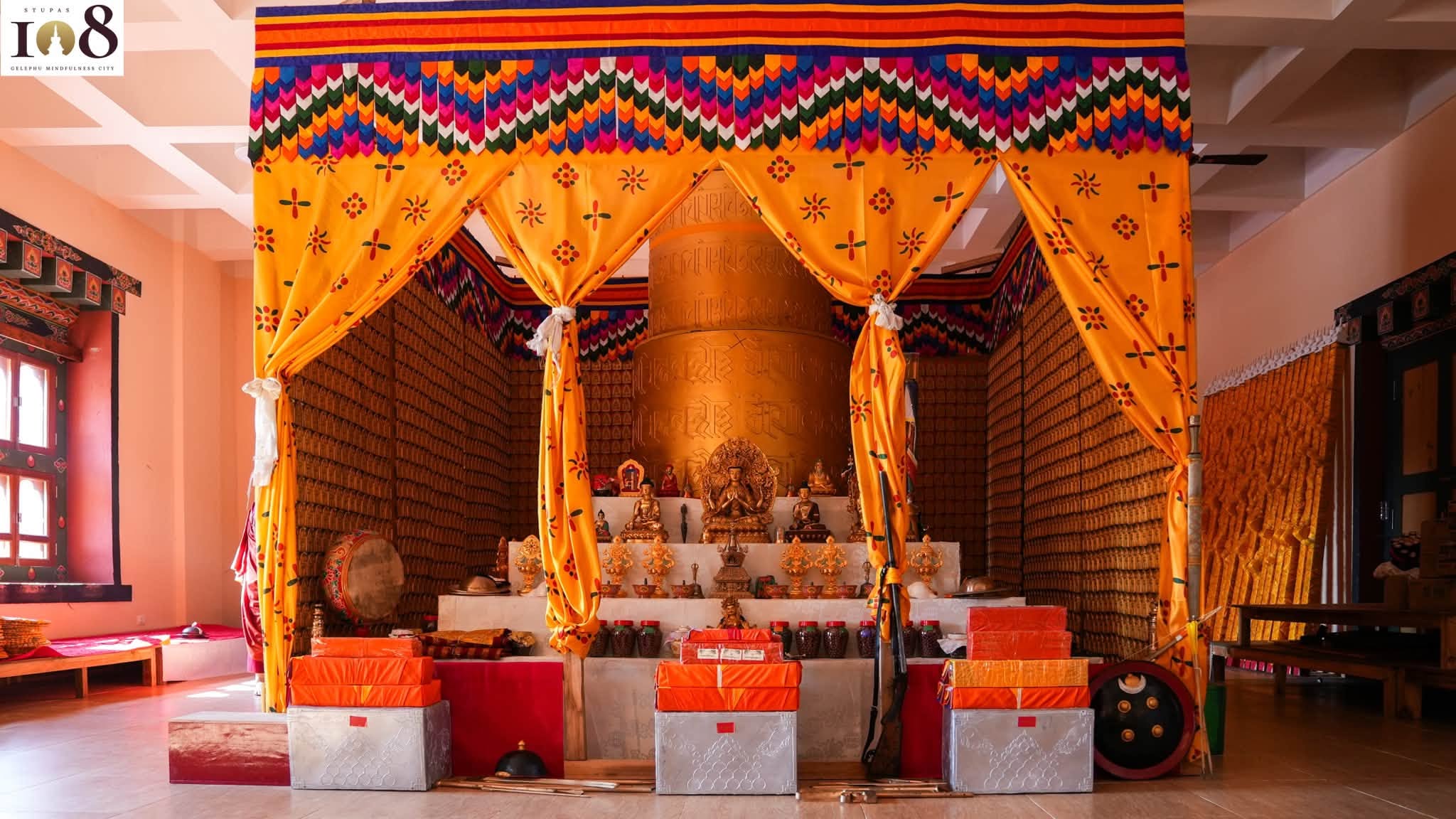
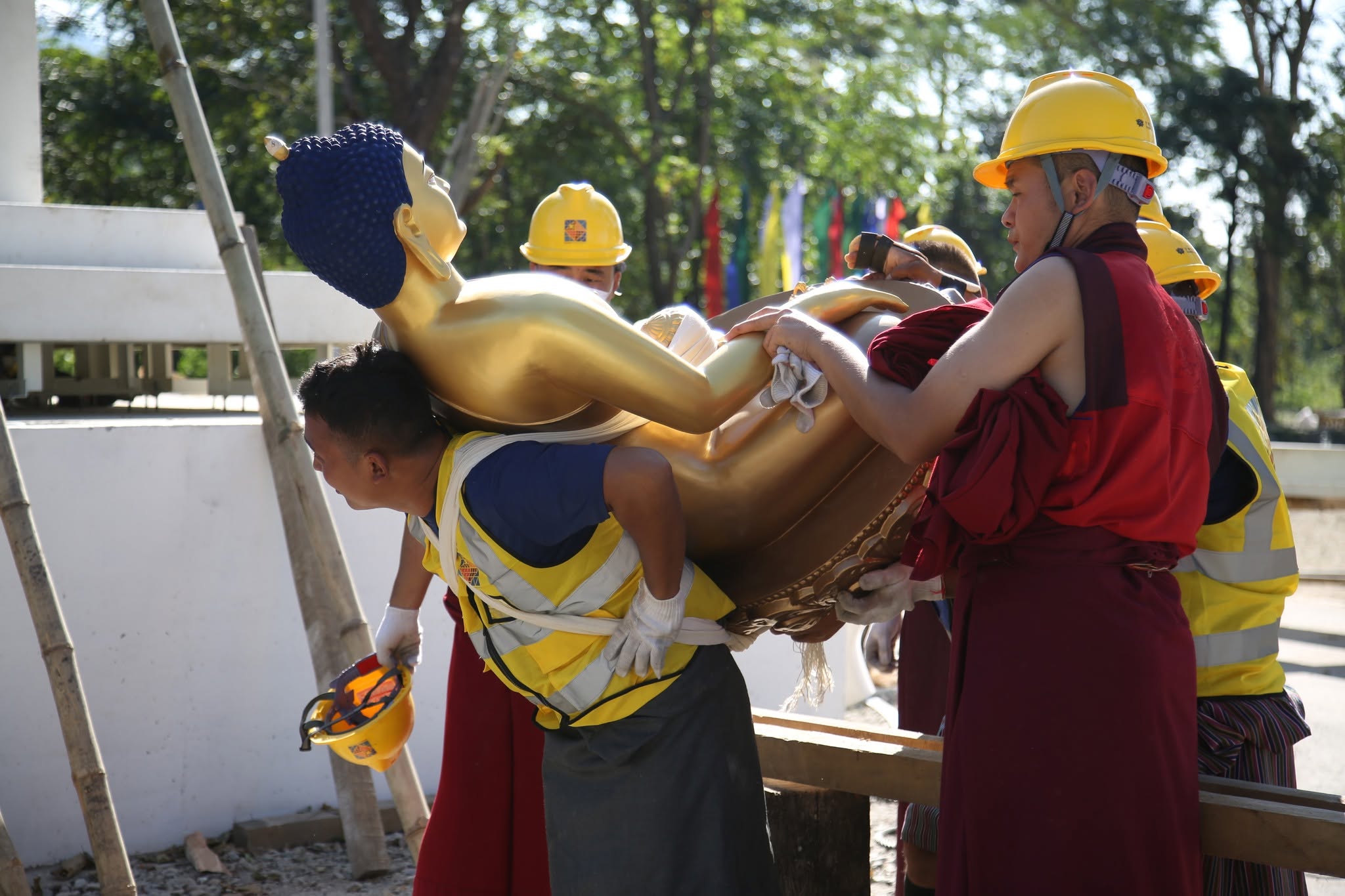
Monks also spent several months preparing the zung, the sacred contents sealed inside a chorten. These include religious texts, rolled mantras, statues, relics and other consecrated objects.
The sacred contents underwent a 21-day consecration process before being taken to the construction sites. Preparatory rituals were also conducted to remove obstacles and seek blessings for the project.
The one-day event was therefore the final coordinated stage of a much longer undertaking. It demonstrated the organisation required to activate 108 construction sites at the same time without treating the work as an open public building exercise.
Visitors attended the prayers and observed the operation, while trained teams, artisans, monks and registered volunteers carried out assigned responsibilities.
Daily Bhutan’s earlier Project 108 explainer provides more background on the design and planning of the initiative.
What Is a Jangchub Chorten?
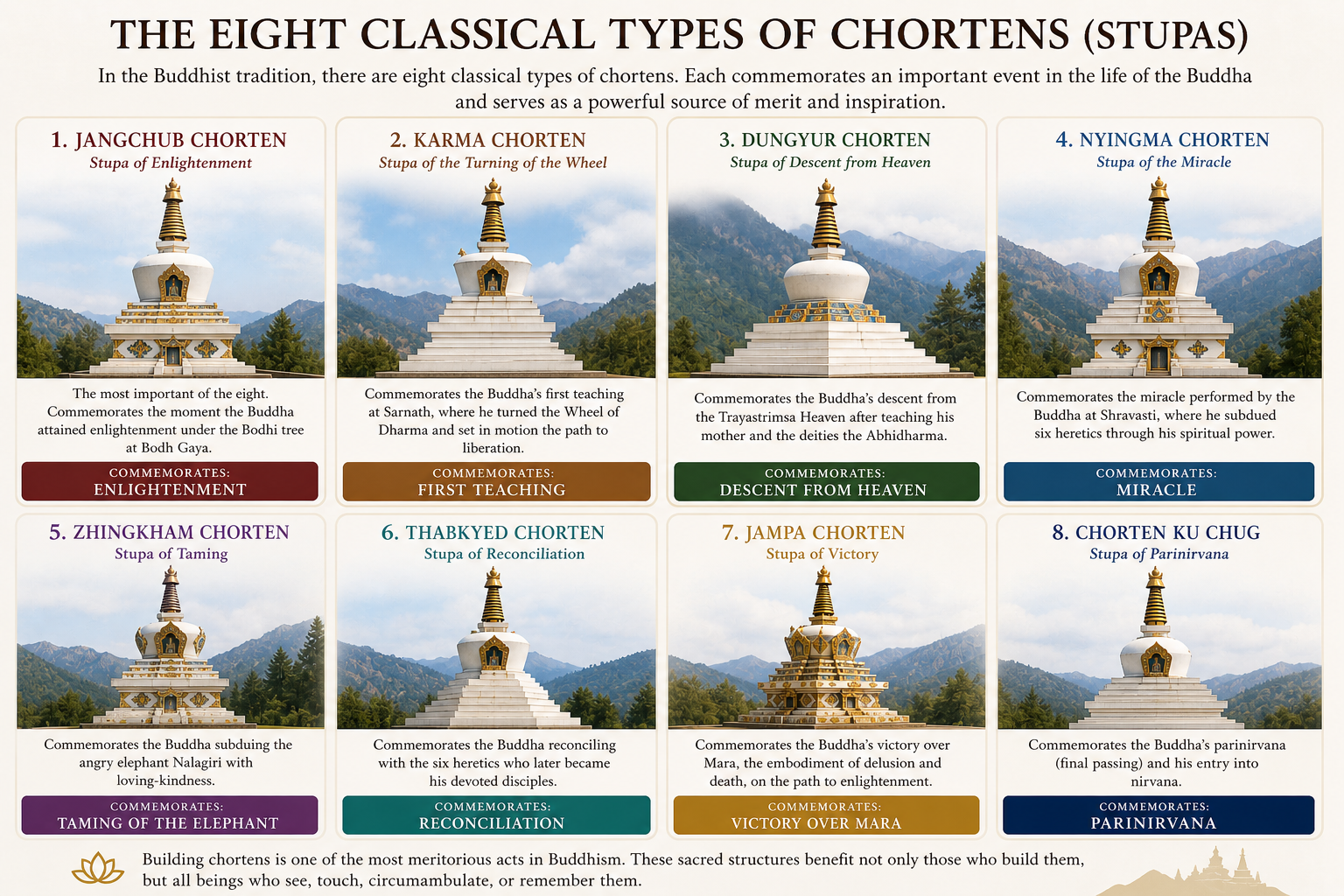
A chorten is the Bhutanese term for a stupa, a Buddhist monument that may contain sacred texts, relics and consecrated objects.
The Jangchub Chorten, also called the Stupa of Enlightenment, commemorates the Buddha’s attainment of enlightenment at Bodh Gaya in India. It is one of eight classical stupa forms associated with important events in the Buddha’s life.
For Buddhist practitioners, a chorten is not simply a monument. People may walk clockwise around it, offer prayers or sit nearby in contemplation. Building or supporting a chorten is traditionally regarded as a way of generating merit for the benefit of others.
Why the Number 108 Matters
The number 108 appears throughout several Buddhist traditions.
The Kangyur, the translated collection of teachings attributed to the Buddha, is commonly organised into 108 volumes. Traditional prayer malas contain 108 beads, allowing practitioners to count mantra recitations.
The number is also associated with 108 afflictive emotions that Buddhist practice seeks to overcome. Within Project 108, the repetition of the number shaped both the number of monuments and the distance separating them.
The chortens form a single procession rather than a compact group. Their arrangement creates a continuous religious landscape through part of Gelephu Mindfulness City.
The Descending Day of Lord Buddha
Lhabab Duechhen is one of the most important dates in the Buddhist calendar. It falls on the 22nd day of the ninth month of the Bhutanese lunar calendar, meaning its Gregorian date changes each year.
In 2026, it fell on 1 November.
The occasion commemorates the Buddha’s return to the human realm after teaching in a celestial realm where his mother had been reborn. The story is understood as an expression of gratitude towards his mother and a reminder of the responsibility to repay parental kindness.
Bhutan also observes Lhabab Duechhen as Mother’s Day. Families use the occasion to recognise the care and sacrifices of mothers, while many people visit temples, light butter lamps and offer prayers.
Completing the 108 Stupas of Enlightenment on Lhabab Duechhen connected the structures with a day devoted to gratitude, religious practice and the Buddha’s teachings.
Readers can learn more about why Bhutan observes Mother’s Day on Lhabab Duechhen.
The King’s 18th Coronation Anniversary
Bhutan observes 1 November as the Coronation Day of King Jigme Khesar Namgyel Wangchuck.
The King assumed the responsibilities of head of state following the abdication of his father in December 2006. On 1 November 2008, he received the sacred five-coloured ceremonial scarf at Punakha Dzong as part of his coronation rites. The wider public coronation ceremonies followed later that month.
The 2026 observance marked the 18th anniversary of those rites.

Holding Project 108 on the anniversary connected the initiative with the King’s emphasis on public service and collective responsibility. When announcing the project on his birthday on 21 February 2026, the King presented it as a way for Bhutanese people to demonstrate what they could accomplish by working together.
The timing also linked the future of Gelephu Mindfulness City with Bhutan’s monarchy and Buddhist heritage, placing spiritual monuments within a development project intended to address contemporary economic and social needs.
A Spiritual Foundation for Gelephu Mindfulness City
Gelephu Mindfulness City is a special administrative region being developed around Gelephu, a town in southern Bhutan beside the Indian state of Assam.
The project seeks to create new opportunities in areas including business, finance, technology, health, education, tourism and sustainable urban development. Project 108 gives the emerging city a visible spiritual dimension from an early stage of its development.
The chortens do not represent the completion of Gelephu Mindfulness City. They are one part of a much larger and long-term urban project. Their placement signals that economic development within GMC is intended to remain connected to Bhutanese cultural and religious values.
Daily Bhutan’s Gelephu Mindfulness City updates provide further context on the city’s infrastructure, connectivity and investment plans.
International Guests Join the Gathering
Senior Buddhist teachers from several traditions attended the ceremonies, reflecting Project 108’s connections with Buddhist communities beyond Bhutan.
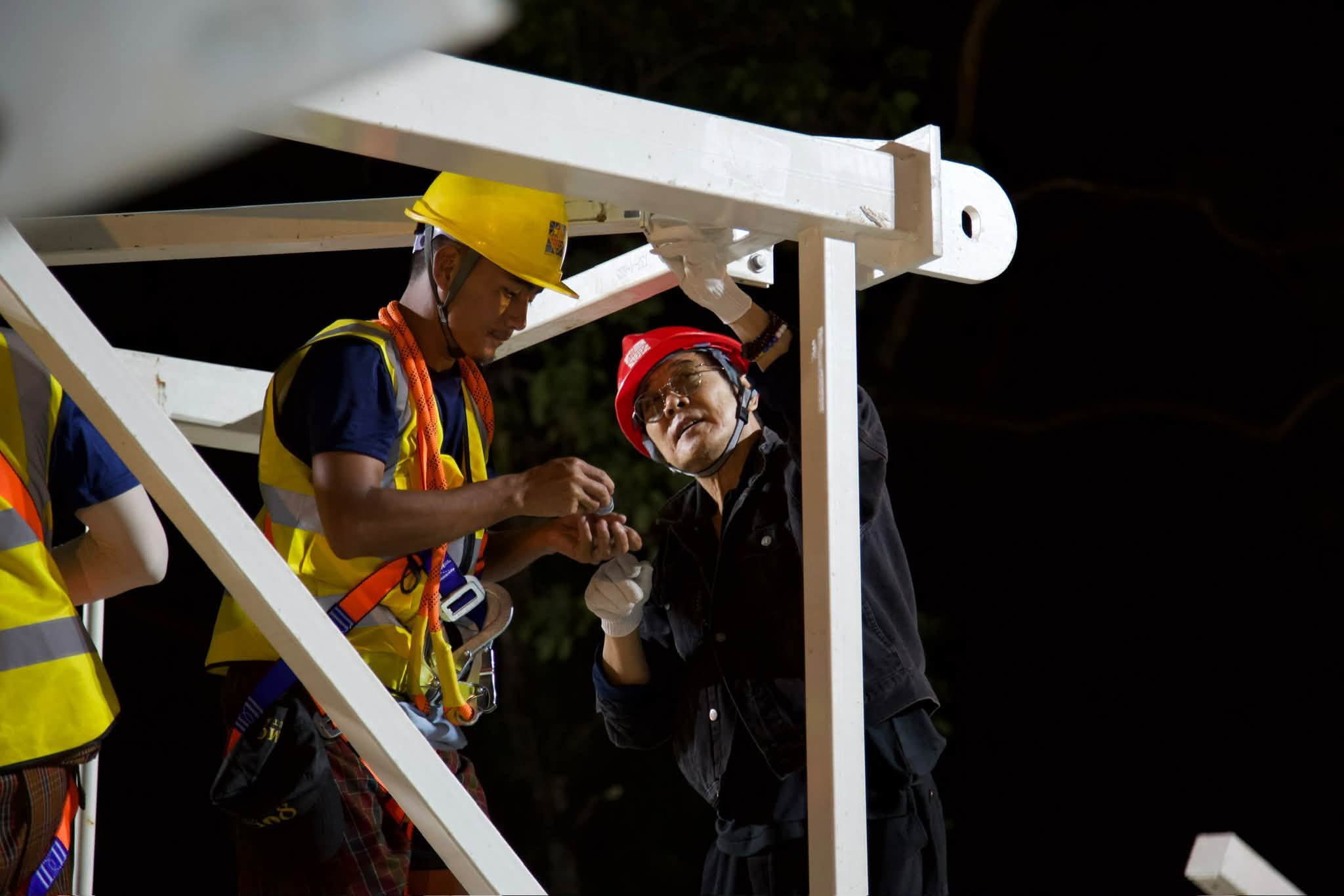
International film actor and martial artist Jet Li joined the volunteers helping to raise the Jangchub Chortens. His participation placed him alongside thousands of people contributing directly to the collective construction effort. Li, who has a longstanding interest in Buddhism and spiritual practice, previously visited Bhutan in 2017.
Thailand’s Prime Minister Anutin Charnvirakul attended with his wife and an official delegation. India was represented by Kiren Rijiju, Minister of Parliamentary Affairs and Minority Affairs.
The participation of Buddhist teachers, political representatives and international public figures placed the event within a wider Asian spiritual, cultural and regional context.
Prayer Participation Expanded Online
The event also coincided with the international opening of Yoeja.com, a digital prayer platform that allows users to record recitations of Om Mani Padme Hung.
Yoeja is a Bhutanese tradition of making offerings to support prayers, monasteries and the monastic community. The digital platform provides an online prayer room with a virtual chyem, or rosary, and records individual and collective prayer counts.
The platform allowed people unable to travel to Gelephu to participate remotely. More information is available in Daily Bhutan’s article on Bhutan’s digital Yoeja prayer platform.
A separate Project 108 platform allows users to submit photographs, memories and a prayer until 15 November. The contributions will remain sealed digitally until their scheduled reveal on 21 February 2027, the King’s birthday.
Ceremonies Continue Until 4 November
The completion of the structures on 1 November did not conclude the religious programme.
Consecration prayers, known as rabney, were scheduled for 2 November. Circumambulation of the chortens, in which devotees walk clockwise around the sacred structures, is scheduled for 3 November alongside continued mantra recitation.
The final day on 4 November includes further religious offerings, teachings and blessings from Buddhist masters.
The full four-day schedule remains available through Daily Bhutan’s Project 108 programme.
As Gelephu Mindfulness City develops, the chortens will form part of its spiritual and physical landscape. Project 108 showed what Bhutan can accomplish when communities work together with discipline and a shared purpose.