
Bhutan Completes Nationwide Orientation for Student Assessment Reform
Bhutan has completed nationwide workshops on a new assessment framework intended to measure how students apply knowledge, reason and solve problems.
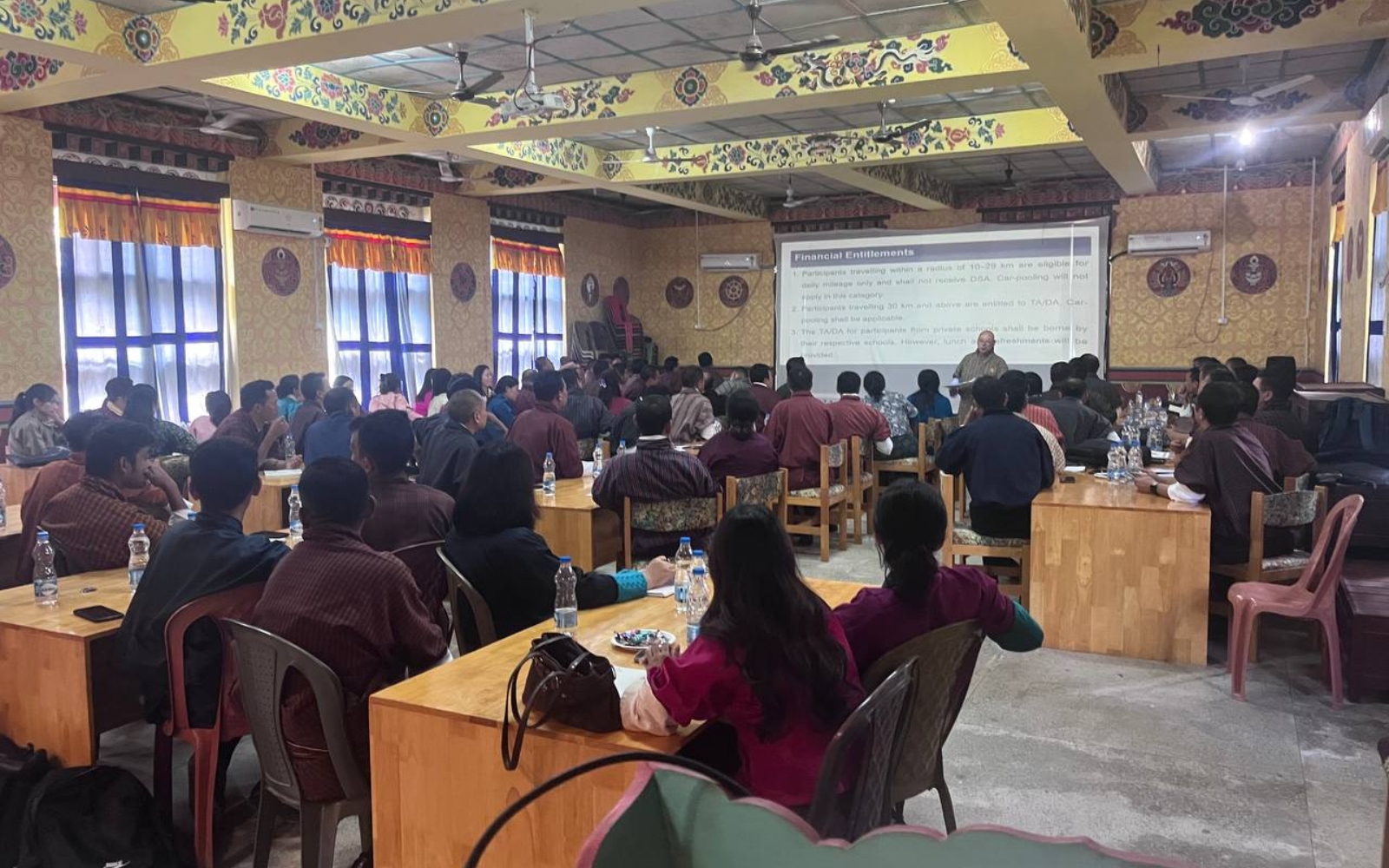
Bhutan has completed a nationwide series of workshops designed to prepare educators for changes to the way student learning is assessed.
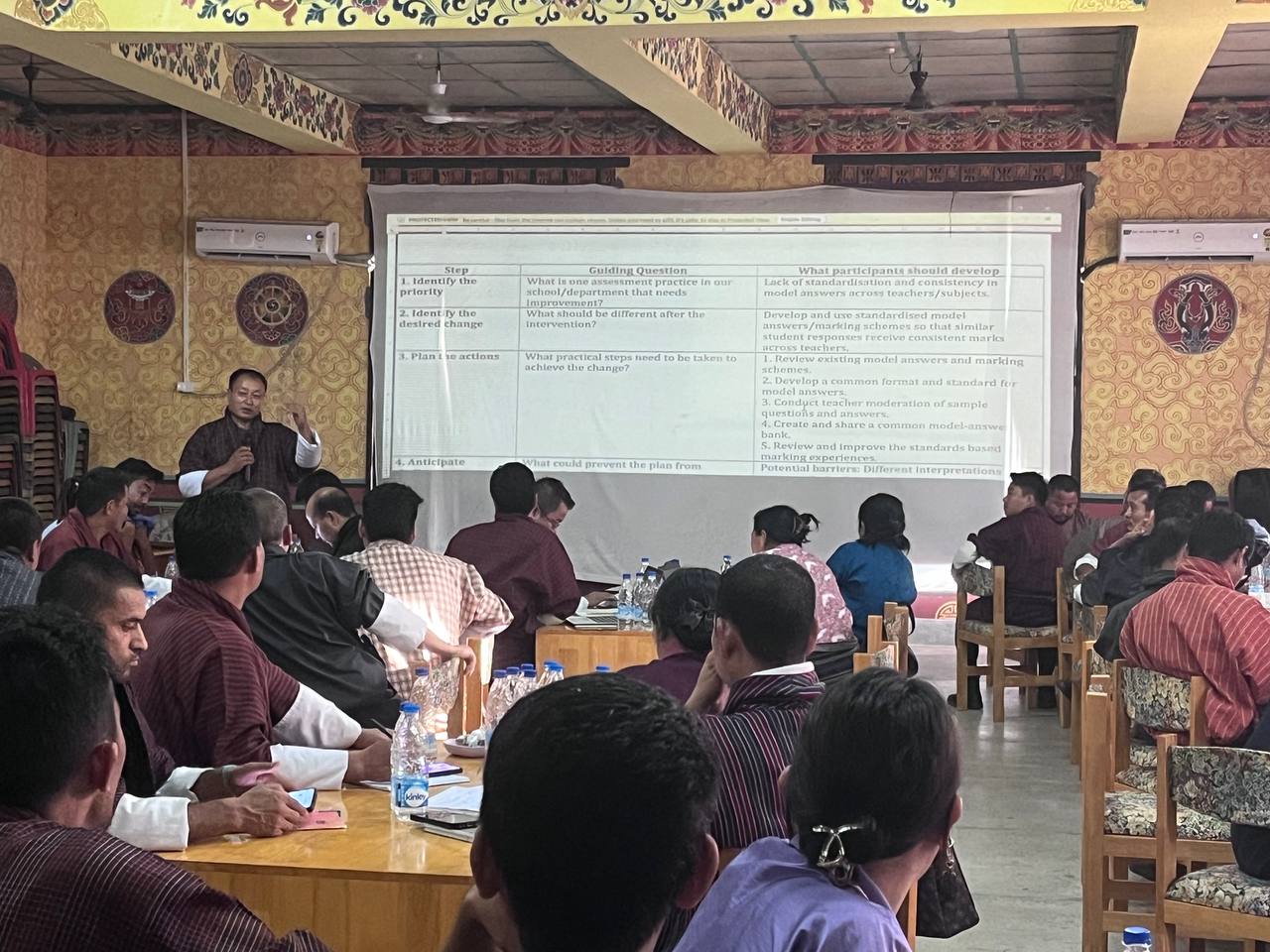
Led by the Bhutan Council for School Examinations and Assessment, or BCSEA, the workshops introduced educators across the country to the National Student-Learning Assessment Framework 2026 and contemporary approaches to measuring learning.
BCSEA is the national body responsible for school examinations and educational assessment. The completion of the workshops moves the reform into a more difficult phase. Its success will now depend on whether teachers, schools and examination authorities can translate the framework into classroom practice.
Reform Originated in a Royal Decree
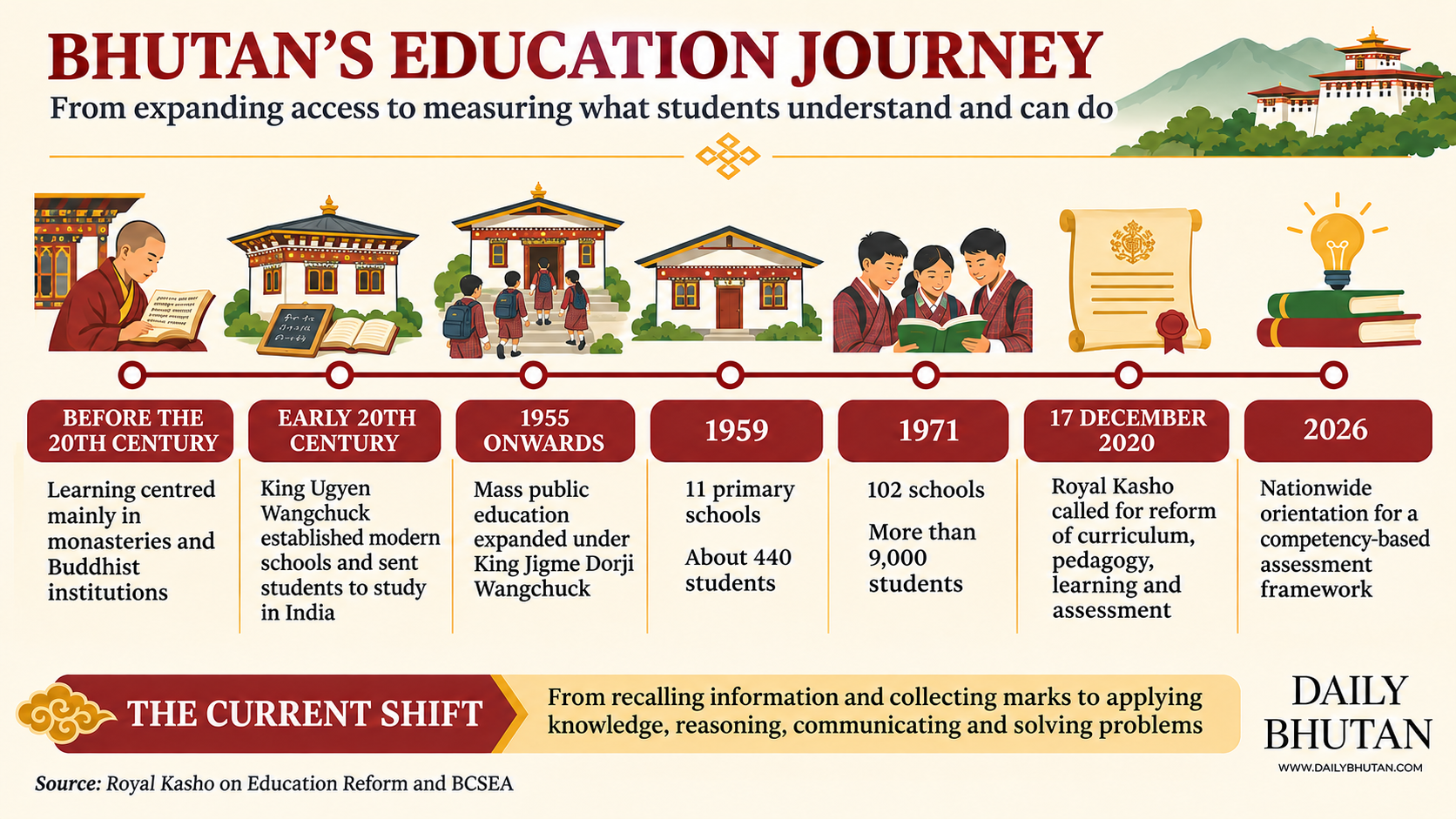
The assessment reforms form part of a wider transformation initiated by King Jigme Khesar Namgyel Wangchuck through the Royal Kasho on Education Reform on 17 December 2020.
A Royal Kasho is a formal decree issued by Bhutan’s King.
The decree called for Bhutan to reconsider the purpose and design of education as technological change, globalisation and new forms of work reshape the knowledge and abilities young people need.
“We must revisit our curriculum, pedagogy, learning process, and assessments to either transform or rewrite them in view of the challenges and opportunities of the twenty-first century,” the King stated in the decree.
The Royal Kasho also identified critical thinking, creativity, problem-solving, collaboration, lifelong learning and technological ability as essential competencies for Bhutanese students.
Assessment reform is therefore not a separate administrative exercise. It is intended to ensure that what schools measure reflects the abilities the wider education system is expected to develop.
Moving Beyond Marks and Recall
Examinations have long carried considerable weight in determining educational success in Bhutan. Marks remain important for progression, certification and entry into further education.
The challenge is that written examinations can sometimes reward the ability to remember and reproduce information more readily than the ability to apply knowledge in unfamiliar situations.
The National Student-Learning Assessment Framework seeks to strengthen the connection between the curriculum, classroom teaching and assessment. It emphasises validity, reliability, fairness, inclusivity, transparency and alignment with intended learning outcomes.
It also places competency-based assessment at the centre of the system.
Competency-based assessment examines whether students can use what they have learned. Depending on the subject, this may involve interpreting information, explaining a decision, applying a concept, solving a problem, conducting an investigation or producing an original response.
The objective is not to remove examinations or marks. It is to improve what those marks represent.
What Competency-Based Assessment Changes
A conventional question may ask a student to recall a definition or reproduce a procedure demonstrated in class.
A competency-based task is more likely to place the student in an unfamiliar situation and ask them to select relevant knowledge, explain their reasoning and develop a solution.
This shift can affect several parts of education:
-
Teachers need to design tasks that produce reliable evidence of understanding.
-
Students need opportunities to practise applying knowledge rather than only memorising content.
-
Marking criteria must recognise reasoning, communication and different valid approaches.
-
Schools need systems that make assessment consistent and fair.
-
Assessment results should help teachers identify learning gaps and adjust instruction.
The framework identifies seven key competencies and includes transferable skills such as critical thinking, communication and creativity.
For students, this could gradually change the experience of preparing for an assessment. For teachers, it requires stronger assessment literacy, including the ability to design suitable questions, interpret evidence and provide useful feedback.
A National Reform Requires Shared Standards
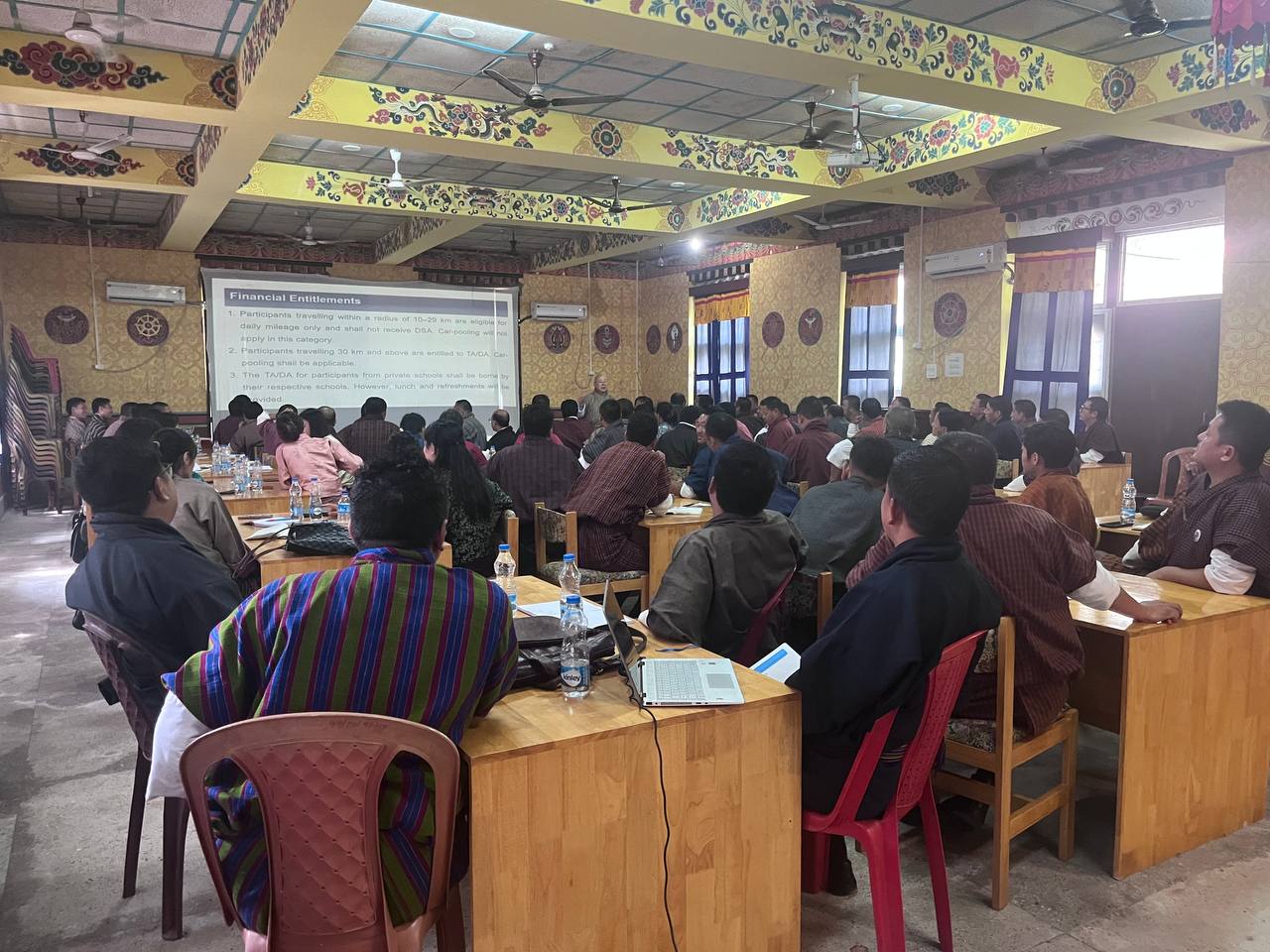
The nationwide orientation matters because assessment reform cannot operate differently in every school or district.
Students must be assessed against comparable expectations, regardless of where they live or attend school. At the same time, the system must accommodate learners with different needs and ensure that assessment methods do not create avoidable disadvantages.
The workshops provided educators with a common introduction to the framework. Orientation alone, however, cannot ensure consistent implementation.
Teachers will need continued professional development, sample assessment tasks, clear marking guidance and time to develop and review new materials. School leaders will need to monitor whether changes are improving learning rather than simply increasing teachers’ workloads.
BCSEA’s implementation plan includes capacity building, continued communication, monitoring, feedback and refinement. The publicly available version of the framework describes implementation as a phased process extending beyond the initial rollout.
Cambridge Standards and Bhutanese Priorities
Bhutan signed an agreement with Cambridge University Press & Assessment in January 2025 to benchmark its national curriculum and assessment system against international standards.
The National Student-Learning Assessment Framework and assessment syllabuses were formally handed over to BCSEA in March 2026. The work covers competency-based assessment across 13 subjects at the senior secondary level.
Cambridge alignment can strengthen technical areas such as question design, marking reliability, fairness, comparability and international recognition.
It should not mean replacing Bhutan’s educational priorities with those of another system.
The framework states that assessment should remain aligned with Bhutanese values and the principles of Gross National Happiness, the country’s development philosophy that considers wellbeing, culture, governance and environmental sustainability alongside economic progress.
The central test is therefore whether Bhutan can develop an assessment system that is internationally credible while remaining suited to its own curriculum, values and national needs.
Implementation Will Determine the Outcome
The completion of the orientation workshops is a milestone, but the number of workshops or participants will not ultimately measure the reform’s success.
The more meaningful questions are whether classroom tasks change, whether examinations provide better evidence of understanding and whether teachers can use assessment findings to improve instruction.
It will also be important to examine whether the new approach works equally well in schools with different staffing levels, resources and access to professional support.
Assessment reform cannot create critical and creative learners by itself. Curriculum, teaching methods, classroom resources and teacher preparation must support the same goals.
If these elements remain aligned, assessment can become more than a method of recording performance. It can help students understand their progress, help teachers respond to learning needs and give the education system better evidence about what is working.
Check out Sarpang Schools Shift Focus From Exam Results to Evidence-Based Learning for more information about how Bhutanese schools are using assessment evidence to guide teaching and student support.
History of Education in Bhutan
For centuries, formal learning in Bhutan was centred mainly in monasteries and Buddhist institutions. Monastic education preserved religious teachings, literature, philosophy, arts and administrative knowledge, but access was largely limited to monks and selected groups.
Modern schooling began taking shape during the reign of Bhutan’s first king, Ugyen Wangchuck, in the early 20th century. Schools were established within Bhutan, while some students were sent to India for further education. His successor, Jigme Wangchuck, continued developing these early foundations.
Mass public education began expanding after 1955 under Bhutan’s third king, Jigme Dorji Wangchuck. In 1959, Bhutan had about 440 students attending 11 primary schools. By 1971, the system had grown to more than 9,000 students in 102 schools.
Education continued to expand under the fourth king, Jigme Singye Wangchuck, as schools reached more communities and Bhutan developed the teachers, administrators and technical professionals required for national development.
This history helps explain the present reform. Earlier generations focused on creating schools and widening access to education. Bhutan’s current challenge is different. It must ensure that learning remains relevant, rigorous and capable of preparing students for a more technological, interconnected and rapidly changing world.
The assessment reforms therefore represent another stage in Bhutan’s educational development. The focus is shifting from whether students can attend school and pass examinations towards what they understand and can do with their learning.