
A Historic Manor in Lhuentse Finds New Life as Jigme Namgyal Museum
The Jigme Namgyal Museum in Lhuentse preserves sacred spaces, historic artefacts and the legacy of Desi Jigme Namgyal in an restored 18th-century manor.
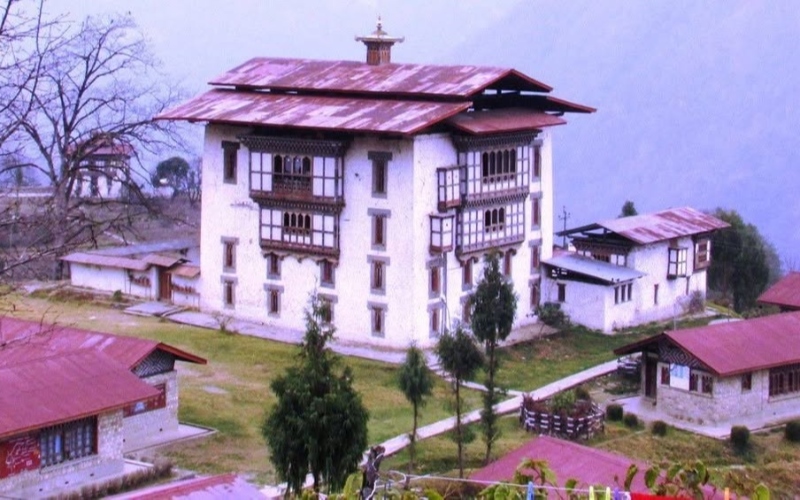
Eastern Bhutan is home to some of the country’s most important religious and historical sites. In Lhuentse, the Jigme Namgyal Museum adds another place where visitors can explore Bhutan’s cultural and royal history.
The museum is housed in a historic naktshang in Dungkar village, Kurtoed Gewog, around 45 kilometres north of Lhuentse town. A naktshang refers to the ancestral or lineage home of an upper-class family.
The four-storey manor, which dates to the 16th century, is closely connected to the descendants of the Buddhist treasure revealer Pema Lingpa and, through that lineage, to Bhutan’s Wangchuck Dynasty.
A village shaped by history and belief
Dungkar village has long been associated with the descendants of Pema Lingpa, one of Bhutan’s most important Buddhist figures.
The Wangchuck royal family traces part of its ancestry to Pema Lingpa’s lineage, whose descendants settled in Dungkar and lived in several homes in the area, including the naktshang that now houses the museum.
The village itself also carries religious significance. According to local tradition, its landscape resembles a conch shell. The name Dungkar means conch, a symbol regarded as auspicious in Buddhism.
One local account connects the settlement of the area to descendants of Pema Lingpa and a local deity named Ama Wangchen Zangmo. According to the story, the deity invited members of the family to establish their home on the ridge and promised to protect them.
The manor is said to have been built around 1595. Its consecration was conducted by Trulku Tshewang Dargay of Kuenzangling, with Buddhist relics installed within the structure.
Later traditions associated with the family also speak of handprints and footprints left on nearby rocks and of a drubchu, or blessed water source.
A manor strengthened over generations
The residence continued to develop over the centuries.
In the late 17th century, eight large pillars were added to strengthen the building. Additional Buddhist relics were also installed under the supervision of Choeje Ngagchang Lama Tub Zhong Rinpoche, an eighth-generation descendant of Pema Lingpa.
The manor later became associated with Dasho Pila Gonpo Wangyal, a member of the Dungkar Choeje lineage.
After spending several years in western Bhutan, he returned to Dungkar and married Ashi Sonam Pedzom. He later moved into the manor, which subsequently became known as Pila Naktshang.
Among their children was Jigme Namgyal, who was born in 1825 and later became the 10th Trongsa Penlop. He was also the father of Ugyen Wangchuck, who became Bhutan’s first hereditary King in 1907.
Because of this association, the residence also became known as Jigme Namgyal Naktshang.
A distinctive four-storey residence
Architecturally, the naktshang follows elements of traditional farmhouse design found in the region, but on a much larger scale.
While large manor houses traditionally have three levels, this residence has four floors. Part of its size reflects its religious function, with several lhakhangs, or temples, incorporated into the building.
Today, the upper floor contains three lhakhangs. The main shrine is the Guru Tshokey Dorji Lhakhang. Next to it is the Kanjur Lhakhang, where sacred Buddhist texts are kept.
The same floor also contains a private chamber associated with Desi Jigme Namgyal, including his bedroom and bed.
A floor below is the Pema Lingpa Lhakhang.
Artefacts from Jigme Namgyal’s time
Another floor now houses the Jigme Namgyal Heritage Gallery.
Its collection includes sacred relics, royal edicts, thangkas, traditional tools, ancient weapons and personal belongings associated with Jigme Namgyal and his ancestors.
The ground floor remains empty for now.
“The museum has been open to the public since June last year, and it is my fourth month as the caretaker. So far, we have received international visitors a couple of times. Likewise, we see more than 20 local visitors here monthly,” said Kezang Jigme, caretaker of the museum.
From ancestral residence to heritage centre
The estate has continued to serve both religious and heritage functions.
Since 2010, the Lhuentse Rabdhey has looked after the property and maintained rituals associated with Jigme Namgyal’s time.
A heritage centre at the site was proposed in 2013. His Majesty King Jigme granted Royal Approval for the project in August 2014, and renovation work began in 2016.
The restored building was subsequently developed as a heritage centre displaying clothing and other objects associated with Jigme Namgyal and his ancestors. It now operates as the Jigme Namgyal Museum.
A cultural stop in eastern Bhutan
Visitor numbers remain modest, especially among international travellers.
Officials hope the ongoing upgrade of the Gangola-Lhuentse Road will improve access and encourage more people to visit the area.
For visitors to eastern Bhutan, the museum provides more than a collection of historical objects. The building itself forms part of the story, linking the religious lineage of Pema Lingpa, generations of the Dungkar Choeje family and the ancestry of Bhutan’s Wangchuck Dynasty.
Museums of Bhutan
Bhutan is also investing in the future of its museums through the Museums of Bhutan project. The initiative aims to strengthen heritage preservation, improve visitor experiences and create more engaging spaces for education, research and cultural activities. It includes plans to upgrade key museums in Paro, Trongsa and Trashigang while supporting wider efforts to promote Bhutan’s cultural heritage.
Click here to support the global fundraising initiative.