
Passion and Purpose: Two Decades of Guiding in Bhutan
For over two decades, cultural and trekking guide Ugyen Tshewang has shared Bhutan’s landscapes, traditions, and spirituality with visitors from around the world. In this interview, he reflects on purpose, peace, memorable journeys, and what makes Bhutan truly unique.
Can you share a little about your background?
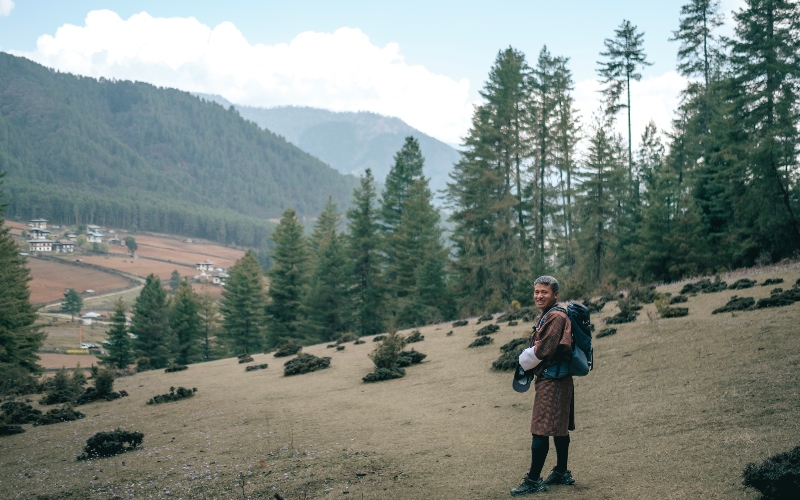
My name is Ugyen Tshewang. I am originally from Radhi, Trashigang, and currently based in Thimphu. I come from a humble background and was raised in a deeply spiritual and traditional environment, which has profoundly shaped my values and outlook on life.
My journey in tourism began in August 2006 when I attended the Cultural and Trekking Guide Training conducted by the Department of Tourism under a government scholarship. I remain sincerely grateful to the Department of Tourism for providing that opportunity. I am also deeply thankful to our Great Fourth King Jigme Singye Wangchuck for introducing the visionary "High Value, Low Volume" tourism policy, which continues to safeguard Bhutan’s culture, environment, and unique identity.
For more than 18 years, I served as a permanent guide. In August 2024, I transitioned to working as a freelance guide so I could create more personal and meaningful experiences for my guests.
Throughout my career, I have consistently invested in expanding my knowledge and skills to provide visitors with deeper insights into Bhutan. As a cultural and trekking guide with over two decades of experience, I am passionate about sharing Bhutan’s rich traditions, spirituality, cultural heritage, and natural beauty with people from around the world.
What places in Bhutan make you feel most connected to nature and yourself?
Bhutan is a deeply peaceful country, and I have been fortunate to experience that sense of peace in many places. If I had to choose, I would say the mountains and trekking trails, where nature remains untouched and pure.
In places such as Haa Valley, Gasa, Phobjikha Valley, Bumthang, the heartland of Buddhism, the remote valleys of eastern Bhutan, and the high Himalayan trails, I often experience a profound silence that touches the heart and brings a sense of calm beyond words.
For anyone seeking peace in nature, trekking in Bhutan offers both adventure and tranquillity. Whether meditating beside a river, sitting quietly by a mountain lake, or visiting lesser-known sacred sites, there is a deep sense of connection and stillness to be found.
For me, peace is not found in a single location. It exists in the harmony between nature, people, and spirituality.
What is the most emotional moment you have experienced as a guide?
I have witnessed many emotional moments throughout my career, but one experience remains especially unforgettable.
Recently, I guided a solo traveller from Singapore on a nine-day journey across Bhutan. He enjoyed exploring beyond the usual tourist sites and spending time immersed in nature. Before his trip, his mother had asked him to offer a prayer for his late grandmother, who was a Buddhist, at a sacred place in Bhutan.
During our hike to Bumdra, at an altitude of 4,130 metres, I suggested that he write a prayer on a rock. The moment he finished and looked up, the clouds suddenly parted and a ray of sunlight broke through. What made it even more remarkable was that the day had been cloudy until that very moment.
He became emotional and began to cry, saying he felt his grandmother was guiding him. Witnessing that deep connection and sense of peace moved me as well.
It reminded me that Bhutan is not simply a destination. For many people, it becomes a journey of healing, remembrance, and spiritual connection. It is a moment I will carry with me forever.
Which season do you think is Bhutan’s best-kept secret?
Every season in Bhutan has its own beauty and character. Most visitors come during spring and autumn, when the skies are clear, Himalayan views are spectacular, and many of the country’s major festivals take place.
Personally, as an adventurer and nature lover, I believe the most underrated season is from June to August.
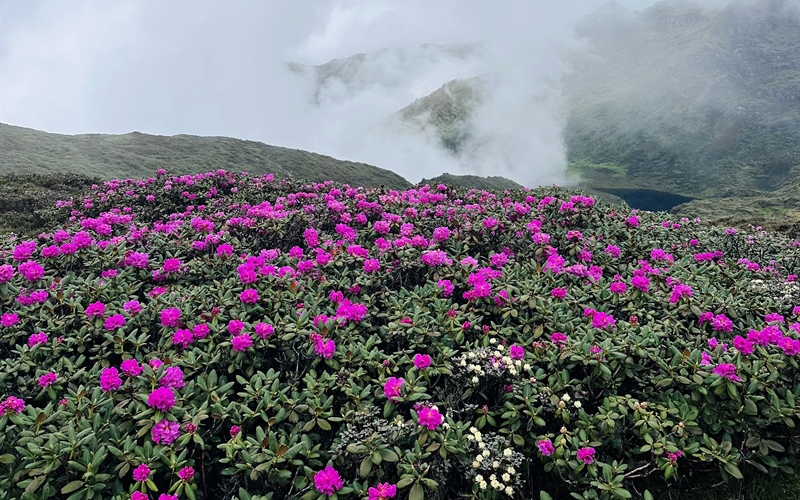
Many travellers avoid this period because of the rain, but it is when Bhutan becomes exceptionally lush and vibrant. High-altitude flowers bloom across the landscape, and the country feels like a vast natural botanical garden. The mountains often appear more mystical as clouds drift slowly across the valleys.
There are also fewer visitors, making the experience quieter, more intimate, and deeply rewarding. For those who do not mind occasional rain, it can be one of the most beautiful times to explore Bhutan.
What has been the funniest moment of your guiding career?
One of the funniest moments in my guiding experience happens almost every day on the trail to Tiger’s Nest.
Guests often ask, "How much farther is it?" and my usual response is, "Just another 10 minutes."
The funny part is that the same answer often comes up several times during the hike. It is not really a lie. It is simply our way of keeping guests motivated and helping them maintain their own pace.
By the time we finally reach the monastery, everyone is laughing about the famous "10 minutes" that never seemed to end.
Which is the most unforgettable tour you have ever guided?
It is very difficult to choose just one particular tour. Every tour I have guided holds a special place in my journey.
I believe every encounter happens for a reason. In Buddhism, we often speak of karmic connections, the unseen bonds that bring people together. Each guest arrives with a unique story, perspective, and life experience, and that is one of the greatest gifts of being a guide.
Over the years, I have also had the privilege of leading prominent media teams, journalists, conservationists, educators, photographers, and spiritual groups from around the world.
Some notable individuals and organisations include:
• BBC World Fast Track in the service industry with Carmen Roberts
• The Soup Spoon founder Mrs. Anna Lim from Singapore, exploring Bhutanese cuisine
• National Geographic photographer Ciril Jazbec from Slovenia, documenting melting glaciers and climate change in the Bhutan Himalayas
• Street portrait photographer Dino Serrao, whose work captures human stories through photography
• National Sports Television from Germany covering the 2015 FIFA World Cup Preliminary Qualifier between Bhutan and the Maldives
• The Straits Times of Singapore with Clara Lock
• Channel NewsAsia with Toh Ee Ming
Among the groups that have inspired me most are:
• The David Suzuki Foundation from Canada, focused on environmental conservation and responsible tourism
• Rufus Reade Tours from Scotland, promoting eastern Bhutan and community tourism
• Cultural, yoga, pilates, and mindfulness groups led by Dehressa Sim (@zenithpilates)
• Students from Raffles Junior College, Raffles Institution, and Jakarta National High School participating in educational exchange and service-learning programmes
• Neykor Tours with Dr. Karma Phuntsho and His Eminence Khentrul Rinpoche, focusing on spiritual well-being
Each of these experiences has enriched my own understanding of the world and strengthened my passion for guiding.
What do visitors notice about Bhutan that locals often overlook?
Many visitors are immediately struck by Bhutan’s peace, fresh air, and clean environment. As locals, we sometimes take these things for granted because they are part of our everyday lives.
Guests often tell me, "What more do you need than this?"
Today, many people are searching for an escape from crowded cities, noise, and stress. They are looking for peace, clean air, and a slower pace of life. Bhutan remains one of the few places where they can still find all three.
Why do you think so many visitors describe Bhutan as different from anywhere else?
I believe many visitors describe Bhutan as different because of the leadership of our monarchs and the values reflected in the philosophy of Gross National Happiness.
We are fortunate to have compassionate kings who place the well-being and happiness of the people at the centre of national development. Visitors also notice how Bhutanese communities support one another during difficult times.
They are often touched by our peaceful way of life, strong cultural traditions, clean environment, and deep respect for nature. Together, these qualities create an experience that feels unique and leaves a lasting impression.
Is there a Bhutanese belief or saying that guides your life?
Yes. I strongly believe in the importance of karmic connection.
According to Buddhist teachings, our present life is shaped by past actions, and what we do today influences the future. This belief encourages us to act with kindness, compassion, and generosity toward all sentient beings.
It reminds me to be mindful in daily life and to help others whenever possible. These values continue to guide both my personal life and my work as a guide.
Have you noticed any shift in travellers' expectations of Bhutan over the years?
Yes. Visitors still appreciate Bhutan's dzongs, monasteries, local festivals, and scenic landscapes. However, many travellers today are looking for deeper and more meaningful experiences. They want to connect with local people, understand Bhutanese values, and see how Gross National Happiness is reflected in everyday life.
Many visitors are also interested in responsible travel. They want to learn about Bhutan's conservation efforts, reduce waste during their journeys, and support local businesses and communities. Simple initiatives, such as the reusable water bottles that Druk Asia provides to guests, are appreciated because they align with these values.
What gives you hope for the future?
My hope is simple. I want to continue sharing Bhutan with visitors for as long as I can.
As long as I am still able to hike to Tiger’s Nest Monastery, I hope to keep guiding, learning, and helping others discover the beauty and spirit of Bhutan.
When do you feel proudest to be Bhutanese?
I am always proud to be a human being, and I am equally proud to have been born in Bhutan.
I deeply admire our King and his leadership, which continues to inspire unity, peace, and happiness across the nation. I also feel a great sense of pride whenever visitors appreciate our culture, kindness, and the beauty of our country.
The proudest moments are often when guests leave Bhutan with positive memories and a genuine appreciation for who we are.
What does happiness mean to you personally, beyond the national philosophy?
For me, happiness is not something that can be bought or manufactured.
It is a state of mind. It exists in the present moment, in how we think, how we feel, and how we choose to appreciate life. True happiness comes from being content, mindful, and grateful for what we already have.
How would you like people to remember you?
Over the past 20 years as a cultural and trekking guide in Bhutan, I have been fortunate to meet wonderful people from many different countries and backgrounds. Guiding has given me the privilege of sharing Bhutan’s unique spirit and the values of kindness, compassion, and respect that are deeply rooted in our culture.
Many guests arrived as visitors but left as friends. Those friendships and shared experiences have been among the most rewarding parts of my journey. I hope people will remember me not only as a tour guide, but as a good friend from Bhutan who shared his country with sincerity, kindness, and passion.
I would be very happy if they returned to Bhutan, and I would have the privilege of guiding them through this beautiful country once again.
This interview is part of the Passion and Purpose series where we shine a spotlight on the extraordinary individuals shaping Bhutan’s industries and communities across the different industries. Each feature explores the unique journeys, challenges, and achievements of Bhutanese professionals across diverse fields—tourism, arts, entrepreneurship, and more. Through heartfelt stories, we uncover what fuels their dedication and how they contribute to preserving Bhutan’s heritage, sustainability, and Gross National Happiness ethos.