
What Bhutan Quietly Changed Inside Me
A reflective Gen Z travel story about returning to Bhutan, exploring mindfulness, spirituality, serendipity, and the quiet beauty of everyday moments.
My first visit to Bhutan was in January 2025, during Chinese New Year.
At the time, I was simply curious and travelled to Bhutan on my own. I had always felt drawn toward Himalayan culture and had spent years reading books about Tibetan Buddhism. Bhutan felt mysterious to me, almost distant from the modern world I was used to. I wanted to experience it for myself.
Instead of celebrating Chinese New Year in a familiar environment, I spent it surrounded by monasteries, mountains, prayer flags, and winding roads through the Himalayas. That first journey stayed with me long after I returned home.
Falling in Love
In fact, I fell in love with the country without even realizing it at first. Even after returning home, I kept thinking about Bhutan constantly, the peaceful atmosphere, the people, the mountains, and the way life felt slower and more present there.
I started feeling a strong desire to let more people discover and experience Bhutan for themselves. During my research, I came across Druk Asia and eventually decided to write in to apply for an internship.
At that point, I did not fully know what I was searching for. I only knew that Bhutan had left a very deep impression on me, and somehow, I wanted to stay connected to the country in a more meaningful way.
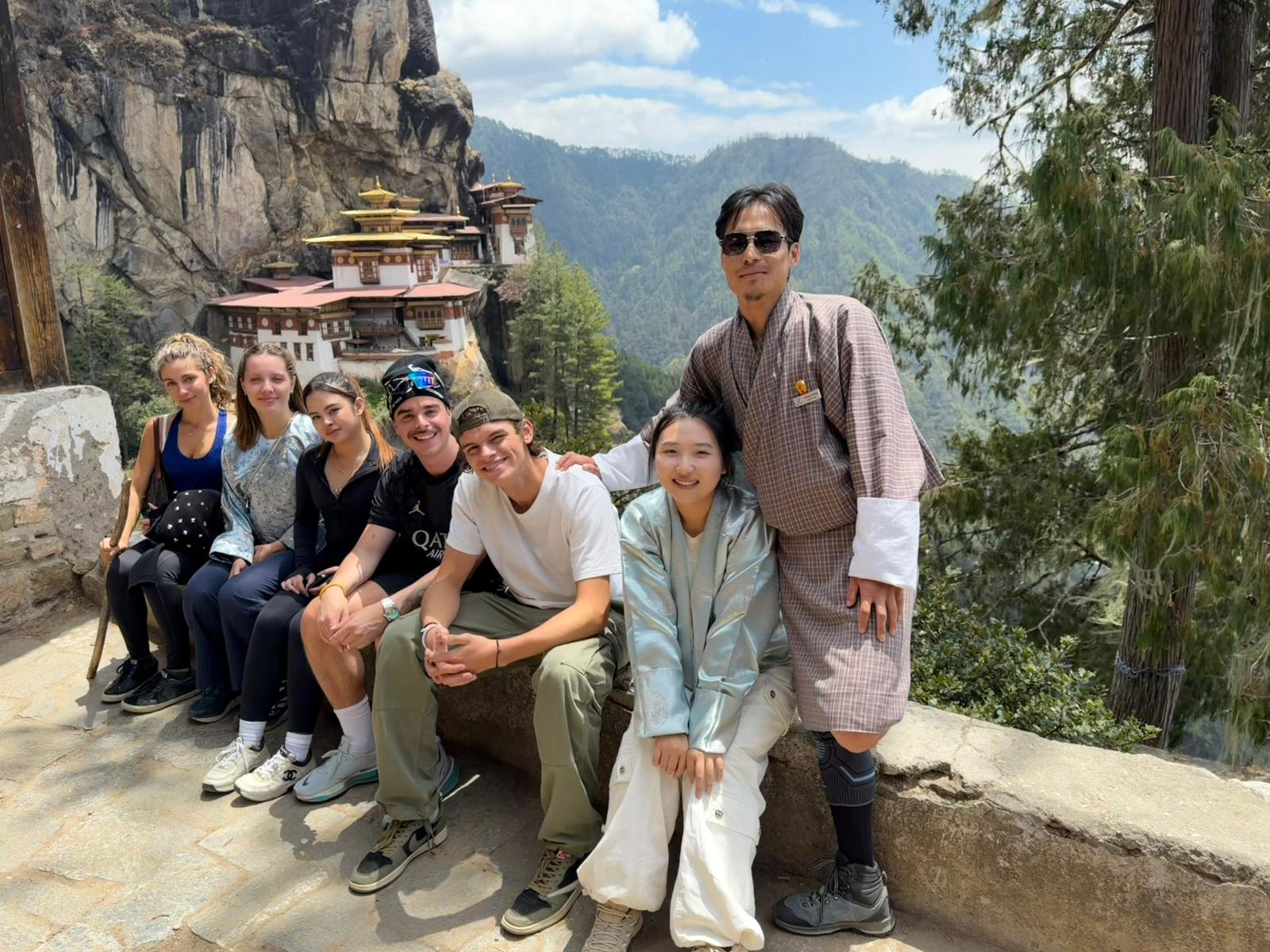
Then, in April 2026, I had the opportunity to return again, this time on a 6-day, 5-night trip together with a group of students from EHL Hospitality Business School Singapore Campus.
But returning to Bhutan after 18 months felt completely different.
The country itself had not changed. I had.
Bhutan Has a Quiet Way of Slowing You Down
One thing I realised during my second trip was that Bhutan carries a kind of quiet energy that naturally makes people more present without even trying.
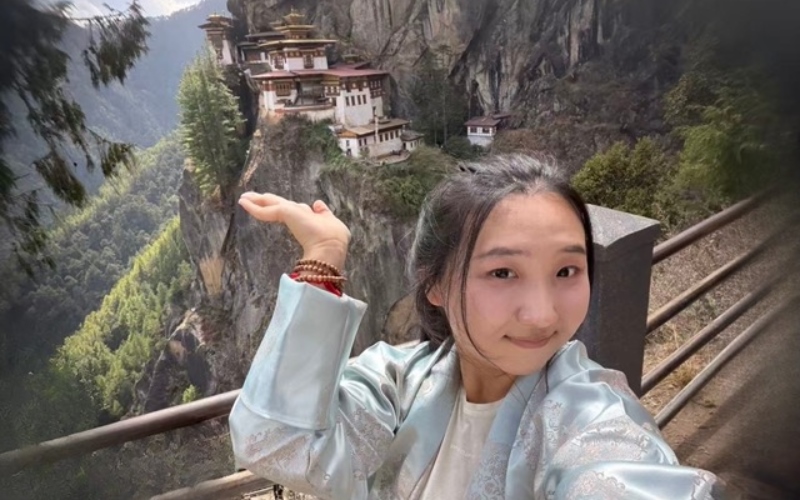
I noticed it most clearly on the hike toward Paro Taktsang, widely known as Tiger’s Nest Monastery.
During my first visit, I could not sleep the night before the hike. I kept questioning whether I was worthy of visiting such a sacred place.
This time, the feeling was completely different.
Halfway up the trail, I sat down on a wooden chair to rest. Sunlight passed gently through the trees and landed across my face. I could feel the cold mountain wind moving toward me while the warmth of the sun stayed on my skin.
For a few minutes, I simply sat there breathing.
Every thought disappeared except the awareness of that exact moment, the sunlight, the wind, and the sound of the forest around me. Nothing dramatic happened, yet it became one of the most meaningful moments of the entire journey.
Bhutan gave me many experiences like this. Not grand revelations, but quiet moments that felt deeply complete on their own.
The Serendipity of Meeting Again
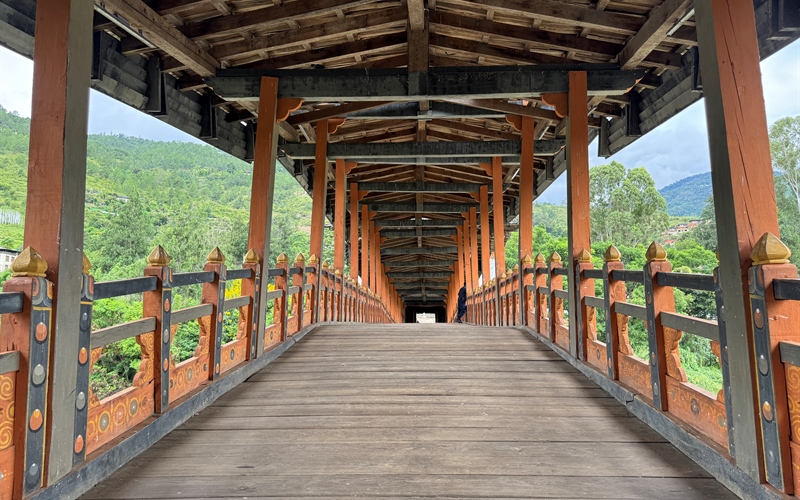
One of the most unexpected moments of the trip happened while I was walking across the bridge toward Punakha Dzong.
Out of nowhere, I saw the tour guide from my very first trip to Bhutan in January 2025.
Of all places and all moments, our paths crossed again beside the river beneath Punakha Dzong. We smiled, greeted each other warmly, and spoke briefly before continuing on our separate paths once more.
The encounter lasted only a few minutes, but it stayed with me for the rest of the day.
Standing there afterwards, watching the river flow beneath the dzong, I suddenly realised that not every connection in life is meant to continue forever, and not every encounter needs to lead somewhere permanent. Some people simply enter our lives when the timing quietly aligns, before flowing onward again.
There was something strangely beautiful about that.
Bhutan often felt like this to me. Not dramatic, but deeply meaningful in small and unexpected ways.
Conversations That Stayed With Me
Some of the strongest memories I carried home from Bhutan were conversations with local people.
One evening in Ura Valley, heavy rain caused the homestay to lose electricity, and my phone battery had already died. Without distractions, I ended up having a long and reflective conversation with my tour guide.
I asked him whether Bhutan’s education system formally teaches Buddhism. He explained that most Bhutanese children learn about Buddhism mainly through their families and upbringing.
Then I asked him something more personal.
“If your son wanted to become a monk one day, would you support him?”
Without hesitation, he said yes. He told me it would be considered a blessing.
That answer stayed with me deeply.
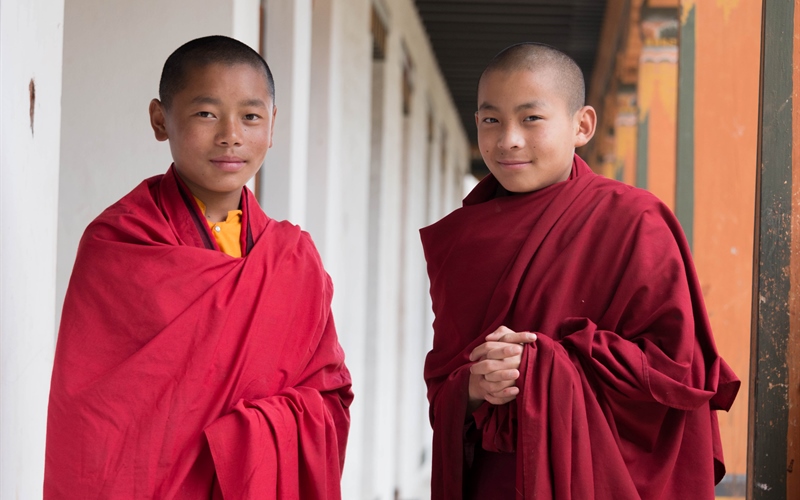
Growing up in a more traditional Asian environment, choices like that are often misunderstood. People may see you as strange, distant, or disconnected from normal society. Sometimes even family members cannot fully understand such decisions.
Hearing his answer made me realise how differently spiritual life can be viewed in Bhutan.
Another conversation that stayed with me was with a Bhutanese woman who had once lived in New York. She had married an American and spent years working there before eventually returning home to Bhutan after her divorce.
She told me that when she was younger, despite growing up in Bhutan, she was not spiritual at all and did not practice religion seriously.
But after returning from New York, her life slowly changed. She became a yoga teacher and began practicing Buddhism more deeply.
The biggest transformation she described was learning how to love herself and become more compassionate toward others.
That conversation resonated with me personally because my own life has also changed significantly through learning and practicing the Dharma.
Before visiting Bhutan, I carried a stereotype that Bhutanese people naturally grow up emotionally balanced because they are surrounded by Buddhist culture from birth. But after meeting more people there, I realised Bhutanese people experience the same struggles, emotions, and inner conflicts as everyone else.
The difference is not perfection.
Perhaps the difference is simply that Bhutan creates more space for reflection, compassion, and awareness within everyday life.
The Quiet Relationship Between Humans and Animals
One of the things that fascinated me most in Bhutan was the peaceful relationship between animals and people.
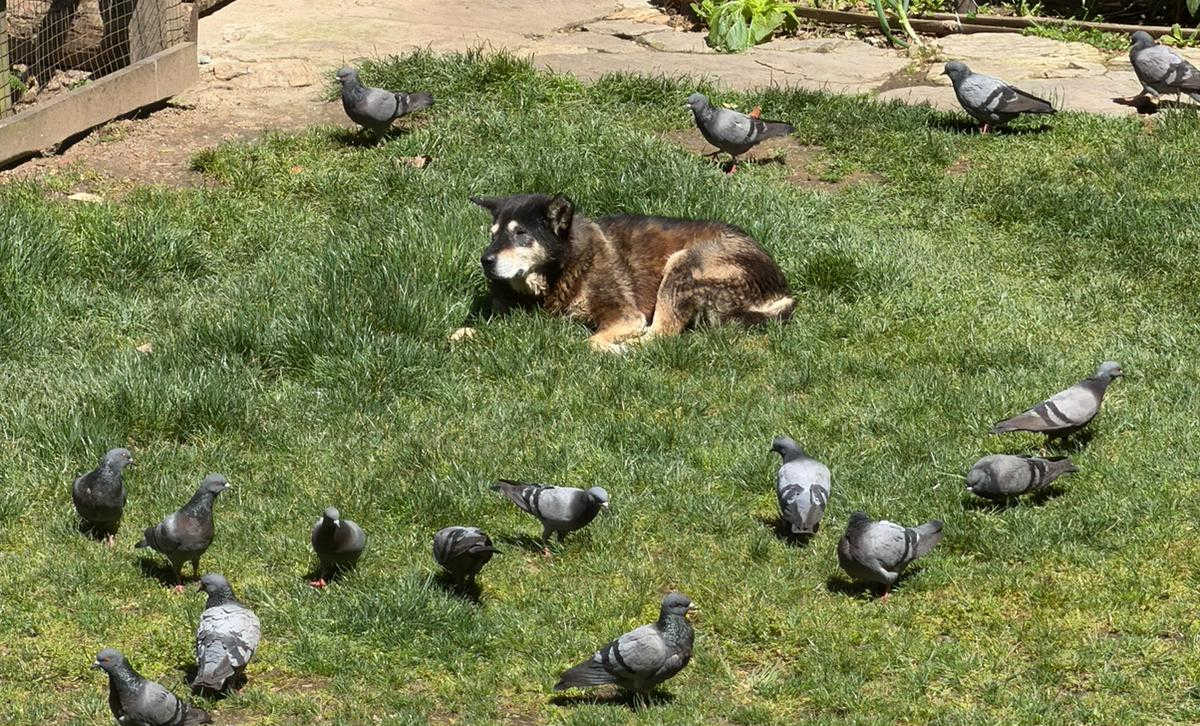
The street dogs felt unusually calm around strangers. Many of them would walk directly toward me, lean gently against my legs after being petted, and wag their tails affectionately. They carried no visible fear.
Sometimes they would sleep directly in the middle of the road, completely relaxed, as if they trusted the world around them enough to fully rest.
Even small things began to stand out to me differently in Bhutan.
One afternoon during lunch in Gangtey, several flies landed softly on my hand. Normally, I would instinctively brush them away. But instead, I just watched them quietly resting there for a few seconds.
It almost felt as if the animals in Bhutan carried no expectation of harm from humans.
That quiet coexistence between humans, animals, and nature felt deeply different from many other places I had travelled.
Bhutan Did Not Change My Life Overnight
People often describe Bhutan as life-changing. For me, the experience felt quieter than that.
Bhutan did not suddenly give me all the answers to life.
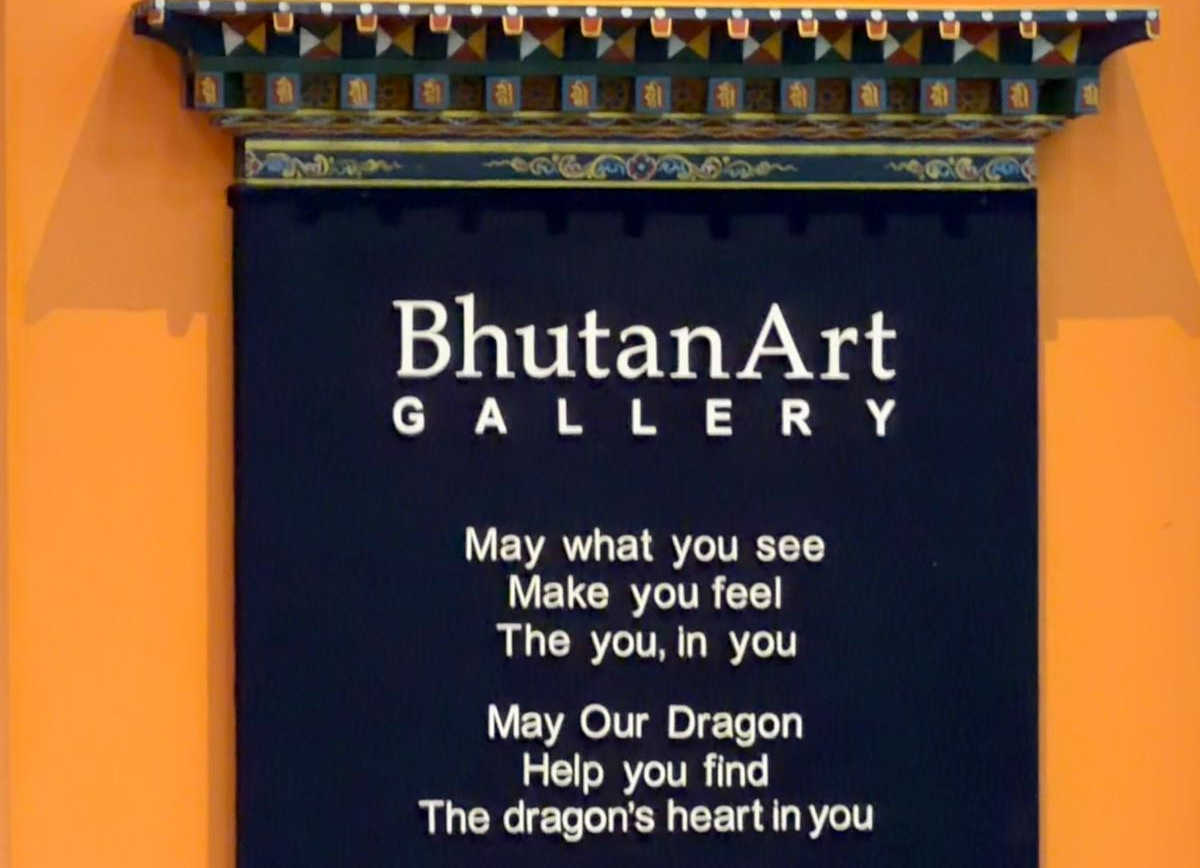
But there was one sentence at Paro International Airport that stayed with me deeply:
“May what you see make you feel the you in you, may our dragon help you find the dragon’s heart in you.”
That sentence perfectly captured how Bhutan felt to me.
The country was not trying to impress visitors through luxury, entertainment, or spectacle. Instead, it quietly encouraged people to reconnect with themselves.
Bhutan also changed the way I think about spirituality.
Before, I often imagined practicing the Dharma or seeking enlightenment as something that required leaving ordinary life behind, retreating into monasteries, mountains, or isolated places far away from society.
But Bhutan made me question that idea.
Perhaps awakening is not about escaping life. Perhaps it is about learning how to remain conscious and present within ordinary life itself.
Why Bhutan Continues to Stay With Me
I have travelled through Nepal and Tibet, and every Himalayan region carries its own atmosphere and philosophy.
But Bhutan affected me differently because it never tried too hard.
Nothing felt rushed. Nothing demanded attention.
Instead, the country slowly changed the way I noticed the world around me.
A brief conversation during a rainstorm. A dog sleeping peacefully on the roadside. Sunshine filtering through trees on the path to Tiger’s Nest. A chance reunion beside Punakha Dzong. The sound of prayer flags moving in the wind.
These moments were small. Yet together, they became unforgettable.
When I look back now, I realise Bhutan did not ask me to become someone new.
It simply reminded me how to fully be present as the person I already was.
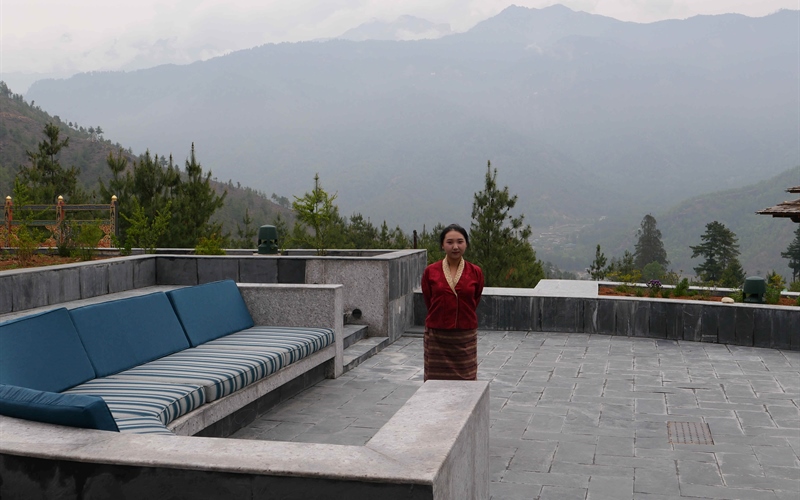
This article was contributed by Wenxin Cong, a third-year student at EHL Hospitality Business School, widely recognized as one of the world’s leading institutions for hospitality education. She is currently interning with Druk Asia, Bhutan Travel Specialist.