
Passion and Purpose: Guiding Visitors Through the Soul of Bhutan
What does it mean to preserve culture in modern Bhutan? Cultural guide Kinley Dorji shares his perspective on spirituality, identity and purpose.
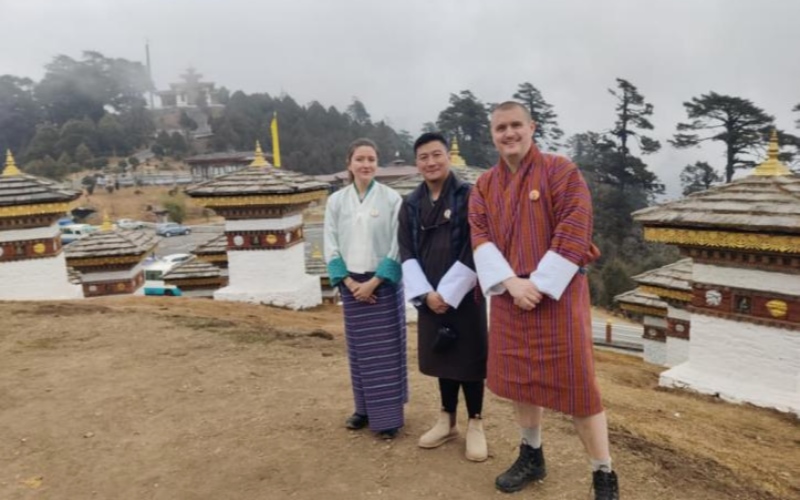
Can you tell us a little about your background and how you became a cultural guide?
My name is Kinley Dorji, though most people know me as Yongko. I’m a proud father to one son, and I have been on quite a journey to find my true calling.
I began my career in 2012 managing our family’s manufacturing business. Over the years, I explored different paths — working as a Programme Lead at an international IT company, completing upskilling programmes in construction and technology, and pursuing various professional opportunities. But despite those experiences, something always felt missing.
Everything changed in 2016 when I discovered my deep passion for travel, culture and connecting with people from around the world. I enrolled in a guiding course, and from the very first day, I knew I had found where I truly belonged. I'm currently a guide with Druk Asia.
What inspired you to leave business and focus on cultural guiding?
After years of exploring different careers, I realised my deepest passion was not in business or technology. It was in Bhutanese culture, Buddhism and the privilege of sharing my country with others.
I wanted to show Bhutan through a lens of genuine compassion and care. Not simply as a tourist destination, but as a living spiritual world with something meaningful to offer those who arrive with an open heart.
What first drew you to study Bhutanese culture, iconography and history so deeply?
It happened naturally through my guests. As I began guiding, I found myself wanting to go deeper into Buddhism and Bhutanese iconography. I realised that every symbol, deity and piece of sacred art carries profound meaning. Nothing is merely decorative. Everything is intentional.
The more I learned, the more I wanted to understand. And the more I shared with guests, the more curious they became. That exchange of curiosity became one of my greatest teachers.
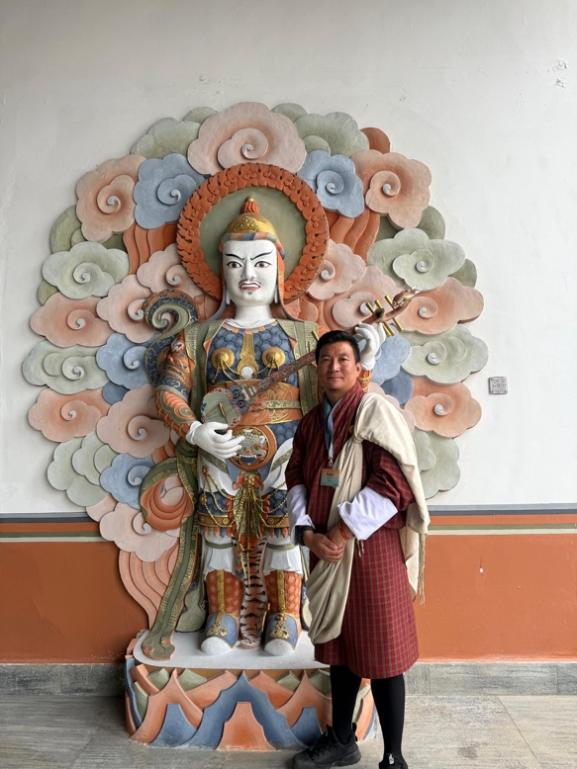
Are there Bhutanese symbols or deities that foreign visitors commonly misunderstand?
Yes. Many visitors first encounter Bhutanese sacred art and assume it is purely decorative, or even frightening. Wrathful deities, in particular, are often misunderstood. In Bhutanese Buddhism, these forms represent fierce compassion: a protective force that shields practitioners from harm and ignorance, not evil or anger as outsiders sometimes assume.
The moment guests begin to understand the meaning behind what they are seeing, their entire experience of Bhutan often changes. Witnessing that moment of understanding is one of the most rewarding parts of my work.
Do you think younger Bhutanese today connect differently with history and tradition compared to previous generations?
This is something that concerns me deeply. Many young Bhutanese are becoming increasingly disconnected from our cultural and religious traditions. Globalisation has created many opportunities, but it has also brought the risk of losing our identity.
I feel a personal responsibility to help preserve those connections, beginning at home. Every moment I spend with my son, I try to teach him Buddhist prayers, Bhutanese traditions and the meaning behind our customs. I want him to grow up deeply rooted in who he is, even as the world around him changes rapidly.
What misconceptions about Bhutan surprise you the most?
Many people arrive expecting Bhutan to be a perfect, untouched paradise frozen in time. The reality is far more nuanced and, I think, far more interesting.
Bhutan is a living, evolving country. We face real challenges, real aspirations and have real people navigating modernity while honouring tradition. That complexity is what makes Bhutan genuinely fascinating, but it is often invisible to those who only see the postcard version of the country.
What is the hardest part about explaining Bhutanese spirituality to outsiders?
Buddhism is not easy to explain, especially to those with no prior exposure to it. It is not simply a religion in the conventional sense. It is a complete way of seeing, living and being in the world.
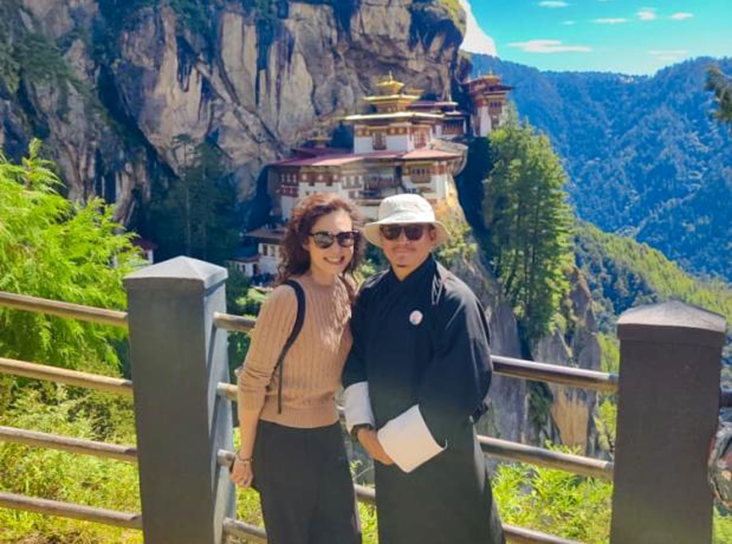
I’ve found the most effective approach is not through intellectual explanation, but experience. When guests stand before a sacred site, breathe the mountain air and feel the stillness around them, they begin to understand something words alone cannot fully capture. The experience itself becomes the teacher.
What aspects of Bhutanese culture do you believe are most at risk today?
Our people — especially those between the ages of 20 and 40. This is the generation that carries our living culture, and many are leaving Bhutan in significant numbers in search of better opportunities abroad, whether in Australia, Canada or the Gulf.
Culture is not preserved only in buildings or festivals. It lives within people. When people leave and gradually lose their connection to home, culture itself becomes vulnerable.
In your view, what does “cultural preservation” really mean in modern Bhutan?
To me, cultural preservation means living your culture, not simply displaying it. It means teaching your children their prayers, speaking Dzongkha at home and understanding the meaning behind the festivals and traditions you celebrate.
Preservation is not a museum exercise, it is a daily choice made through ordinary moments and everyday life.
If Bhutan could offer the world one lesson, what would it be?
That a meaningful life and a prosperous life are not necessarily in conflict, but they do require a different understanding of prosperity.
Many Bhutanese carry a deep sense of compassion. Gross National Happiness is not simply a government policy; it reflects values many people genuinely try to live by. In a world increasingly driven by materialism, Bhutan quietly demonstrates that mindful and sustainable living can also be deeply fulfilling.
What is one thing every visitor should understand before coming to Bhutan?
Bhutan is not a destination built around cities, nightlife or fast-paced entertainment. If that is what someone is looking for, Bhutan may not be the right place.
But for those seeking mountains, stillness, mindfulness, genuine human connection and a spirituality woven into everyday life, Bhutan can give you something that you will remember for the rest of your life.
Come with an open mind. Leave your expectations at the border. Bhutan will do the rest.
What is the most meaningful feedback you have received from travellers?
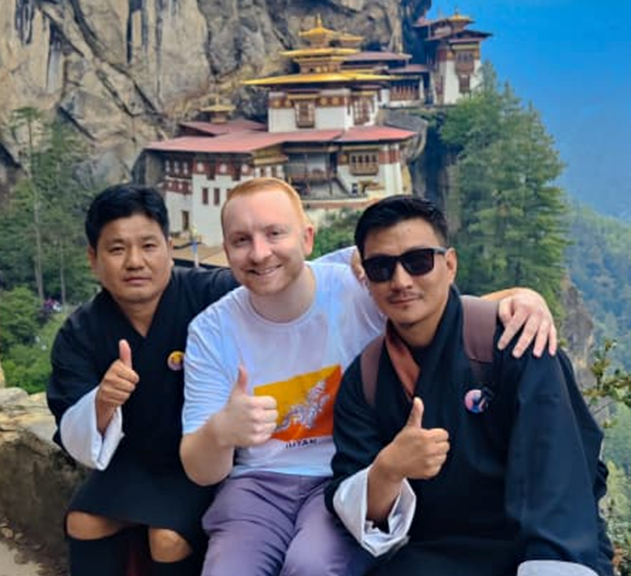
The feedback that touches me most deeply is when guests tell me that my passion for Buddhism and Bhutanese culture genuinely moved them and that the way I shared our traditions helped them feel something unexpected.
Some guests have even jokingly called me a legend, which is very kind, and a little embarrassing. (laughs)
But in all seriousness, what I treasure most is knowing that my passion came through in an authentic way. Over the years, I’ve had the privilege of guiding remarkable travellers who arrived in Bhutan with a sincere desire to understand Buddhism and our way of life. Those journeys where curiosity meets genuine openness have been the most meaningful experiences of my guiding journey.
When a guest leaves Bhutan understanding something they did not before, that is the greatest reward this work can offer me.
This interview is part of the Passion and Purpose series where we shine a spotlight on the extraordinary individuals shaping Bhutan’s industries and communities across the different industries. Each feature explores the unique journeys, challenges, and achievements of Bhutanese professionals across diverse fields—tourism, arts, entrepreneurship, and more. Through heartfelt stories, we uncover what fuels their dedication and how they contribute to preserving Bhutan’s heritage, sustainability, and Gross National Happiness ethos.