
Fourth King Graced Sacred 21 Taras Thongdrol Ceremony
Royal Family members joined senior monks and officials at Pangrizampa for the consecration of a new sacred Tara thongdrol depicting the 21 manifestations of Tara, marking an important spiritual milestone for Bhutan.
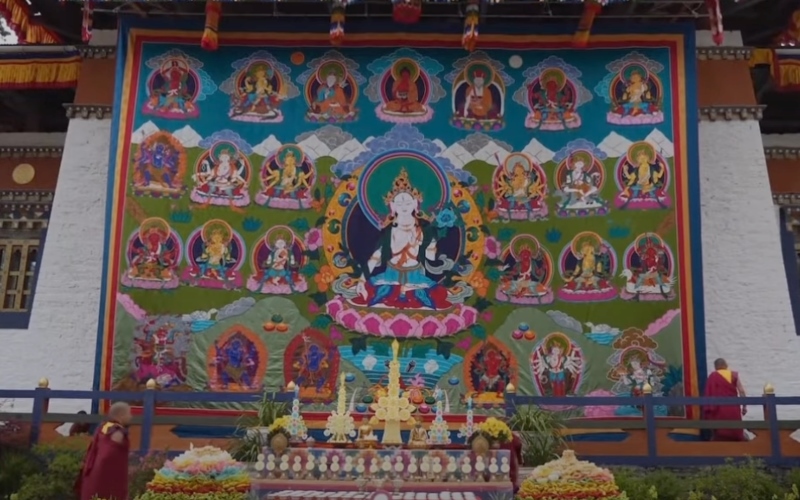
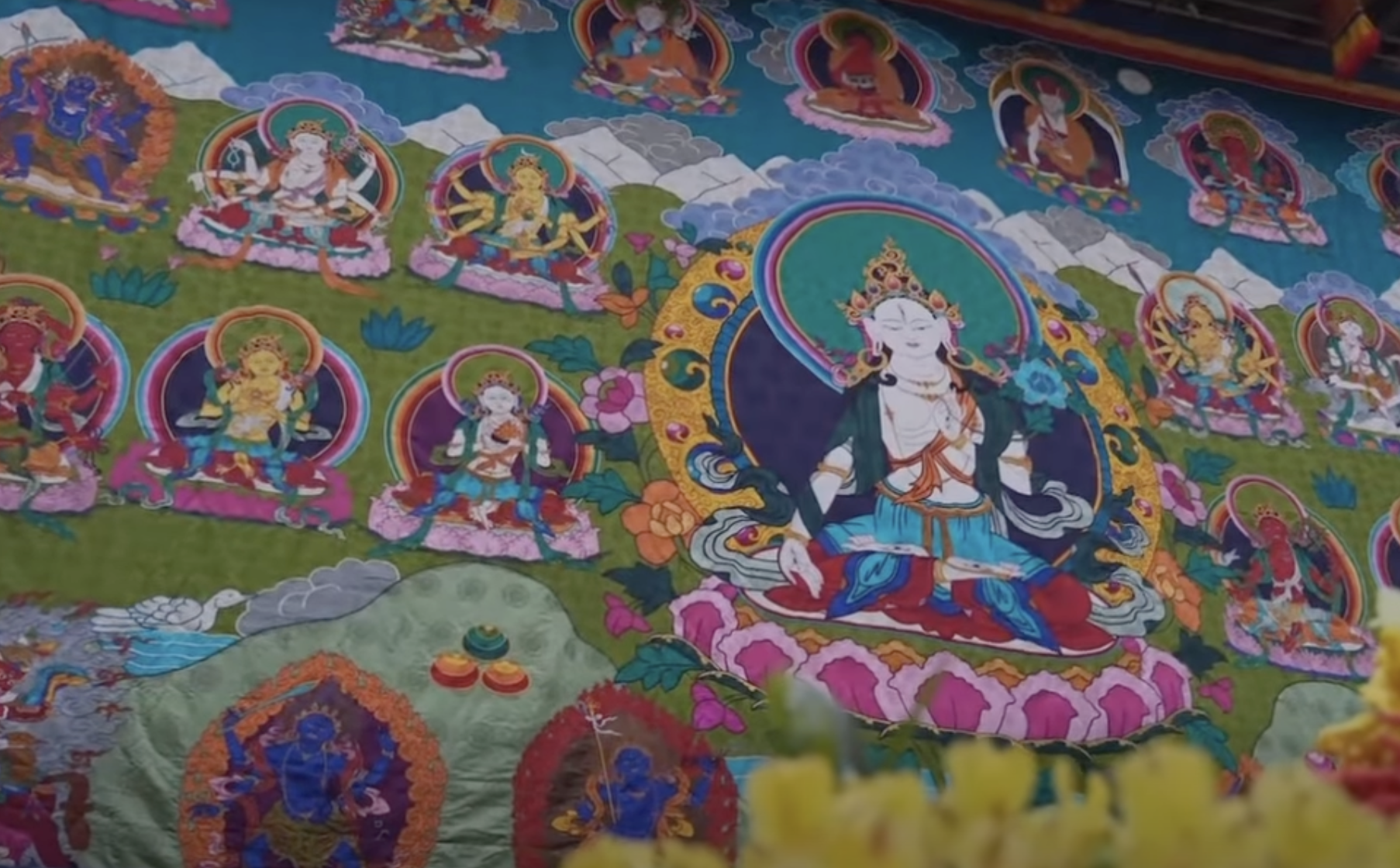
A major spiritual milestone was marked at the historic Tara Lhaden Zhingkham in Pangrizampa with the formal consecration, known as Tashi Rabney, of a newly created Drölma Nyishu Tsachi Thongdröl, a giant sacred scroll appliqué tapestry depicting the 21 Emanations of Tara.
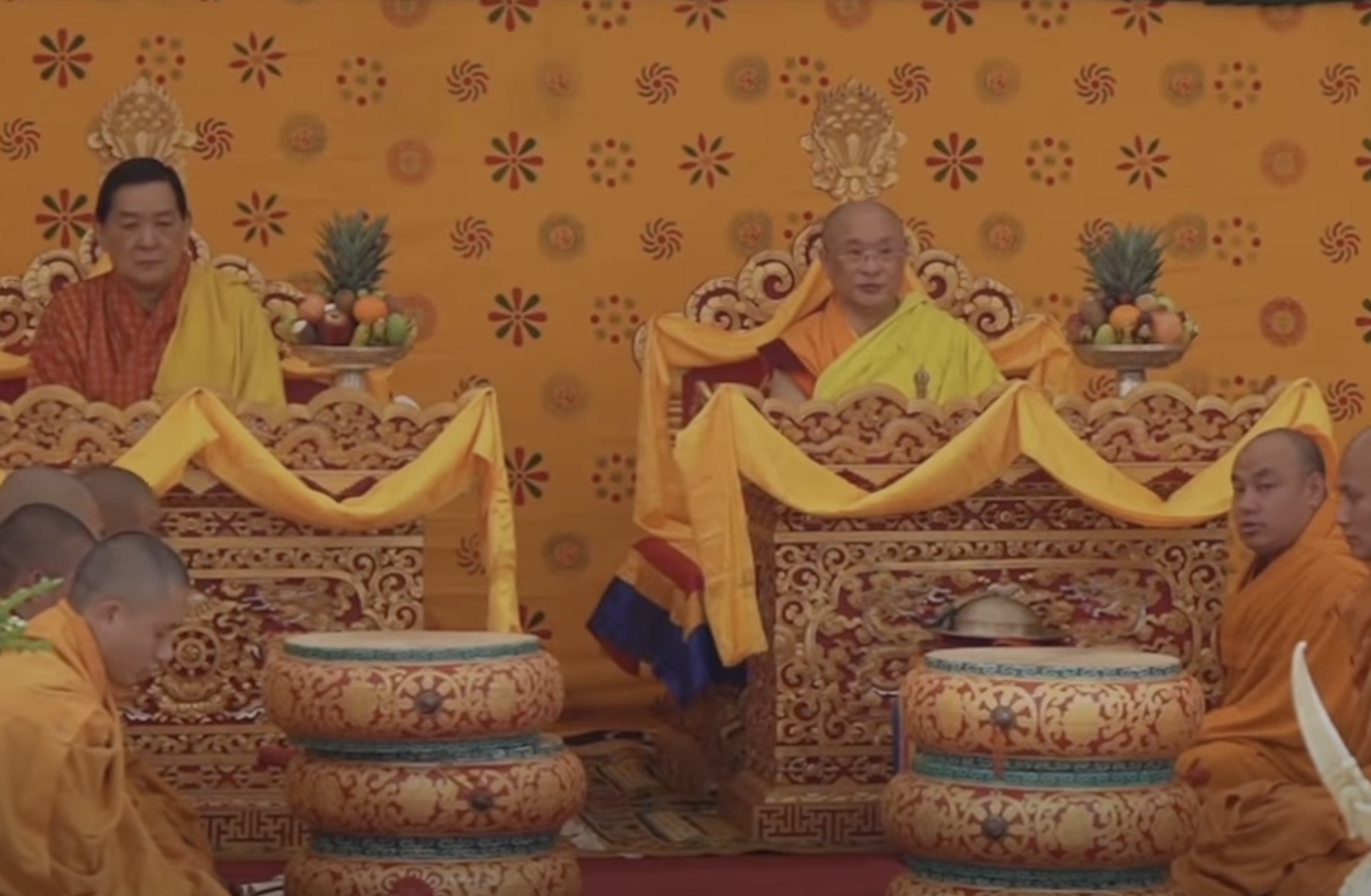
The ceremony brought together members of Bhutan's Royal Family, senior government officials, and representatives of the Central Monastic Body, highlighting the enduring significance of Bhutan's spiritual heritage and living Buddhist traditions.
His Majesty the Fourth King Graces the Ceremony
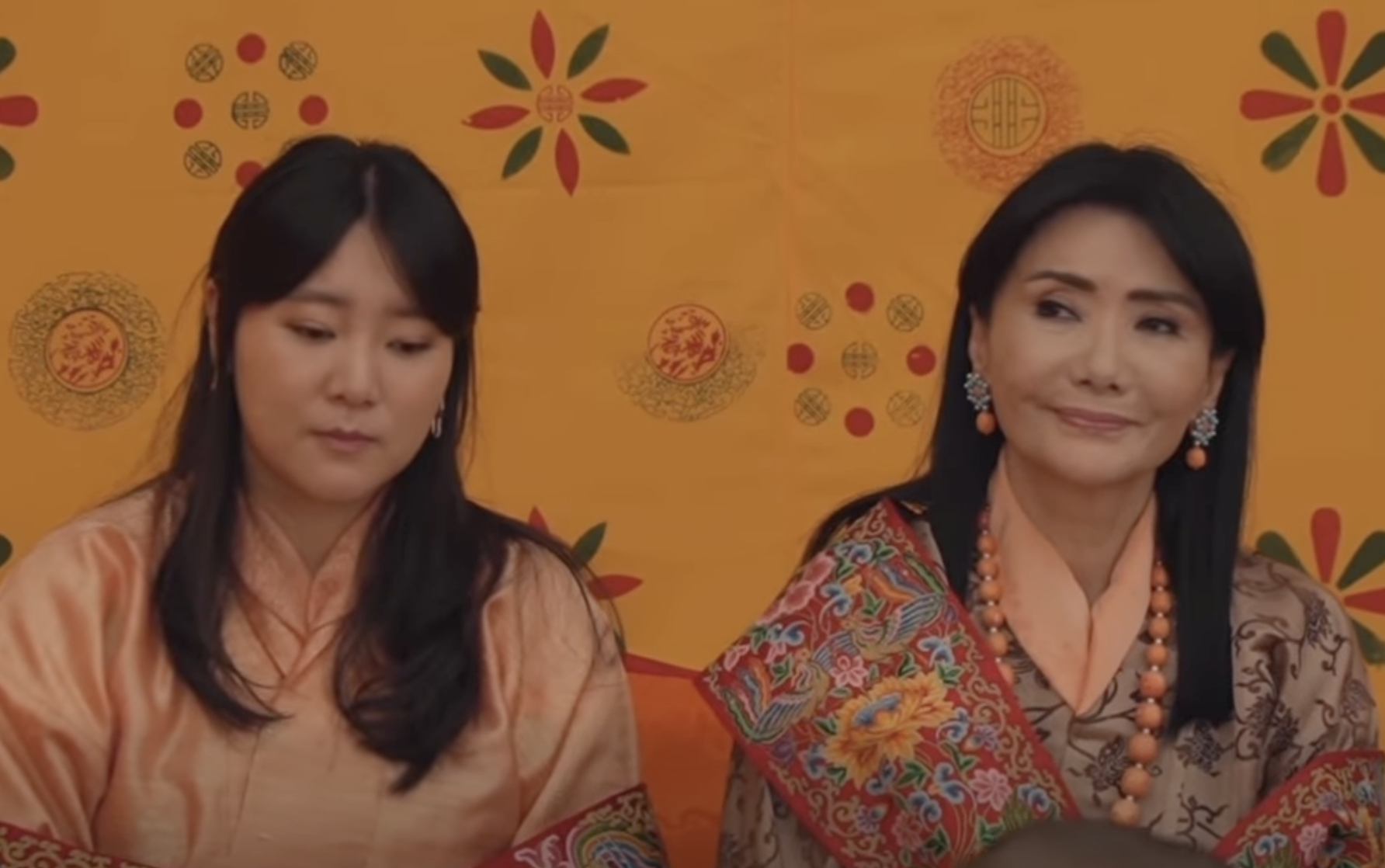
The consecration was grandly graced by His Majesty King Jigme Singye Wangchuck, whose presence added profound spiritual and national significance to the occasion.
Her Royal Highness Princess Eeuphelma Choden Wangchuck also attended the ceremony alongside other members of the Royal Family, senior government officials, and senior representatives of the Zhung Dratshang, Bhutan's Central Monastic Body.
The gathering reflected the close relationship between Bhutan's spiritual institutions and national life, as well as the continued importance of sacred sites in preserving the country's cultural and religious traditions.
A Sacred Offering Dedicated to the 21 Taras
The newly consecrated Thongdröl portrays the 21 manifestations of Tara, one of the most revered female deities in Vajrayana Buddhism. Green Tara, known as Dröljang, and White Tara form the central focus of the composition.
The creation of the sacred tapestry was initiated under the patronage and guidance of Her Majesty Gyalyum Sangay Choden Wangchuck. The Queen Mother has long been a dedicated patron of the Tara Lhaden Zhingkham complex and founded Bhutan's first temple dedicated exclusively to the 21 Taras at the site.
Commissioned with prayers for the peace, prosperity, and well-being of His Majesty the King, the people of Bhutan, and all sentient beings, the Thongdröl represents both a sacred offering and a lasting contribution to Bhutan's spiritual heritage.
The Thongdröl was unfurled at the Tara Lha-dhen Zhingkham Lhakhang and consecrated by the Venerable Dorji Lopen. Measuring 36 feet in width and 26 feet in height, the sacred tapestry is crafted from Thai silk and took approximately one year to complete.
The consecration was dedicated to the long life and well-being of His Majesty the Fourth King. The Thongdröl will be unfurled annually on the fifteenth day of the fourth month of the Bhutanese lunar calendar, allowing devotees and visitors to receive its blessings and pay their respects.
Understanding the Significance of a Thongdröl
In Bhutanese Vajrayana Buddhist tradition, a thongdröl is often translated as "liberation through sight." These large sacred scrolls are displayed during important religious occasions and are believed to confer blessings upon those who view them.
According to Buddhist belief, gazing upon a properly consecrated thongdröl helps purify negative karma, generate spiritual merit, and protect individuals from misfortune. For many devotees, the opportunity to witness the unfurling of a sacred thongdröl is considered a rare and auspicious occasion.
The new Drölma Nyishu Tsachi Thongdröl carries particular significance because it is housed within Tara Lhaden Zhingkham, a sacred complex entirely dedicated to the 21 manifestations of Tara.
Traditional Rituals Mark Historic Occasion
The consecration ceremony was conducted through elaborate traditional purification rituals known as Tagoen Sungchog, accompanied by prayers and blessings led by senior lamas.
These sacred rites formally sanctified the Thongdröl and marked another important chapter in the spiritual history of Pangrizampa, one of Bhutan's most historically significant religious sites. The ceremony further strengthened the role of Tara Lhaden Zhingkham as an important centre of devotion, pilgrimage, and Buddhist learning.
Preserving Bhutan's Living Spiritual Heritage
The consecration of the new Drölma Nyishu Tsachi Thongdröl stands as a testament to Bhutan's continued commitment to preserving its spiritual traditions while ensuring they remain relevant for future generations. In Bhutan, the 21 Taras are not viewed merely as abstract meditation deities; they are active, fierce protectors of the state, the royal family, and daily life
The Essence and Origins of the 21 Taras
In Vajrayana (Tibetan/Bhutanese) Buddhism, Tara (known in Dzongkha/Tibetan as Drölma, "The Liberator") is revered as the female embodiment of enlightened compassion, swift activity, and ultimate wisdom.
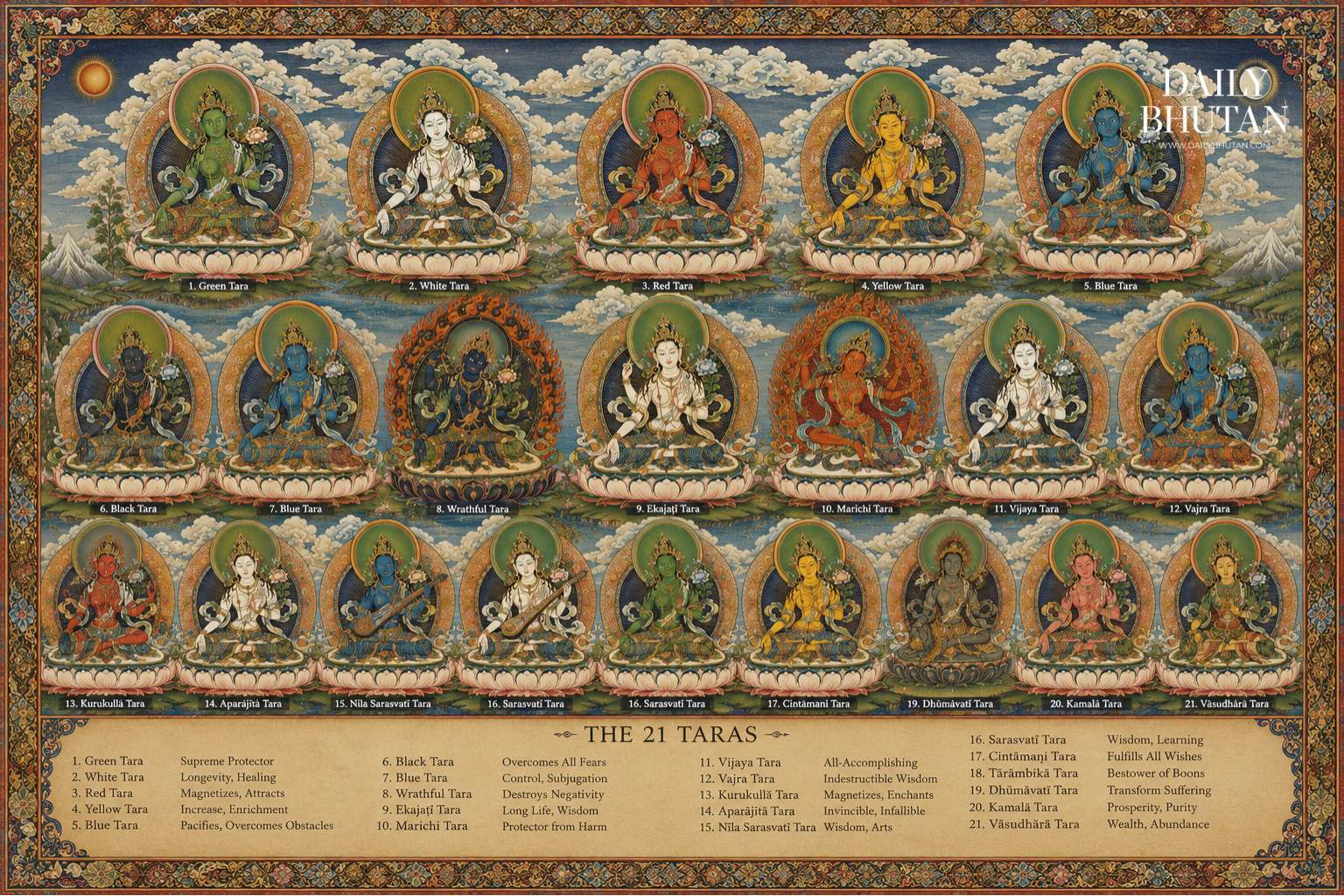
Rather than a singular entity, Tara manifests in a mandala of 21 distinct emanations (Drölma Nyishu Tsachi). Each form possesses specialized enlightened qualities, colors, postures, and symbolic implements to help practitioners overcome specific mundane obstacles and clear spiritual blockages.
1. Origins and Core Theology
The spiritual blueprint of the 21 Taras is rooted in the Praises to the Twenty-One Taras (Chagtsal Drölma Nyishu Tsachi), a canonical liturgy recited daily across all major lineages of Himalayan Buddhism (Nyingma, Kagyu, Sakya, and Gelug).
-
The Compassionate Origin: According to sacred texts, the Bodhisattva of Compassion, Avalokiteshvara (Chenrezig), looked down upon the endless suffering of samsara and wept. From his tears, a lake formed, and out of its waters blossomed a lotus. When the lotus opened, it revealed Tara, who vowed to work unceasingly until every last being was liberated from suffering.
-
The Feminine Vow: Distinctively, Tara vowed to always manifest in a female body throughout her lifetimes to achieve full enlightenment, demonstrating that gender is no barrier to ultimate realization.
-
The Core Manifestations:
-
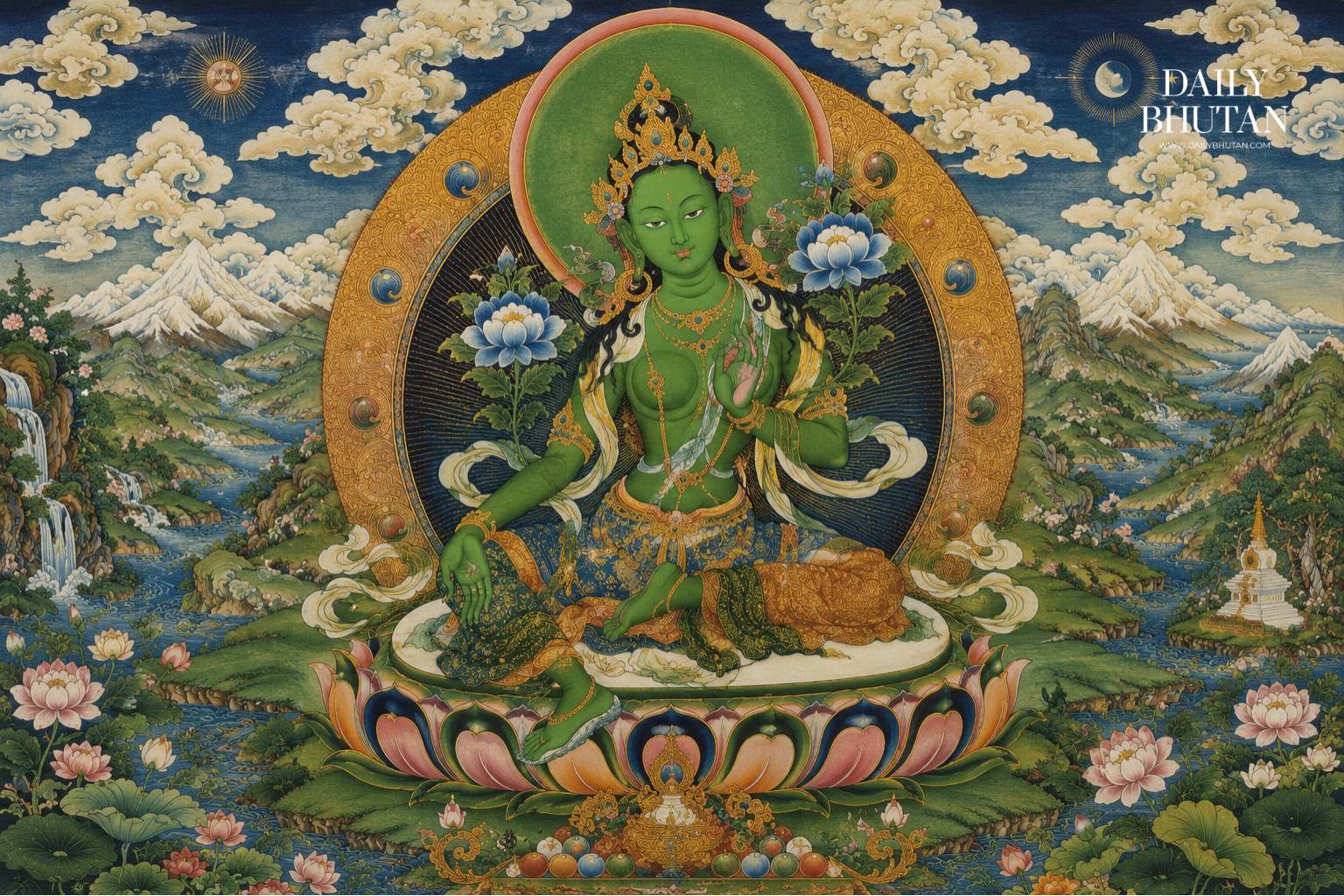
Green Tara (Dröljang): The primary source form. She is traditionally depicted sitting with her right leg slightly extended, ready to step down and instantly spring into action to aid those who call upon her.
-
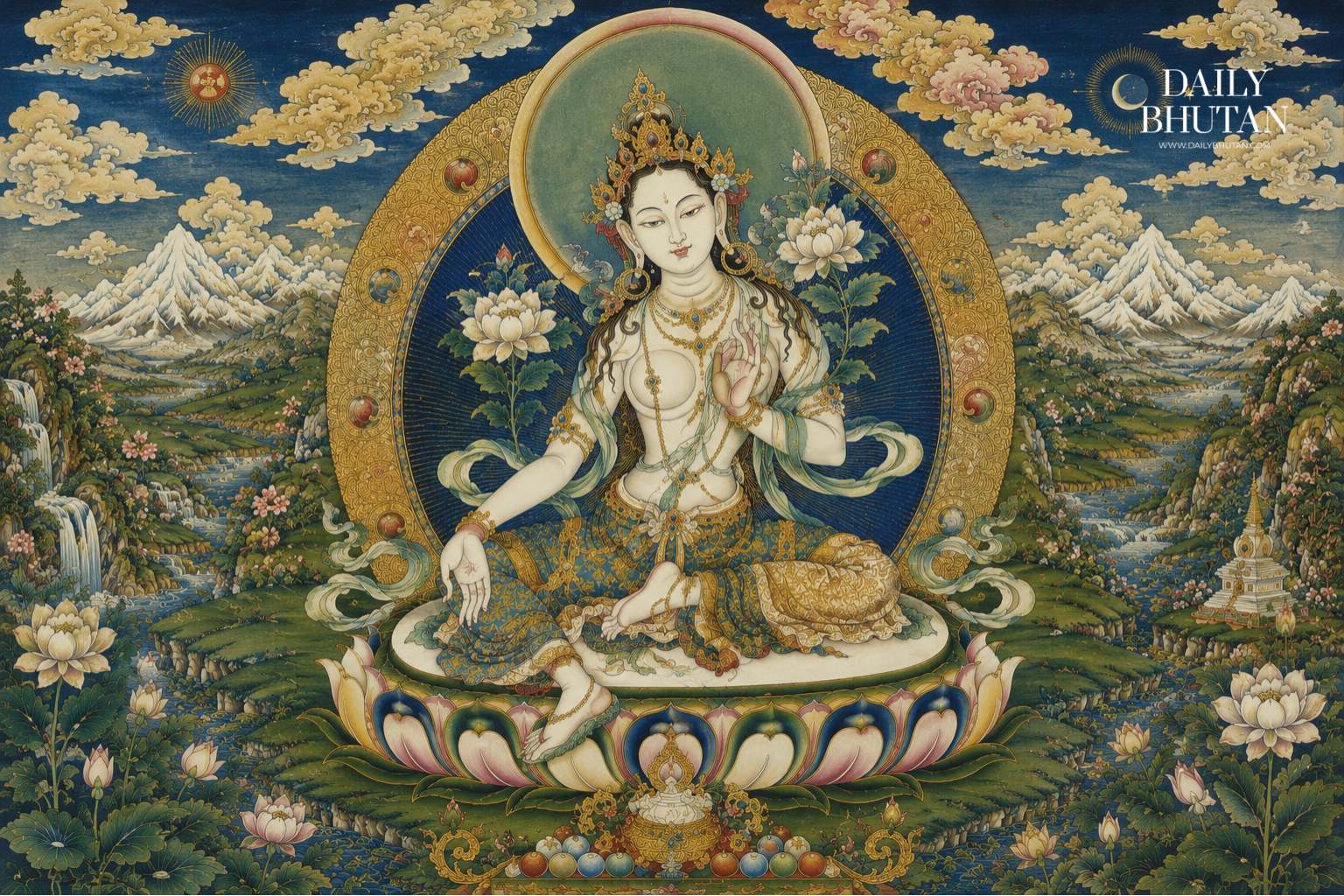
White Tara (Drölkar): Represents long life, pacification, and maternal healing. She features seven eyes (including eyes on her forehead, palms, and the soles of her feet) to see all suffering across the universe.
-
2. The Two Major Visual Iconographies
While the core liturgy praising the 21 Taras remains identical, their visual depictions and specific attributes vary depending on the historical transmission lineage. The two most prominent iconographic systems are:
A. The Atisha Lineage
Transmitted by the 11th-century Indian master Atisha, this is the most common system found in Bhutanese and Tibetan monastic murals. In this tradition:
-
All 21 Taras share a similar physical posture (mirroring Green Tara).
-
They are differentiated primarily by their body color (representing the four enlightened activities: pacifying, enriching, magnetizing, and destroying) and the vases/implements resting on the lotus flowers held in their hands.
B. The Suryagupta Lineage
An older tradition originating from the Indian master Suryagupta. In this system:
-
The 21 Taras are highly distinct dynamically.
-
They vary wildly in physical form, posture (some sitting, some standing, some multi-armed), facial expressions (peaceful, semi-wrathful, and fiercely wrathful), and the specific implements they hold.
3. The 21 Emanations & Functions (Atisha Tradition)
From a Bhutanese Vajrayana Buddhist perspective, the 21 Taras most commonly follow the Atisha/Nyingma-Kagyu tradition of the Twenty-One Praises to Tara, which is also widely practised in Bhutan. However, it is important to note that Bhutanese monasteries and thangkas may vary slightly in iconography, colours, and names depending on lineage and treasure (terma) traditions.
| No. | Name (English) | Tibetan/Dzongkha Name | Colour | Core Attributes |
|---|---|---|---|---|
| 1 | Swift Heroine Tara | Nyurma Pamo | Green | Swift protection, compassionate action, overcoming obstacles |
| 2 | Tara White as the Autumn Moon | Drolkar | White | Longevity, healing, peace, purification |
| 3 | Golden Tara | Sermo | Yellow | Prosperity, merit, abundance |
| 4 | Tara with Blue Lotus | Utpala Drolma | Blue-Green | Wisdom, overcoming ignorance |
| 5 | Tara Proclaiming Hum | Hung Dradrolma | Red | Magnetising power, influence, compassion |
| 6 | Tara Victorious Over Three Worlds | Jigten Sumle Gyalma | Red-Orange | Victory over obstacles and negative forces |
| 7 | Tara Crushing Hostile Forces | Shatrunam Parjoma | Black-Blue | Subduing enemies and harmful influences |
| 8 | Tara Dispelling Poisons | Dugselma | White | Protection from poisons, disease, negativity |
| 9 | Tara Holding the Three Jewels | Konchok Sumdzinma | Yellow | Refuge, spiritual wealth, blessings |
| 10 | Tara Dispelling Suffering | Dukngal Selma | White | Relief from physical and emotional suffering |
| 11 | Tara Bringing Good Fortune | Tashi Drolma | Yellow | Auspiciousness, success, favourable conditions |
| 12 | Tara Radiating Light | Odzer Chenma | Golden | Illumination, wisdom, removing darkness |
| 13 | Tara Burning Away Negativity | Barwa'i Drolma | Red | Purification, transformation of negative karma |
| 14 | Wrathful Tara | Throer Chenma | Dark Blue | Fierce protection, destruction of obstacles |
| 15 | Tara Granting Accomplishments | Ngodrub Terma | Green | Success in spiritual and worldly activities |
| 16 | Tara of Great Peace | Zhiwa Chenma | White | Harmony, pacification, inner peace |
| 17 | Tara Who Removes Fear | Jikpa Selma | Green | Protection from danger, anxiety, uncertainty |
| 18 | Tara of Increasing Qualities | Phelgyur Drolma | Yellow | Increase of merit, health, wisdom, prosperity |
| 19 | Tara Who Destroys Obstructions | Gekselma | Blue | Removal of hindrances and karmic obstacles |
| 20 | Tara of Supreme Courage | Pawo Chenma | Red | Confidence, bravery, spiritual strength |
| 21 | Tara of Complete Enlightened Activity | Jetsun Drolma | Green | Embodiment of all enlightened activities and qualities |
The Most Popular Taras in Bhutan
Among the 21, Bhutanese devotees most frequently pray to:
- Green Tara (Jetsun Drolma) – swift protection and removal of obstacles.
- White Tara (Drolkar) – longevity and healing.
- Yellow Tara (Sermo Drolma) – prosperity and abundance.
- Red Tara (Kurukulle form) – magnetising positive circumstances.
- Black Tara (Nagmo Drolma) – protection from negative forces.
Many Bhutanese households keep images of Green Tara, and monasteries regularly recite the Praises to the Twenty-One Taras (Drolma Nyerchiktsa) for protection, success, health, and the removal of obstacles.
4. Protection from the "Eight Great Fears"
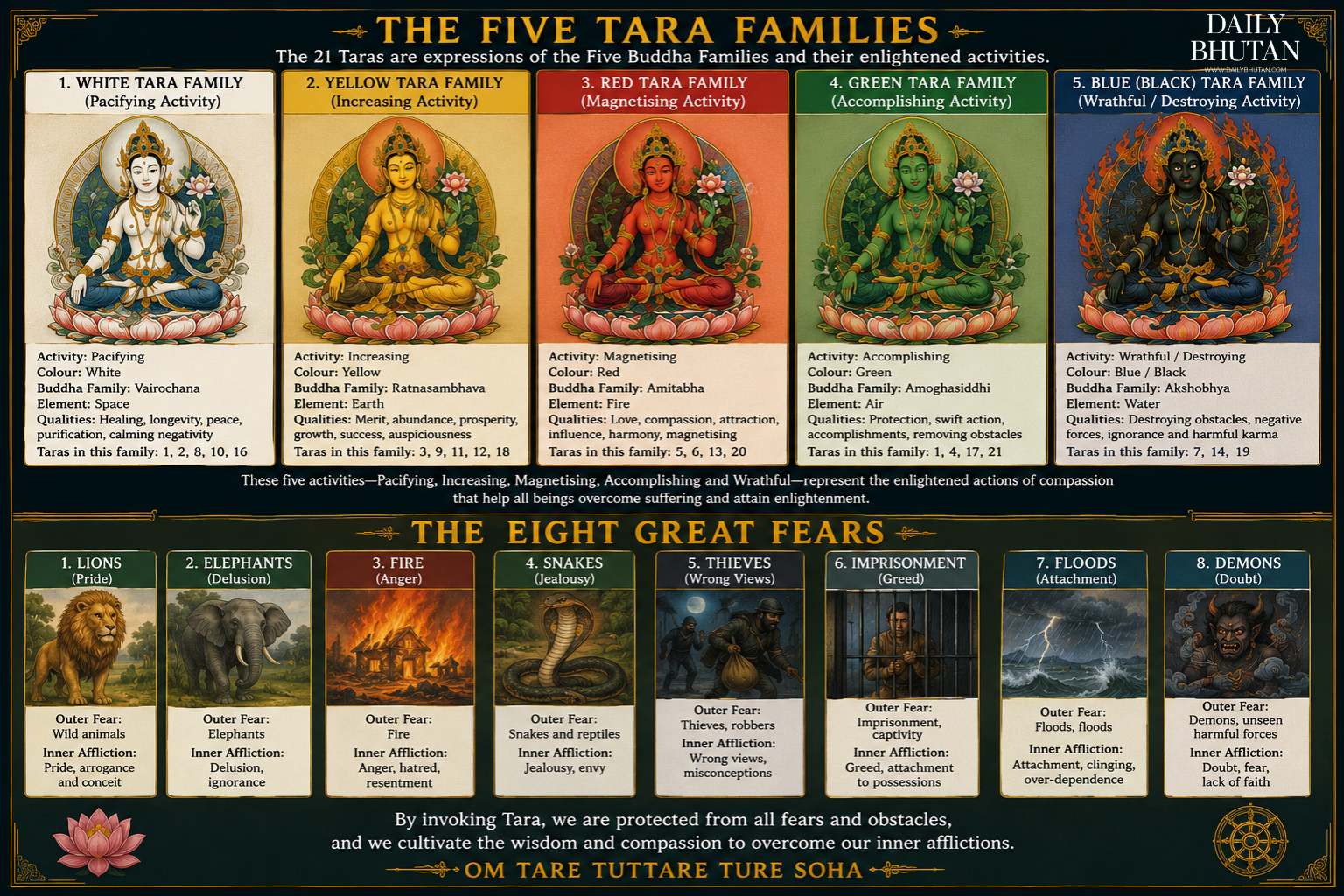
A cornerstone of Tara practice is her unique capacity to shield practitioners from the Eight Great Fears (Jigpa Gye). In Vajrayana philosophy, these are viewed simultaneously as external, physical dangers and internal, psychological afflictions:
-
The Lion: Pride
-
The Wild Elephant: Delusion and ignorance
-
The Forest Fire: Anger and hatred
-
The Snake: Envy and jealousy
-
Robbers / Thieves: Fanatical views and dogmatic beliefs
-
Prisons / Captivity: Avarice and attachment
-
Floods / Raging Waters: Attachment and desire
-
Demons / Evil Spirits: Crippling doubt and insecurity
5. The Five Tara Families
In Bhutan, the 21 Taras are often grouped according to the Five Buddha Families, which correspond to different enlightened activities:
| Colour | Activity |
|---|---|
| White Tara | Pacifying (healing, longevity, peace) |
| Yellow Tara | Increasing (wealth, merit, abundance) |
| Red Tara | Magnetising (love, influence, compassion) |
| Green Tara | Accomplishing (swift action, protection) |
| Blue/Black Tara | Wrathful (destroying obstacles and negativity) |
6. Cultural & Ritual Practice Today
In active contexts—such as the Tara Lhaden Zhingkham in Pangrizampa, Bhutan—the 21 Taras are not approached merely as historical abstractions, but as living cosmic principles.
-
The Liturgy: The 21 Praises are sung rapidly, accompanied by bells, drums, and visual mudras (hand gestures). Monks, nuns, and lay practitioners frequently recite the praises 7, 21, or 108 times consecutively to build protective energy during turning points in life or state undertakings.
-
The Mantra: Each manifestation can be accessed through the root universal mantra of Tara:
OM TARE TUTTARE TURE SOHA
OM: Represents the enlightened body, speech, and mind.
TARE: Liberates from mundane suffering and the cycles of samsara.
TUTTARE: Liberates from the eight fears and individual psychological afflictions.
TURE: Liberates from spiritual ignorance, bringing one into the realm of ultimate wisdom.
SOHA: "May the blessings take root."